
Markets
CATCaterpillar$510.45-5.01%•
DEDeere & Co.$609.25-2.50%•
CNHCNH Industrial$10.74-2.98%•
AGCOAGCO Corp.$100.93-1.91%•
URIUnited Rentals$973.43-8.13%•
ALTGAlta Equipment$4.33-8.46%•
TTCToro Company$100.82-1.70%•
HRIHerc Holdings$133.55-11.54%•
MGRCMcGrath RentCorp$113.45-6.38%•
MTWManitowoc$20.31-5.58%•
Back to Newsdealership

A Texas JCB Sale Signals the Next Phase of Equipment Dealership Consolidation

Jon RossiJon RossiFounder & Editor-in-Chief September 8, 2026 3 min read

South Star JCB’s sale puts a high-performing Dallas-Fort Worth dealership at the center of a broader M&A cycle tied to Texas construction, infrastructure and aftermarket demand. The transaction also raises the valuation bar for dealers with strong parts and service execution.

A Texas JCB Sale Signals the Next Phase of Equipment Dealership Consolidation

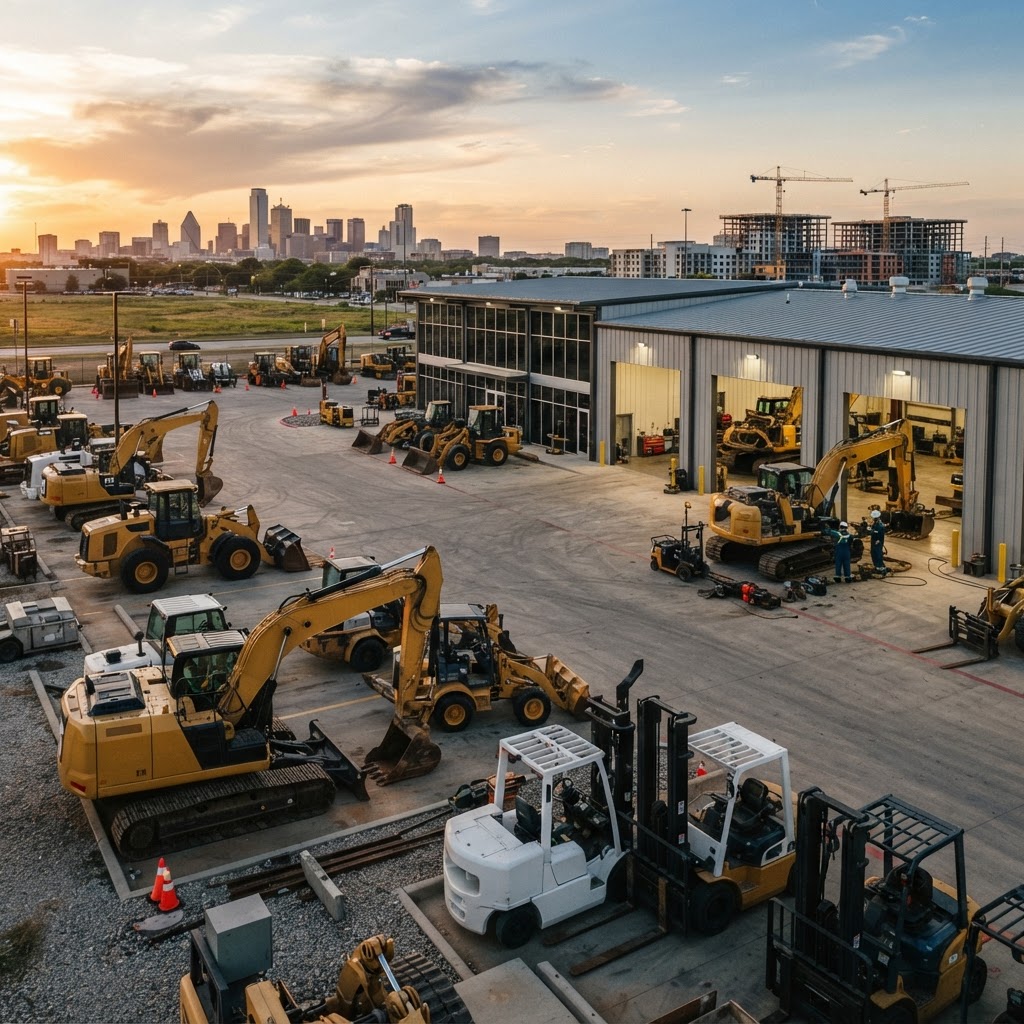
South Star JCB has been sold in an advisory transaction facilitated by Performance Brokerage Services, placing one of the Dallas-Fort Worth market’s strongest heavy equipment dealerships under new ownership as Texas infrastructure and commercial construction activity continues to attract capital. The dealership ranked among JCB’s top six U.S. dealers in 2024 and placed in the top three nationally for aftermarket parts and service performance, making the transaction relevant well beyond a single change of control.

DIG Analysis — 2026-09-08: The sale shows where dealership value is concentrating: in territories with durable equipment demand, operating depth and a recurring aftermarket business that can support earnings after the initial machine sale.

A high-performing dealership in a high-growth territory

South Star JCB’s position in the Dallas-Fort Worth metroplex gave the buyer exposure to one of the most active construction markets in the United States. Population growth, commercial development, transportation work and utility investment have expanded the customer base for excavators, forklifts and related equipment. That demand creates room for a dealer to grow new and used equipment volume while building a larger parts and service operation around an expanding installed base.

The dealership’s national ranking matters because it provides a clearer signal than territory size alone. Strong sales can reflect a favorable market, but top-tier aftermarket performance points to execution in technician coverage, parts availability, customer response times and service-contract discipline. Those capabilities are difficult to build quickly and are often central to a buyer’s underwriting case.

“The transaction highlights the premium attached to dealerships that combine market growth with measurable parts and service strength.” Performance Brokerage Services advisory context

Why aftermarket performance is driving the M&A discussion

Equipment dealerships are increasingly valued as service businesses as much as sales businesses. Machine deliveries are cyclical and can be affected by interest rates, project timing, rental-fleet purchases and manufacturers’ production schedules. Parts, maintenance, repairs and field support can provide a steadier revenue base, improve customer retention and create more visibility into future cash flow.

For buyers, South Star JCB offers a useful template. A dealership with a strong OEM relationship, recognized sales performance and national aftermarket credentials may require less operational repair than a distressed or underinvested platform. That can support a faster growth plan, including additional technicians, expanded parts inventory, mobile service capacity and targeted coverage of adjacent product categories.

The transaction also reinforces the importance of brand position. JCB’s product range gives the new owner exposure to compact and heavy excavators, material-handling equipment and forklifts. A broader product mix can increase account penetration, particularly when contractors and fleet operators prefer to consolidate purchases, service relationships and parts support with fewer suppliers.

What the next buyer will need to prove

Ownership change does not guarantee growth. The buyer will need to preserve the dealership’s service culture while adding capacity without weakening working-capital controls. Texas demand can be strong and still uneven across submarkets, project types and customer segments. Construction slowdowns, labor shortages, equipment availability and elevated financing costs remain practical constraints.

The most important early indicators will be technician retention, service absorption, parts fill rates, customer response times and the quality of the sales pipeline. Management will also need to determine whether expansion should come through additional branches, mobile service units, rental activity or deeper coverage of existing accounts.

For the wider dealer market, the message is direct. Attractive Texas territories are drawing attention, but buyers are likely to distinguish between revenue scale and operating quality. South Star JCB’s sale makes aftermarket execution a visible measure of strategic value, while the broader M&A cycle gives well-run dealerships a reason to prepare for scrutiny on margins, customer concentration, inventory discipline and succession readiness.

Who This Affects

OEM Impact

OEM channel managers will face greater pressure to protect high-performing territories while supporting new ownership with inventory, training and service continuity. JCB will also need to monitor whether expansion raises brand coverage without weakening dealer standards or customer support in adjacent Texas markets.

Dealer Impact

Dealer principals should expect buyers to place heavier weight on service absorption, technician retention, parts fill rates and succession planning, not just annual unit sales. Smaller dealers near fast-growing Texas corridors may see higher valuations, but also more competition for technicians, customers and acquisition financing.

Contractor Impact

Fleet operators, commercial contractors and infrastructure firms may gain a broader JCB sales and service footprint in North Texas, including more equipment availability and field-support capacity. They should still confirm continuity of account teams, warranty handling, rental options and response times during the ownership transition.

Startup Impact

Series A investors and founders building equipment-service, fleet-management or parts-logistics companies should view dealer consolidation as both a channel opportunity and a competitive risk. A larger dealer platform may become a stronger distribution partner, but it could also internalize services that startups previously sold directly to contractors.

Dealmaker Impact

PE dealmakers, independent sponsors and dealership investment bankers will likely use South Star JCB as evidence that high-quality aftermarket operations command attention in growth markets. Underwriting will increasingly focus on technician labor, service absorption, OEM territory rights, customer concentration and the cost of expanding branch and mobile-service capacity.

Back to News
Dealer M&AJCBTexas constructionAftermarket serviceHeavy equipmentDealership valuation