
Markets
CATCaterpillar$510.45-5.01%•
DEDeere & Co.$609.25-2.50%•
CNHCNH Industrial$10.74-2.98%•
AGCOAGCO Corp.$100.93-1.91%•
URIUnited Rentals$973.43-8.13%•
ALTGAlta Equipment$4.33-8.46%•
TTCToro Company$100.82-1.70%•
HRIHerc Holdings$133.55-11.54%•
MGRCMcGrath RentCorp$113.45-6.38%•
MTWManitowoc$20.31-5.58%•
CATCaterpillar$510.45-5.01%•
DEDeere & Co.$609.25-2.50%•
CNHCNH Industrial$10.74-2.98%•
AGCOAGCO Corp.$100.93-1.91%•
URIUnited Rentals$973.43-8.13%•
ALTGAlta Equipment$4.33-8.46%•
TTCToro Company$100.82-1.70%•
HRIHerc Holdings$133.55-11.54%•
MGRCMcGrath RentCorp$113.45-6.38%•
MTWManitowoc$20.31-5.58%•

Aftermarket Strength Powers Hitachi Construction Machinery to Record Q1; Outlook Raised

Jon RossiJon RossiFounder & Editor-in-Chief August 5, 2026 3 min read

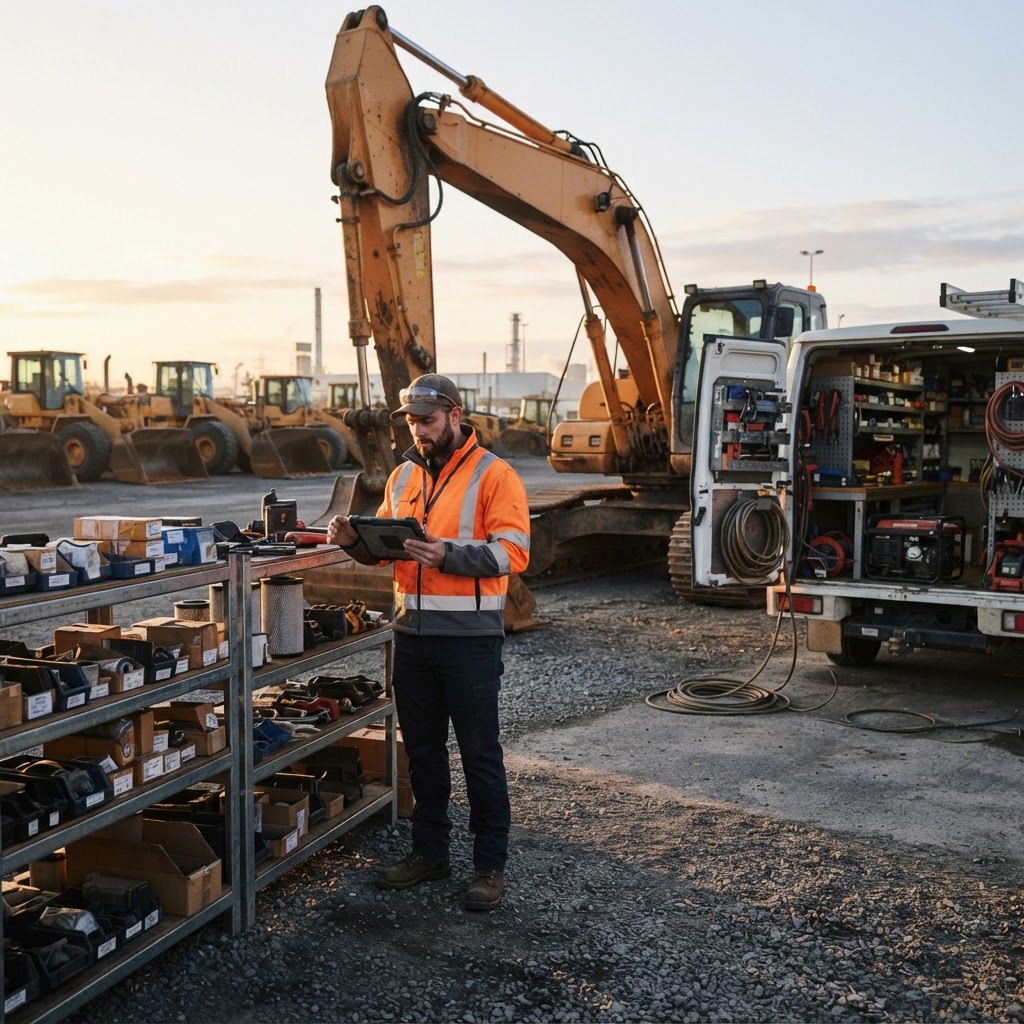
Hitachi Construction Machinery posted a record $2.1 billion in first-quarter revenue, driven by parts and services growth, and raised its fiscal 2026 outlook. The results underscore the rising importance of aftermarket revenue and resilience in equipment demand.

Aftermarket Strength Powers Hitachi Construction Machinery to Record Q1; Outlook Raised

Hitachi Construction Machinery reported record first-quarter revenue of $2.1 billion, led by stronger-than-expected performance in its parts and services divisions. The company followed the quarter by raising its fiscal 2026 full-year outlook, signaling confidence in ongoing demand for maintenance and support across global construction fleets.

DIG Analysis — 2026-08-05: The headline figure masks a strategic shift. Aftermarket sales are supporting top-line growth while smoothing cyclicality from new-equipment orders. That dynamic gives Hitachi leverage on margin, customer retention, and dealer network economics.

What happened: aftermarket growth carried the quarter

Hitachi’s Q1 strength is concrete and concentrated. According to a report published by Construction Owners, parts and service revenues outperformed other segments and were the principal driver of the $2.1 billion top line. That pattern points to higher service frequency, longer equipment on-rent cycles, or a rising installed base requiring support. In short, revenue that is recurring and attached to existing machines is accounting for more of the company’s growth.

Operationally, aftermarket business tends to be less volatile than new-equipment sales. Parts margins are typically higher and service contracts provide predictable cash flow. Hitachi’s decision to emphasize these channels appears to be paying off through improved utilization of existing logistics, remote diagnostic tools, and targeted inventory placement to keep downtime low for customers.

Why it matters: margin, retention, and dealer economics

For Hitachi, stronger parts and service performance does three things at once. It bolsters margins relative to equipment manufacturing, increases customer lock-in through maintenance contracts and scheduled service, and stabilizes revenue when capital spending softens. That makes quarterly results less dependent on new machine cycles and gives the company flexibility to invest in supply chain improvements and digital service platforms.

Dealers benefit from the flow of aftermarket business but also face pressure to service its growth. Parts inventory needs to be more accurate and technicians must be available to meet higher service volumes. Fleet operators see lower unplanned downtime when service networks are responsive, which supports equipment availability and utilization.

Implications and near-term risks

Raising the fiscal 2026 outlook is a signal to markets and partners. It invites competitors to reassess their own aftermarket strategies and may accelerate consolidation among parts distributors and service providers. The upside depends on Hitachi maintaining supply reliability. If parts availability lags demand, the company risks extending service times and eroding the advantage it has just built.

"We are encouraged by the resilience of our services and parts operations and their contribution to first-quarter revenue." — Hitachi Construction Machinery, reported via Construction Owners

Execution will determine whether the quarter is the start of a multi-year shift or a transitory benefit. For investors, the raised outlook reduces short-term uncertainty but increases scrutiny on margins and free cash flow. For customers and dealers, the practical outcome will be faster parts fulfillment, expanded service offerings, and tighter collaboration with OEM channel teams to keep machines working in the field.

Source reporting by Construction Owners confirms the results and the company statement. Watch for subsequent quarterly disclosures to reveal whether aftersales growth sustains or compresses as supply chain normalization and regional demand patterns evolve.

Who This Affects

OEM Impact

OEM channel managers and product line leaders should expect continued emphasis on aftermarket revenue; they will need to allocate more investment to parts logistics, warranty processing, and service training to defend margins. Product development teams may prioritize serviceability and remote diagnostics to reduce downtime and lower lifecycle costs for customers.

Dealer Impact

Dealer principals and general managers will see higher parts and service demand, requiring tighter inventory forecasting, expanded technician headcount, and potentially upgraded service bays. Dealers who cannot scale service capabilities risk losing share to better-equipped rivals and may need additional support from OEMs for parts stocking or training.

Contractor Impact

Fleet managers and maintenance supervisors at construction and contracting firms can expect improved availability of OEM-backed parts and expanded service options, which can reduce unplanned downtime and lower total cost of ownership. However, contractors should budget for possible price pressure on labor rates as demand for certified technicians rises.

Startup Impact

Series A startups in predictive maintenance, parts logistics, and field-service automation may find expanded commercial opportunities selling to Hitachi and its dealer network, but will face stiffer competition from incumbent service platforms. Early-stage companies should prioritize integrations that demonstrate immediate ROI for dealers and fleet operators to win pilot programs.

Dealmaker Impact

Private equity dealmakers and M&A teams should view aftermarket-focused assets, such as parts distributors and service platforms, as higher-value targets because of recurring revenue profiles and margin resilience. Strategic acquirers will price in potential synergies with OEM service networks and may accelerate consolidation to capture dealer and fleet relationships.

Back to News
heavy-equipmentaftermarketHitachiparts-and-servicefinancial-resultsconstruction