
Powered by Google TranslateTranslate
Markets
CATCaterpillar$510.45-5.01%•
DEDeere & Co.$609.25-2.50%•
CNHCNH Industrial$10.74-2.98%•
AGCOAGCO Corp.$100.93-1.91%•
URIUnited Rentals$973.43-8.13%•
ALTGAlta Equipment$4.33-8.46%•
TTCToro Company$100.82-1.70%•
HRIHerc Holdings$133.55-11.54%•
MGRCMcGrath RentCorp$113.45-6.38%•
MTWManitowoc$20.31-5.58%•

Archiboost Raises $6.2 Million as AI Moves Upstream in Construction

Jon RossiJon RossiFounder & Editor-in-Chief November 15, 2026 3 min read

The San Francisco startup says its software has reviewed 550,000 drawing sheets tied to $3.5 billion in projects. The round will test whether early document review can become a repeatable budget line for construction firms.

Archiboost Raises $6.2 Million as AI Moves Upstream in Construction

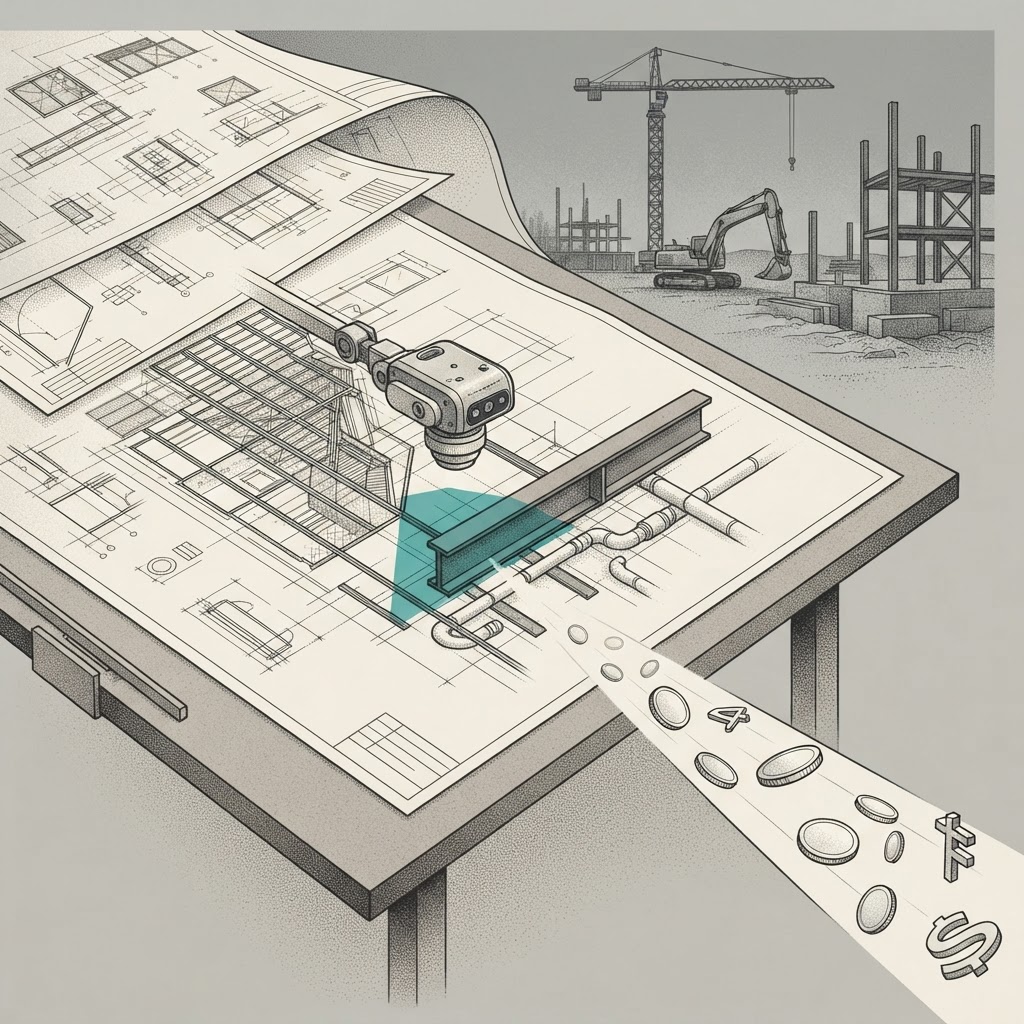
Archiboost AI has raised $6.2 million in combined pre-seed and seed financing to sell an earlier check on construction documents, where errors can become expensive once crews and materials are committed. The San Francisco startup says its platform has reviewed more than 550,000 drawing sheets across projects representing $3.5 billion in value, giving investors an initial measure of activity, though not of savings or customer retention.

DIG Analysis — 2026-11-15: The financing places Archiboost in a crowded category of construction software that promises to reduce project risk through automation. Its commercial test is narrower: whether owners, general contractors and design teams will pay to catch coordination problems before documents reach the jobsite, and whether the software can do so without adding another review layer to already complex approval processes.

Bricks & Bytes reported that Hanabi Capital and Marathon Venture Capital led the round. The company’s stated review volume suggests access to a meaningful body of project documents, but the available funding announcement does not identify customers, disclose revenue, or quantify how many detected issues were confirmed and corrected. Those details matter more than sheet counts when buyers assess operational value.

Where the risk sits

Construction drawings are produced by multiple design disciplines and revised across a project’s life. A conflict between architectural, structural and mechanical plans may be visible in separate documents but missed in a conventional review, especially when revisions arrive on different schedules. If discovered during construction, the conflict can lead to rework, delays or change orders. A software review performed earlier could reduce that exposure, provided its findings are accurate and fit the project team’s existing workflow.

That condition limits what the headline numbers establish. Reviewing 550,000 sheets demonstrates throughput, not necessarily precision. Archiboost has not said how often its system flags false positives, which types of errors it handles best, or how much review time it replaces. Nor has it reported a measured reduction in project costs or schedule overruns. In construction, a missed clash can be costly, but an excess of low-value alerts can also consume time and erode confidence.

The product also enters a chain of responsibility in which software does not make the final design decision. Architects and engineers remain accountable for their work, while contractors must coordinate documents with field conditions and procurement. A platform that surfaces a potential discrepancy can inform those decisions; it cannot by itself resolve competing interpretations or guarantee that a revised drawing reaches every party.

“The company says it has reviewed more than 550,000 drawing sheets across $3.5 billion in project value.”

Source: Bricks & Bytes

What the round must prove

The funding gives Archiboost resources to develop its product and pursue customers, but the announced figures do not specify the company’s valuation, the split between pre-seed and seed capital, or its planned use of proceeds. Those omissions are common in early-stage announcements and make it difficult to compare the round with peers or judge how far the capital is expected to carry the business.

For investors, the next evidence will be commercial rather than technical alone. Repeat use across projects, conversion from pilots to paid deployments, and documented reductions in review effort would help show that document checking can become part of standard project controls. Buyers will also want to know how the platform handles changing revisions and whether it integrates with the systems used to manage drawings and requests for information.

Archiboost’s claimed project value gives the company a concrete starting point for that proof, but project value is not the same as revenue opportunity captured. The company has not disclosed the number of customers behind the figure or whether the reviewed projects were paid deployments. Its next milestone is to turn a large volume of reviewed documents into evidence that customers return, renew and trust the findings before work moves to the site.

Who This Affects

OEM Impact

OEM construction-equipment channel managers may see earlier drawing review as a way to reduce delays that disrupt equipment delivery and site mobilization. If contractors adopt these tools, OEMs may face pressure to share equipment dimensions and configuration data in formats that project-document platforms can use.

Dealer Impact

Dealer principals serving construction fleets could benefit if fewer coordination errors reduce idle equipment and rescheduled deliveries. The indirect effect may be greater demand for accurate machine specifications and faster coordination between dealer sales teams, contractors and project designers.

Contractor Impact

General contractors and project controls directors are the likely buyers or internal sponsors, but they will need evidence on false-positive rates, revision handling and measurable savings before broad deployment. BIM coordinators and VDC managers may gain review capacity, while engineers could face added work if alerts are noisy or ownership of resolution is unclear.

Startup Impact

Archiboost must convert reported document volume into paid, repeat deployments and demonstrate that its findings improve project outcomes. Its next financing prospects will depend on customer retention, implementation costs and quantified value, not project value reviewed alone.

Dealmaker Impact

Seed investors and Series A investors will look for customer concentration, recurring revenue and validated cost avoidance before assigning substantial value to the reported review volume. PE dealmakers and construction-software acquirers may monitor whether document checking becomes a standalone budget item or a feature bundled into broader project platforms.

Back to News
Archiboost AIconstruction technologyAIseed fundingdocument reviewproject risk