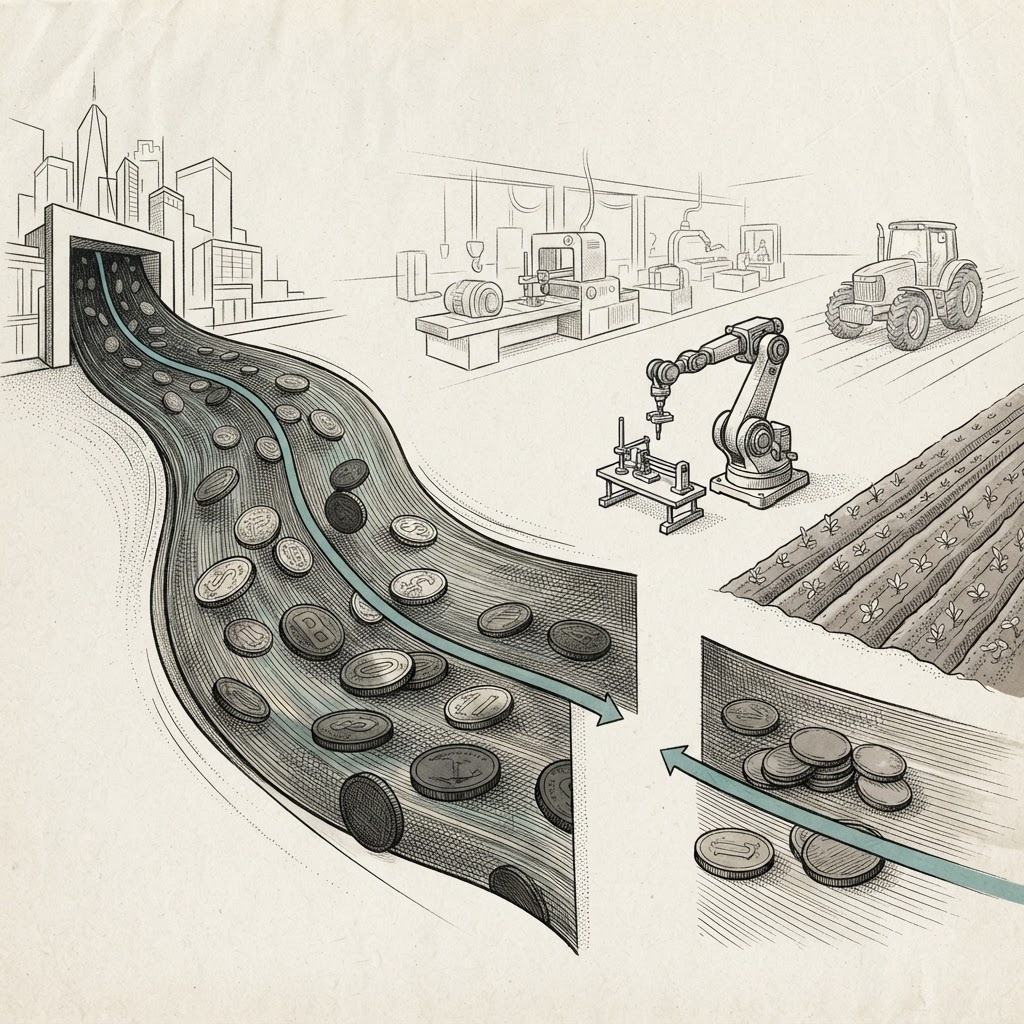
Chinese robotics startup Astribot raised RMB 1 billion at a reported RMB 15 billion valuation, underscoring investor demand for automation. The financing is a signal of capital availability, not yet evidence of commercial scale or equipment-industry adoption.
Astribot has raised RMB 1 billion in fresh capital at a reported valuation of RMB 15 billion, placing a large financing round for a Chinese robotics company alongside renewed investor interest in agricultural technology. The headline figures are substantial; what they buy in terms of production capacity, customer adoption and durable revenue remains undisclosed.
DIG Analysis — 2026-10-24: For heavy equipment and agriculture executives, the round is best read as a measure of investor appetite for automation, not a forecast of immediate competitive change. The funding may give Astribot room to develop and deploy its technology, but the available report does not identify the investors, the intended use of proceeds, operating milestones or customer commitments.
The financing signal
Tech Startups reported the financing on Oct. 13, grouping Astribot with other companies raising capital, including agricultural-tech startup CarbonFarm. The report identifies Astribot’s new funding and valuation but supplies little detail about its business performance. It does not disclose revenue, production volume, order backlog or the terms attached to the valuation.
That distinction matters. A private-company valuation reflects the price investors are prepared to pay under a particular transaction, not an independently established measure of operating value. A RMB 15 billion mark can support hiring, product development and supplier commitments. It can also raise the bar for future fundraising: investors will expect evidence that the company can turn technical progress into repeatable sales and acceptable unit economics.
The financing also says something about where venture capital is willing to take risk. Robotics companies often require substantial spending before product revenue catches up, particularly when systems must work safely and reliably outside controlled settings. Agriculture adds seasonal operating windows and variable field conditions; industrial applications carry their own integration and uptime demands. Capital can fund testing and manufacturing, but it cannot by itself resolve those constraints.
“The funding may give Astribot room to develop and deploy its technology, but the available report does not identify the investors, the intended use of proceeds, operating milestones or customer commitments.”
From capital to customers
For established equipment makers, the pertinent question is whether funded robotics companies become suppliers, partners or future competitors. A startup that can prove a system in a narrow task could influence how OEMs allocate research budgets or evaluate outside technology. Yet there is no reported evidence here of an Astribot agreement with an equipment manufacturer, dealer network or fleet customer.
Commercial adoption will depend on practical measures: the cost of installation, maintenance requirements, performance in field conditions and the time needed to recover the purchase price. For customers, automation is not valuable simply because it is new. It must fit existing workflows, parts support and safety procedures, while performing consistently enough to justify the capital expense.
Those requirements can favor incumbents with service networks and established customer relationships, even when a startup has a compelling technical product. They can also create openings for suppliers that build equipment around a specific job rather than attempting a broad platform. The trade-off is that a narrow application may be easier to sell and validate, but may limit the addressable market that investors expect to see at a high valuation.
What remains unknown
The CarbonFarm mention broadens the funding report’s relevance to agriculture, but the supplied account gives no financing amount, valuation, product detail or customer information for the company. It is therefore not possible to compare its position with Astribot’s or to infer that both companies are advancing at the same pace. The shared appearance in a funding roundup is a category signal, not evidence of a business relationship.
For now, the clearest fact is the scale of Astribot’s reported round and valuation. The next evidence that would change the industrial read is specific: disclosed deployment numbers, recurring customer use, manufacturing capacity and a path to support systems after sale. Until those details emerge, the RMB 1 billion raise measures investor commitment to the possibility of automation, rather than demonstrated demand for it.
 Translate