
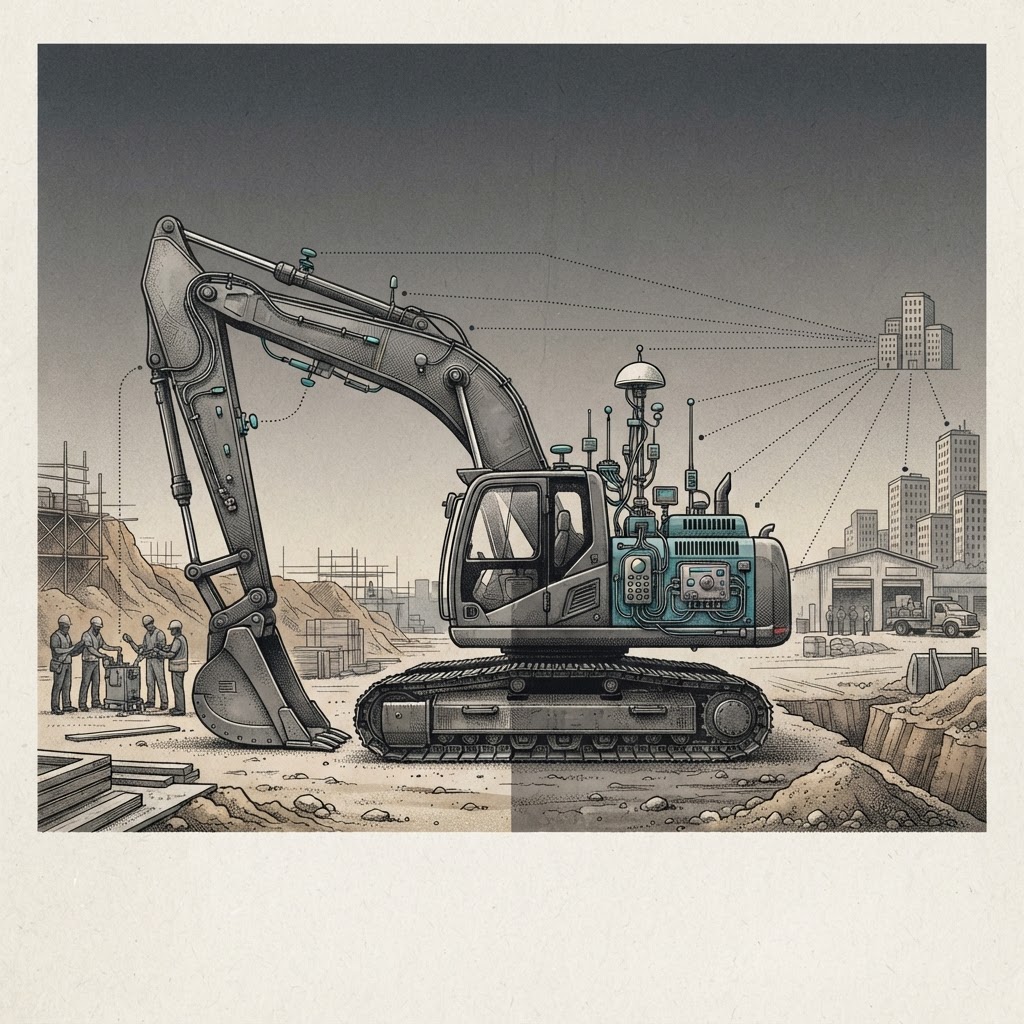
Bedrock Robotics has raised $600 million in a Series C round, valuing the company at $4.1 billion after the investment and giving it nearly $1 billion in total funding. The company plans to use the capital to expand commercial deployments and add operating teams that support contractors across the United States.
DIG Analysis — 2026-10-26: The financing gives Bedrock room to move beyond proving autonomous equipment in limited settings and toward the harder test of repeatable field operations. Its retrofit approach targets machines already in contractors’ fleets, but adoption will depend on performance, support costs and whether autonomous work can fit the varied routines of active job sites.
Bedrock’s system is designed to add autonomous capability to existing heavy construction equipment, including excavators. That distinguishes its pitch from a strategy built around replacing fleets with purpose-built autonomous machines. Contractors may be able to preserve existing assets, while the company can pursue a broader installed base without requiring customers to buy an entirely new machine for every deployment.
Capital for deployment
The round was announced by the company in a release distributed through GlobeNewswire. CapitalG, Emergence Capital, US Innovative Technology Fund, Bessemer Venture Partners, Temasek, 8VC, Georgian, Valor Equity Partners, Xora, Eclipse and Perry Creek Capital were among the named investors. NVIDIA was also listed among the companies associated with the announcement.
Bedrock did not disclose how the new capital will be allocated, how many machines are currently operating autonomously, or what commercial milestones it expects to reach. It also did not provide deployment targets or revenue figures. Those omissions matter: a high valuation and a large round establish investor expectations, but they do not show whether customers will pay enough to cover installation, maintenance and field support across different equipment models and worksites.
Scaling operations is a substantial part of the task. Autonomy software must work around changing terrain, shifting work plans and equipment that may have accumulated years of wear. A rollout also requires people who can install and maintain systems, train crews, troubleshoot failures and coordinate with contractors when a machine’s work affects the rest of a site. Adding those teams may consume capital before deployments generate predictable returns.
“The company specializes in retrofitting existing heavy construction equipment, such as excavators, with autonomous technology to improve job site capacity and safety.”
Company description in the GlobeNewswire announcement
The retrofit question
The commercial case rests on whether autonomy can increase useful machine hours or reduce exposure to hazardous tasks without adding new sources of delay. A machine that can work with less direct operator input could help contractors address labor constraints and schedule pressure. But a software-enabled excavator still depends on the surrounding site: people, trucks and other machines must coordinate with it, and a breakdown can interrupt more than the autonomous unit’s own work.
Retrofitting also puts pressure on the relationship between technology providers and equipment manufacturers. Contractors often buy machines through established dealer channels, where parts, service and financing are tied to the original equipment. Bedrock’s model may extend the useful role of those assets, though it raises practical questions about warranty responsibility, service access and how software updates interact with manufacturer systems. The company did not describe how those arrangements will be handled.
The financing creates room to build those commercial and service capabilities, while raising the bar for evidence. At a $4.1 billion post-money valuation, investors are backing an expectation that Bedrock can convert successful deployments into a repeatable business across contractors and sites. Whether that can be done at a cost customers accept will be determined in the field, not by the size of the round.
Evidence still to come
For now, the company has disclosed a financing plan rather than a deployment record detailed enough to assess utilization, customer retention or unit economics. Those measures will clarify whether the retrofit model can scale beyond selected projects and whether contractors view autonomous capability as a productivity investment rather than an experimental add-on.
Bedrock said the proceeds will support commercial deployments and expand its operational teams serving contractors across the United States. It has not announced a timetable or numerical target for that expansion.