
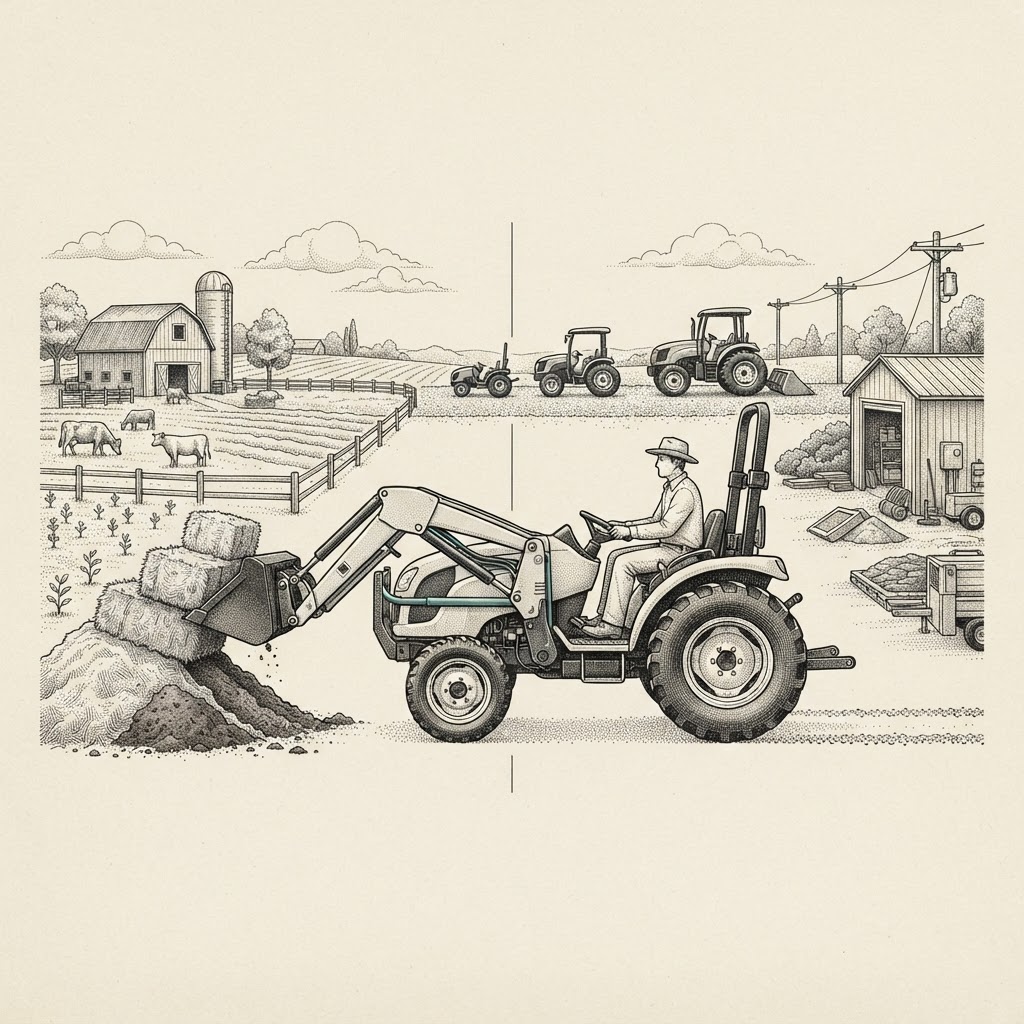
Case IH is adding three compact tractors to its Farmall range, extending the line with models rated at 45, 50 and 55 horsepower. The 45A, 50A and 55A are intended for small-scale farming and utility operations, and bring higher hydraulic flow and loader lift capacity, according to Equipment World.
DIG Analysis — 2026-11-08: The addition is a focused product-range move, not evidence of a broader change in Case IH’s compact-equipment strategy. More hydraulic capacity and lift can matter as much as a modest increase in engine output for buyers who use one tractor across loader work, property maintenance and farm chores. The commercial test will be whether the upgrades justify their price against existing models and competing compact machines.
More capacity in a compact class
The three tractors give Case IH additional steps within a horsepower band where buyers often weigh capability against purchase cost, storage space and ease of use. The reported specifications reach as high as 57 horsepower. Case IH also points to increased hydraulic flow and loader lift capacity, features that can affect the range and pace of front-end work more directly than rated horsepower alone.
That combination positions the new models for jobs that require a loader or hydraulic implement but do not necessarily call for a larger agricultural tractor. Farms with limited acreage, livestock operations and property owners may value a machine that can move material and run attachments without taking up the space or capital of a higher-horsepower unit. The same breadth of use, however, can make comparisons difficult: buyers will need to judge the machines against both compact tractors and larger, lightly used equipment.
Equipment World reported the introduction but the information available does not establish pricing, delivery timing, standard equipment, or how the new models compare with the Farmall Compact A tractors they may sit alongside. Those details will shape the actual value proposition. Higher lift capacity is useful only in relation to the loader configuration, implement requirements and operating conditions a buyer faces.
The purchase decision
For customers, the practical question is whether the additional capacity reduces work time or avoids the need for a second machine. A small farm that regularly handles feed, soil or materials may put loader performance to use throughout the year. A property owner with occasional tasks may find that the added capability has little economic value if the purchase price rises accordingly.