
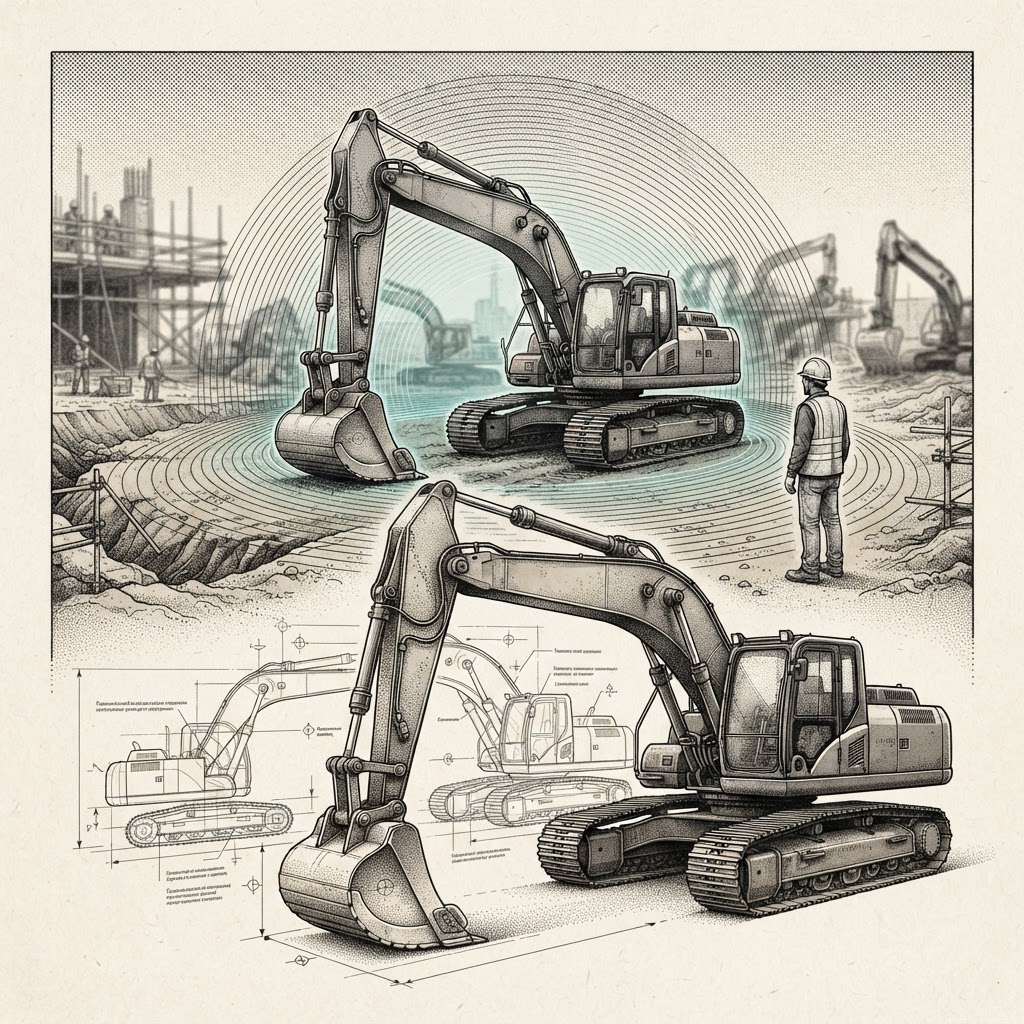
Caterpillar will make collision warning and collision mitigation technologies standard on the majority of its new construction machines throughout 2027, shifting safety systems from optional or separately specified equipment toward the baseline build. The announcement, reported by PR Newswire, describes a broad change in product specification, but leaves key commercial details open: Caterpillar did not say which models will be included, whether machine prices will change, or how the systems will be configured across different applications.
DIG Analysis — 2026-11-18: The move makes safety technology a more visible part of the machine itself, rather than an add-on that buyers must identify and purchase. That can raise the expected standard across the market, while putting pressure on manufacturers and suppliers to show that the systems work reliably in varied jobsite conditions and justify their cost.
A change in the default
Collision warning systems alert operators to a potential hazard; collision mitigation systems are intended to help reduce the likelihood or severity of an impact. The distinction matters commercially. A warning depends on the operator’s response, while mitigation may involve machine functions that act on the threat. Caterpillar’s announcement groups both under the broader effort, but does not specify the operating capabilities, sensor configurations or intervention limits for each machine.
Making these technologies standard changes the buying decision. Customers who previously weighed the feature against its incremental price may instead compare machines on the basis of a safety capability included in the base configuration. For Caterpillar, standardization could also simplify product ordering and increase the number of machines equipped with the systems. The company did not disclose expected fitment volumes, the timing by model family or whether the technology will be included in every geographic market.
The phrase “majority of its new construction machines” is consequential, but broad. It leaves room for exclusions and does not establish how the rollout will treat compact equipment, specialized machines or older models. Nor does the announcement specify whether features will be enabled at delivery, require customer configuration, or depend on additional hardware. Those details will determine how much the change affects real-world use rather than the equipment specification sheet.
“Caterpillar’s announcement makes collision warning and mitigation part of the expected machine, but it does not yet define the boundary of that expectation.”
DIG Analysis
Costs and proof
Standard equipment can improve adoption by removing a separate purchasing decision. It can also shift costs into the machine’s base price, even if Caterpillar does not identify a separate charge. Buyers will need to assess the full ownership case, including maintenance, calibration and replacement costs for sensors or other components. The company has not provided pricing, service requirements or data on collision reduction, so the financial and safety effects cannot yet be measured from the announcement alone.
Performance will depend on more than the presence of hardware. Dust, poor visibility, crowded work areas and changing site layouts can complicate detection. Operators also need to understand what the system can and cannot detect. If alerts are frequent or poorly matched to operating conditions, crews may come to disregard them; if intervention is limited, buyers may question what mitigation adds beyond a warning. Caterpillar has not described its training plan or the evidence it will use to assess effectiveness.
The change may also reset competitive comparisons. Other manufacturers could face pressure to include similar features as standard, or to distinguish their systems through capability, ease of service and demonstrated results. That response is not automatic: competitors may choose different rollout schedules, equipment classes or pricing structures. For now, Caterpillar has made a commitment covering most new construction machines in 2027, without publishing a model-by-model schedule or a measure of the expected reduction in jobsite hazards.