
Markets
CATCaterpillar$600.20-0.84%•
DEDeere & Co.$673.54-0.77%•
CNHCNH Industrial$11.91-0.50%•
AGCOAGCO Corp.$111.94+0.46%•
URIUnited Rentals$1124.56-1.28%•
ALTGAlta Equipment$5.32-6.01%•
TTCToro Company$105.89-0.90%•
HRIHerc Holdings$165.39-0.67%•
MGRCMcGrath RentCorp$128.68-1.00%•
MTWManitowoc$23.81-2.34%•
CATCaterpillar$600.20-0.84%•
DEDeere & Co.$673.54-0.77%•
CNHCNH Industrial$11.91-0.50%•
AGCOAGCO Corp.$111.94+0.46%•
URIUnited Rentals$1124.56-1.28%•
ALTGAlta Equipment$5.32-6.01%•
TTCToro Company$105.89-0.90%•
HRIHerc Holdings$165.39-0.67%•
MGRCMcGrath RentCorp$128.68-1.00%•
MTWManitowoc$23.81-2.34%•
Back to Newsdealership

CNH’s Scottish Reset Puts Dealer Scale Ahead of Standalone Coverage

Jon RossiJon RossiFounder & Editor-in-Chief October 5, 2026 3 min read

Twelve-month termination notices to three Case IH dealers signal a sharper move toward dual-brand outlets in Scotland. The shift may widen service capacity for selected partners, while putting local dealer economics and customer continuity under pressure.

CNH’s Scottish Reset Puts Dealer Scale Ahead of Standalone Coverage

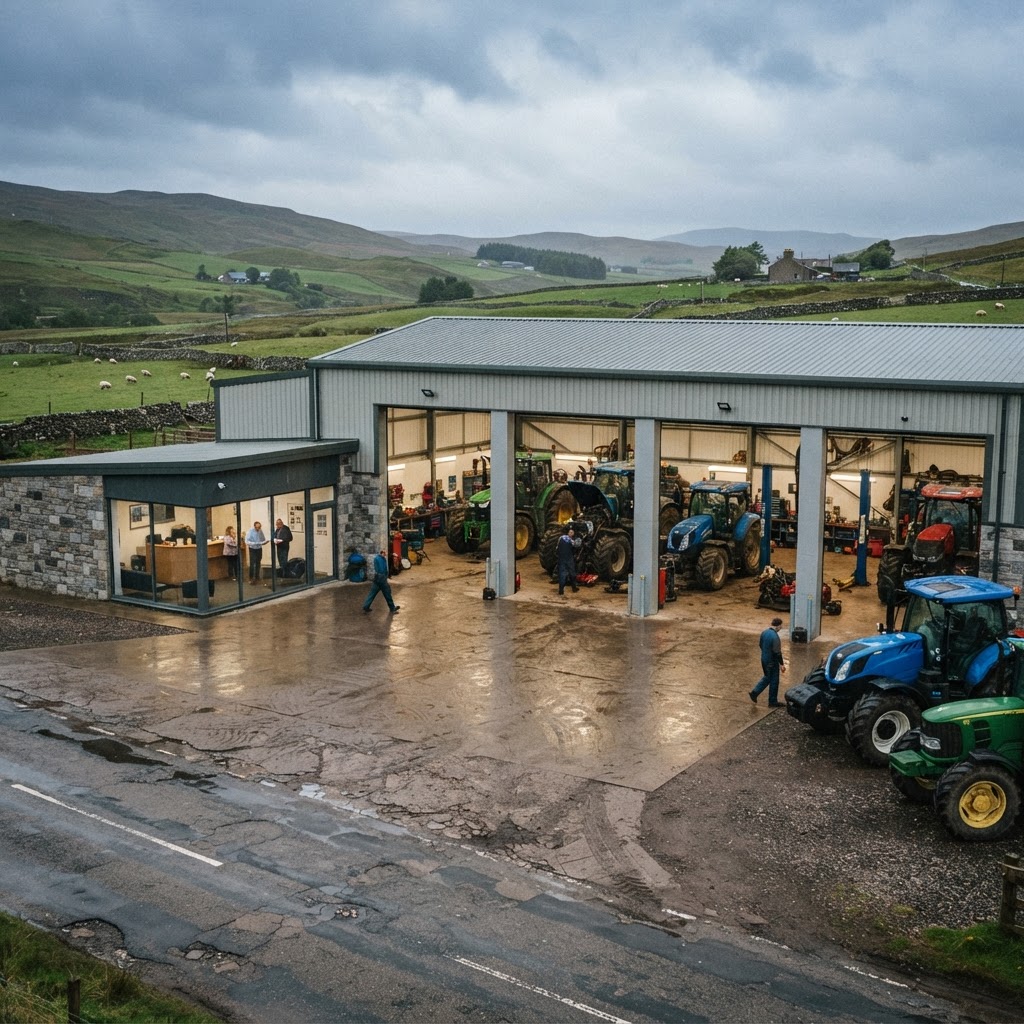
CNH Industrial has given three Case IH dealerships in Scotland 12-month termination notices as it moves toward a network built around dual-brand outlets. The decision places dealer structure, rather than product demand alone, at the center of the next phase of competition in the Scottish farm machinery market.

DIG Analysis — 2026-10-05: The strategy trades some local independence for broader partner responsibility. If existing dealers such as Agricar and Ravenhill take on expanded roles, CNH will be betting that fewer, more capable outlets can deliver stronger after-sales coverage without leaving gaps in a geographically dispersed market.

Consolidation shifts the channel’s center of gravity

The Scottish Farmer reported the notices and linked them to CNH’s move toward dual-brand dealerships. The company’s stated direction is to consolidate its dealer network and enhance after-sales support, with partners including Agricar and Ravenhill expected to assume broader responsibilities. The report does not establish the full future footprint, the detailed terms of the notices, or which locations and customer accounts will transfer.

That distinction matters. A dual-brand format can create a larger platform for parts, workshop capacity, and technical staffing. It can also make investment easier to justify when a single-brand site lacks sufficient sales volume or service throughput. But the benefits depend on execution: territory design, technician availability, parts inventory, and clear customer handovers will determine whether scale translates into better uptime.

For CNH, network consolidation offers a more concentrated set of commercial relationships and potentially more consistent standards. The trade-off is reduced dealer diversity and fewer independent points of accountability. If expanded partners cannot maintain response times across the territory, the apparent efficiency of a leaner network could be offset by longer travel distances, overloaded workshops, or slower parts delivery.

After-sales capacity will decide whether the reset works

In agricultural machinery, after-sales performance is not a secondary measure of dealer quality. Seasonal operating windows make the availability of trained technicians and parts a direct input into farm productivity. A machine that cannot be repaired quickly during planting or harvest can impose costs far beyond the service invoice, so customer confidence will depend on practical coverage, not the branding above the dealership door.

The twelve-month notice period gives CNH and affected businesses time to plan, but it also creates a transition risk. Customers need clarity on who will handle warranty work, service records, parts orders, and existing finance or maintenance arrangements. Staff may face uncertainty about their roles, while incoming partners must assess whether current facilities and teams can support a wider installed base. Weak communication could prompt customers to test rival brands before the new structure is fully in place.

“The restructuring aims to consolidate the dealer network and enhance after-sales support by expanding the responsibilities of existing partners.”

Source: The Scottish Farmer

A test case for dealer consolidation

The Scottish changes reflect a broader consolidation trend in agricultural machinery retail, where OEMs are seeking partners with the scale to fund facilities, inventory, digital systems, and specialist labour. That trend may improve operational resilience, but it can also raise the capital and management threshold for remaining an authorized dealer. Smaller operators may find fewer routes to continue independently, even when they have established local relationships.

CNH’s outcome should be judged against measurable service indicators: workshop utilization, technician coverage, parts fill rates, emergency response times, and customer retention across the affected territories. The company will also need to show that expanded partners can handle the added workload without weakening service at their existing sites. Until the new arrangements are defined and tested through a full agricultural season, the strategic logic remains a proposition rather than a proven result.

Who This Affects

OEM Impact

CNH channel managers will need to specify territory boundaries, transfer procedures, service-level targets, and warranty accountability before notices expire. Weak execution could push Case IH customers toward competing brands and make future network consolidation harder to secure.

Dealer Impact

Dealer principals at affected outlets must plan for contract exit, staff retention, asset utilization, and customer-account transitions during the 12-month notice period. Agricar and Ravenhill will need to fund added technicians, parts inventory, and workshop capacity while protecting service levels at their current locations.

Contractor Impact

Agricultural contractors and farm operators in affected areas should confirm which outlet will support their machines, honor warranties, and supply urgent parts after the transition. Longer travel distances or overloaded workshops could increase downtime during planting and harvest, making service response commitments a key factor in future equipment purchases.

Startup Impact

Series A founders selling dealer software, remote diagnostics, or parts-planning tools may find larger dual-brand groups offer a more concentrated route to customers. However, fewer independent dealers could reduce the number of prospective accounts and increase the need to prove measurable uptime or labor-efficiency gains to centralized buyers.

Dealmaker Impact

PE dealmakers and agricultural-equipment investors should assess how OEM authorization, territory rights, and customer retention affect the value of independent dealer assets. Consolidation may create acquisition opportunities for scaled groups, but contract termination risk and the cost of expanding service coverage can weaken projected returns.

Back to News
CNH IndustrialCase IHScottish dealershipsdealer consolidationafter-sales serviceAgricultural machinery