 Translate

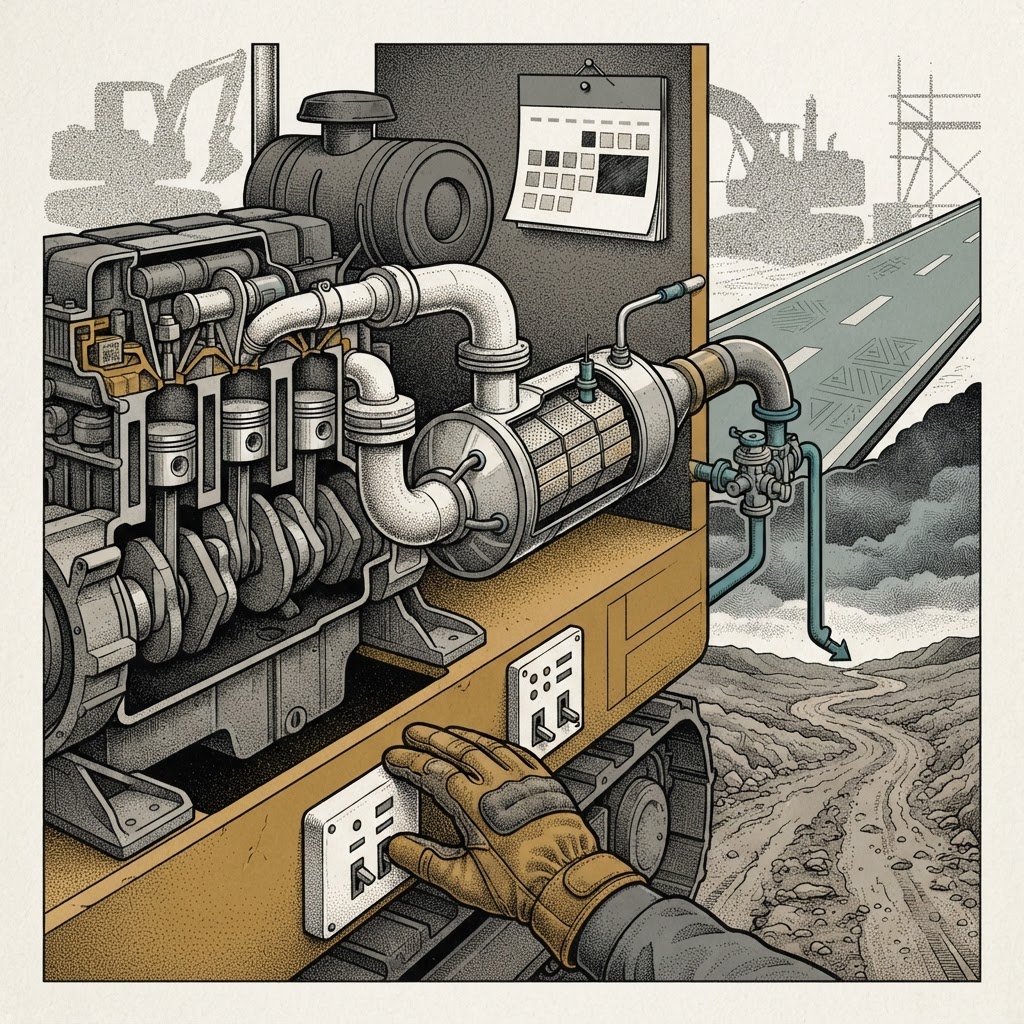
DEUTZ will change its selective catalytic reduction (SCR) inducement strategy for off-highway internal combustion engines in the fourth quarter of 2026, a move that the company says will give original equipment manufacturers and machine operators greater flexibility in key global markets. The announcement points to a change in how engines respond when emissions-control requirements are not met, though DEUTZ has not disclosed the specific thresholds or operating consequences under the updated approach.
DIG Analysis — 2026-10-21: The timing gives equipment manufacturers more than a year to assess the change before it takes effect. The commercial value will depend on details not yet made public: which engine families and markets are covered, how inducement behavior will change, and whether regulators in each jurisdiction accept the revised strategy.
What changes, and when
SCR systems use a reagent, commonly diesel exhaust fluid, to reduce nitrogen oxide emissions. Inducement is the system response intended to prompt action when a relevant fault or operating condition arises. Depending on the engine and regulatory regime, that response can affect machine performance or limit operation. Altering the strategy therefore has implications beyond software calibration: it shapes how emissions compliance is enforced in the field and how machines behave when a system fault is unresolved.
In its announcement, as reported by Powertrain International, DEUTZ described the update as an optimization intended to improve flexibility across important global markets. The company did not specify whether the change concerns warning sequences, fault handling, power limits, time allowances, or some combination. Nor did it identify the markets or engine platforms in scope. Those omissions matter because off-highway requirements differ by jurisdiction, and a control strategy that is acceptable in one market may not be appropriate in another.
The fourth-quarter 2026 start date is also significant. It places the change on a product-planning horizon rather than presenting it as an immediate remedy for machines already in service. OEMs will need to establish whether the revised strategy applies to new engine orders, future model years, or field updates to existing equipment. DEUTZ has not said how it will handle those distinctions.
Compliance and operating trade-offs
Inducement settings sit between two competing demands. Manufacturers must meet emissions rules and demonstrate that onboard controls can deter continued operation when emissions systems are compromised. At the same time, equipment owners need machines to remain productive when a fault requires diagnosis, parts, or service access. A more flexible strategy could reduce avoidable downtime in some circumstances, but the available announcement does not establish which circumstances DEUTZ intends to address.
That uncertainty leaves an important question for regulators and customers: flexibility in control behavior is not the same as a change in emissions obligations. DEUTZ has not said that certification requirements will change, and there is no basis in the announcement to conclude that the revised strategy relaxes compliance standards. The practical distinction will be in the system’s response to faults and the process for returning an affected machine to normal operation.
There is also a cost to changing course. OEMs may have to review integration plans, validation work, service documentation, and operator guidance. If the update applies across several engine families or markets, manufacturers will need clear mapping of which configurations receive which calibration. Without that information, the announcement is a signal of intent, not yet a specification that product teams can implement.
Details to watch
For DEUTZ, the change reflects continuing work on emissions-management systems across industrial and construction applications. The company’s broad customer base spans machines with different duty cycles and service models, making a single response strategy difficult to apply uniformly. A market-specific approach may offer room to account for those differences, while increasing the burden of communicating and supporting multiple configurations.
The next useful disclosures will be technical and procedural: affected engine series, geographic scope, treatment of machines already operating, and the conditions that trigger each inducement stage. OEM engineering and compliance teams will also need to know how the update aligns with certification and whether implementation requires new validation or documentation. Powertrain International reported the planned effective period and DEUTZ’s stated aim, but the company has not yet provided those operating details.
“These changes are designed to provide OEMs and machine operators with greater flexibility in key global markets.”
DEUTZ, as reported by Powertrain International
For now, the firm date is the fourth quarter of 2026. The market scope and the revised inducement behavior remain unspecified.
