
Powered by Google TranslateTranslate
Markets
CATCaterpillar$510.45-5.01%•
DEDeere & Co.$609.25-2.50%•
CNHCNH Industrial$10.74-2.98%•
AGCOAGCO Corp.$100.93-1.91%•
URIUnited Rentals$973.43-8.13%•
ALTGAlta Equipment$4.33-8.46%•
TTCToro Company$100.82-1.70%•
HRIHerc Holdings$133.55-11.54%•
MGRCMcGrath RentCorp$113.45-6.38%•
MTWManitowoc$20.31-5.58%•

Develon Targets the Production Middle Ground With Its 33-Ton DX300LC-9

Jon RossiJon RossiFounder & Editor-in-Chief October 4, 2026 3 min read

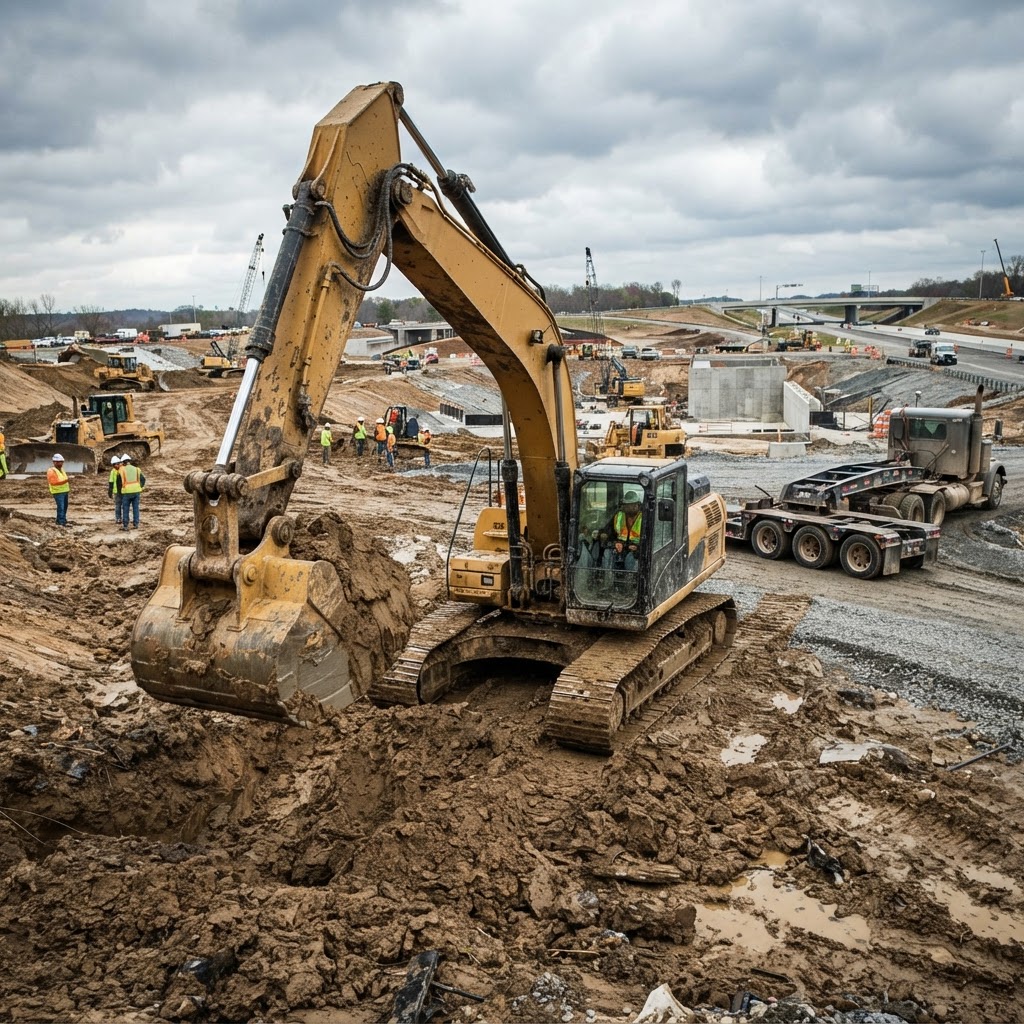
The DX300LC-9 pairs heavy-duty digging and demolition capability with a transport profile designed around standard lowboy trailers. That combination addresses a practical constraint for contractors moving production-class excavators between jobsites.

Develon Targets the Production Middle Ground With Its 33-Ton DX300LC-9

Develon’s new 33-ton DX300LC-9 excavator is aimed at a consequential point in the construction fleet: large enough for demanding digging and demolition work, yet engineered to fit on standard lowboy trailers. The launch makes transportability part of the machine’s core proposition, not an afterthought.

DIG Analysis — 2026-10-04: The machine’s commercial case rests on reducing friction between production capacity and jobsite mobility. Contractors weigh an excavator’s output against the cost, availability and requirements of moving it; a model designed for standard lowboy transport could widen the range of jobs where a 33-ton machine is practical.

A production-class machine with logistics in view

Develon positions the DX300LC-9 to balance heavy-duty digging and demolition performance with transportability. That pairing matters because an excavator’s effective value is not determined solely by its performance once it reaches the work. Mobilization schedules, hauling arrangements and the ability to move between projects also affect utilization and project economics.

Equipment World reported the launch and highlighted the machine’s ability to fit on standard lowboy trailers. That design target speaks to a routine but significant fleet decision: whether a contractor can move a machine using commonly available transport or must plan around a more specialized hauling setup. The story does not provide transport dimensions, operating specifications or performance comparisons, so the practical advantage should be assessed against the complete machine and haul configuration.

For contractors operating across infrastructure, site preparation and demolition work, the 33-ton class can represent a production sweet spot. It offers more capacity than smaller excavators while remaining more manageable to deploy than heavier machines, depending on local rules, route conditions and the trailer combination. Develon is positioning the DX300LC-9 to serve that middle ground.

Why trailer fit can shape fleet economics

Transportability can influence more than the haul itself. If a machine can move on standard lowboy equipment, fleet planners may have more options when dispatching, scheduling and sourcing outside transport. The benefit is conditional: contractors still need to verify actual weights, attachments, permitted loads, route restrictions and the requirements of their carrier. Standard trailer compatibility does not eliminate permitting or logistical checks.

The intended trade-off is clear. A contractor wants enough machine to sustain production on demanding work, without allowing mobilization complexity to limit where that capacity can be deployed. That calculation becomes particularly relevant for firms that shift equipment between shorter-duration projects or serve dispersed infrastructure sites. A machine that is easier to transport can support higher utilization only if it also matches the project’s output needs and ownership costs.

“The DX300LC-9 is designed to balance heavy-duty digging and demolition performance with transportability.”

Develon product positioning, as reported by Equipment World

That positioning is a statement of design intent, not proof of lower total cost. Buyers will need to compare the machine’s specifications, fuel use, service requirements and resale prospects with competing models. Transport fit adds a meaningful decision variable, but it does not replace the fundamentals of productivity and lifecycle economics.

Portfolio expansion puts execution under scrutiny

The DX300LC-9 expands Develon’s mid-range portfolio, giving the company another offering aimed at production-oriented construction and infrastructure projects. The strategic question is whether the machine’s transportability and work capability translate into a distinct reason to choose it in a crowded excavator segment. That will depend on delivered performance, availability, dealer support and the economics of ownership.

For the market, this launch reinforces how product positioning increasingly joins jobsite capability to the practical realities of getting equipment there. Develon has identified a logistical requirement that contractors recognize: the need to move a substantial excavator without making every deployment a specialized operation. The next test will be customer validation in the field, where transport constraints, production rates and maintenance experience determine whether the intended balance holds up.

Who This Affects

OEM Impact

Develon product leaders and OEM channel managers will need to substantiate the lowboy-fit proposition with clear transport configurations, weight data and operating specifications. Product planning teams at competing manufacturers may face pressure to demonstrate comparable mobility without compromising production capacity.

Dealer Impact

Dealer principals and sales managers can use transportability as a practical qualification point for contractors moving between dispersed projects, but they will need precise guidance on trailer, attachment and permitting requirements. Parts and service teams should prepare for fleet comparisons that weigh support coverage and uptime alongside the machine’s haul profile.

Contractor Impact

Fleet operators and construction procurement managers should compare the DX300LC-9’s actual loaded transport configuration, productivity and lifecycle costs against their current 30-ton-class machines. Easier access to standard lowboy transport could expand deployment options, but route restrictions, carrier availability and job-specific output still determine the realized benefit.

Startup Impact

Construction-equipment technology startups focused on fleet dispatch, telematics or equipment logistics may find a useful customer problem in coordinating machine moves around trailer availability and project schedules. Series A investors should treat the launch as evidence of persistent logistics demand, not proof of a new market, and look for adoption and utilization data from fleets.

Dealmaker Impact

PE dealmakers and strategic acquirers evaluating equipment dealers, rental businesses or hauling providers should account for how production-class machines are mobilized across local markets. The DX300LC-9’s positioning could influence fleet mix and transport demand, but diligence should test whether standard lowboy compatibility changes rental utilization, resale values or hauling economics in practice.

Back to News
DevelonDX300LC-9excavatorsconstruction equipmentequipment transportinfrastructurefleet strategy