 Translate

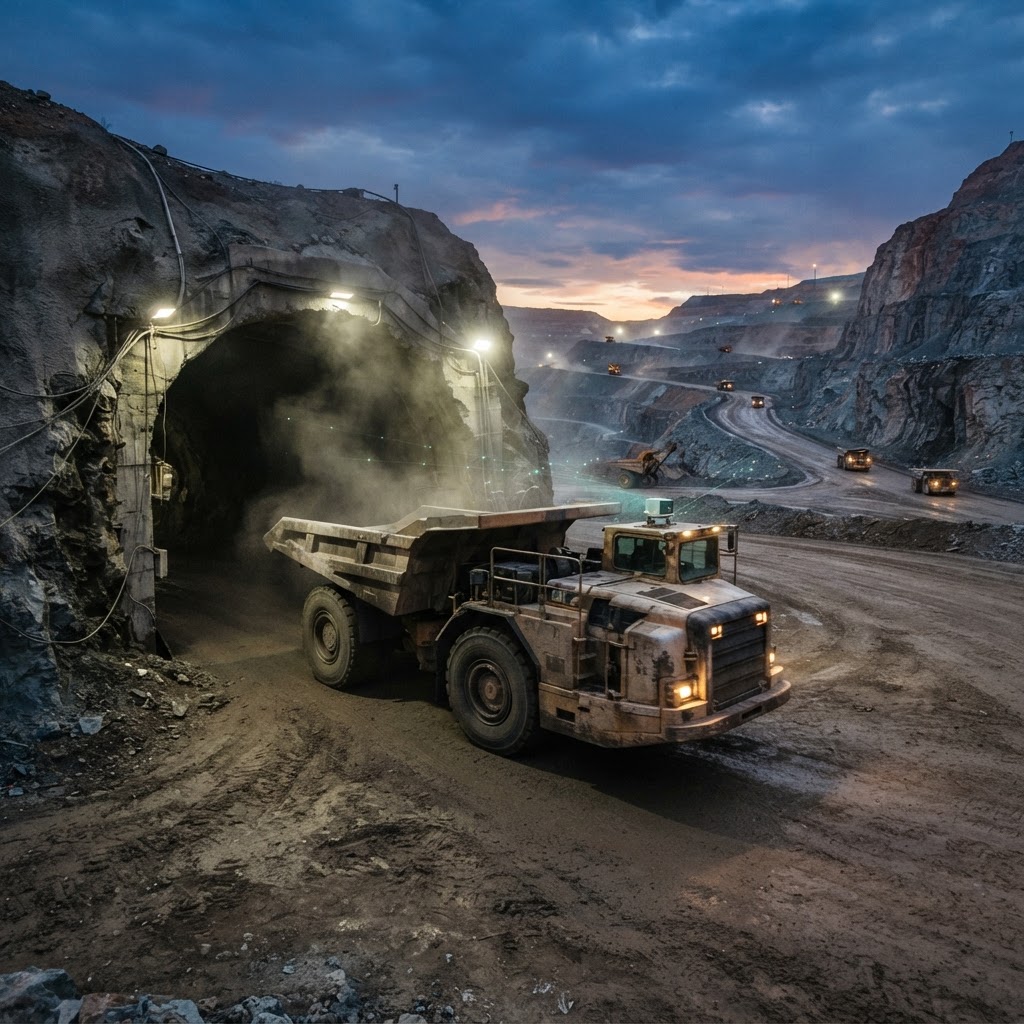
Epiroc is extending its Deep Automation platform beyond the underground operating envelope, enabling autonomous mine trucks to work in surface environments as well as below ground. The change matters because it targets the full haul cycle rather than a single controlled section of a mine: loading, underground travel, portal transitions, surface haulage, and destination handling.
DIG Analysis — 2026-09-29: Epiroc’s move turns underground autonomy from a site-specific productivity tool into a broader fleet-control proposition. The commercial question is no longer whether an autonomous truck can repeat a route underground, but whether the same operating logic can manage changing terrain, visibility, traffic, and route conditions across the mine.
From fixed underground routes to mixed environments
Underground automation has typically benefited from constrained roadways, defined production areas, and relatively predictable traffic patterns. Surface operations introduce a different set of demands. Routes may be wider but less bounded, lighting changes throughout the day, weather can affect sensing and traction, and interactions with service vehicles, light vehicles, personnel, and loading equipment become more variable.
Epiroc’s expanded platform uses 3D LiDAR to support localization, mapping, and obstacle detection in those surface conditions. The sensor data helps the truck establish where it is, understand the surrounding operating area, and identify objects or changes that require a response. That capability is central to linking underground and surface segments into one autonomous cycle.
According to Mining Monthly, the development is designed to allow underground trucks to operate autonomously after emerging into surface environments. The significance is practical: a mine may be able to preserve one automation architecture as material moves between different physical settings instead of creating separate control systems for each segment.
“The boundary between underground and surface automation is becoming an engineering problem to solve, not a permanent operating constraint.”
Why the portal transition is strategically important
The portal is more than a geographic dividing line. It is a handoff point where operating rules, communications coverage, navigation references, and traffic controls can change. If autonomy stops at that boundary, people must resume control, dispatchers must manage a second operating mode, and the mine loses part of the potential value of automation.
Extending autonomy across the transition could improve equipment utilization and reduce interruptions in material movement. It may also simplify the operating model by allowing dispatch and fleet-management teams to monitor a continuous cycle rather than coordinate separate underground and surface processes. Those gains will depend on site-specific validation, including communications reliability, geofencing, emergency procedures, road maintenance, and interaction with manually operated equipment.
The LiDAR capability also points to a broader shift in the technical requirements for autonomous mining. Underground systems can rely heavily on mapped routes and controlled access. Surface deployment requires more capable perception and localization because the operating scene can change faster. The platform therefore has to combine prior maps with live sensor interpretation, while maintaining safe behavior when conditions differ from the expected route.
Automation moves toward the complete material-flow problem
Epiroc’s announcement places the focus on an end-to-end autonomous cycle. That framing is important for mine planners evaluating automation investments. A truck that operates autonomously for only part of a route may still deliver value, but the mine must account for control handoffs, labor requirements, safety procedures, and possible bottlenecks at the boundary.
Surface capability also broadens the range of mine designs that can be considered for autonomous hauling. Operations with underground extraction feeding surface stockpiles, crushers, or waste facilities could have a clearer path to connecting those steps. The technology does not remove the need for disciplined road design, fleet rules, maintenance, or human oversight. It does, however, give operators a platform for testing whether those processes can be coordinated under one autonomous operating model.
For Epiroc, the development strengthens the case for selling automation as a system capability rather than as an isolated truck feature. The next proof point will be operating performance in real mine conditions: availability, intervention frequency, obstacle response, route-change management, and the ability to scale from a demonstration vehicle to a working fleet.
