
Markets
CATCaterpillar$510.45-5.01%•
DEDeere & Co.$609.25-2.50%•
CNHCNH Industrial$10.74-2.98%•
AGCOAGCO Corp.$100.93-1.91%•
URIUnited Rentals$973.43-8.13%•
ALTGAlta Equipment$4.33-8.46%•
TTCToro Company$100.82-1.70%•
HRIHerc Holdings$133.55-11.54%•
MGRCMcGrath RentCorp$113.45-6.38%•
MTWManitowoc$20.31-5.58%•
Back to Newsmarket-intelligence

Equip Expo Puts Dealer Relationships Alongside Product Launches

Jon RossiJon RossiFounder & Editor-in-Chief October 23, 2026 3 min read

Equip Expo 2026 opened in Louisville as manufacturers, dealers and contractors gathered around new equipment and technology. The event’s business significance will depend less on the show floor than on whether introductions translate into orders and durable channel relationships.

Equip Expo Puts Dealer Relationships Alongside Product Launches

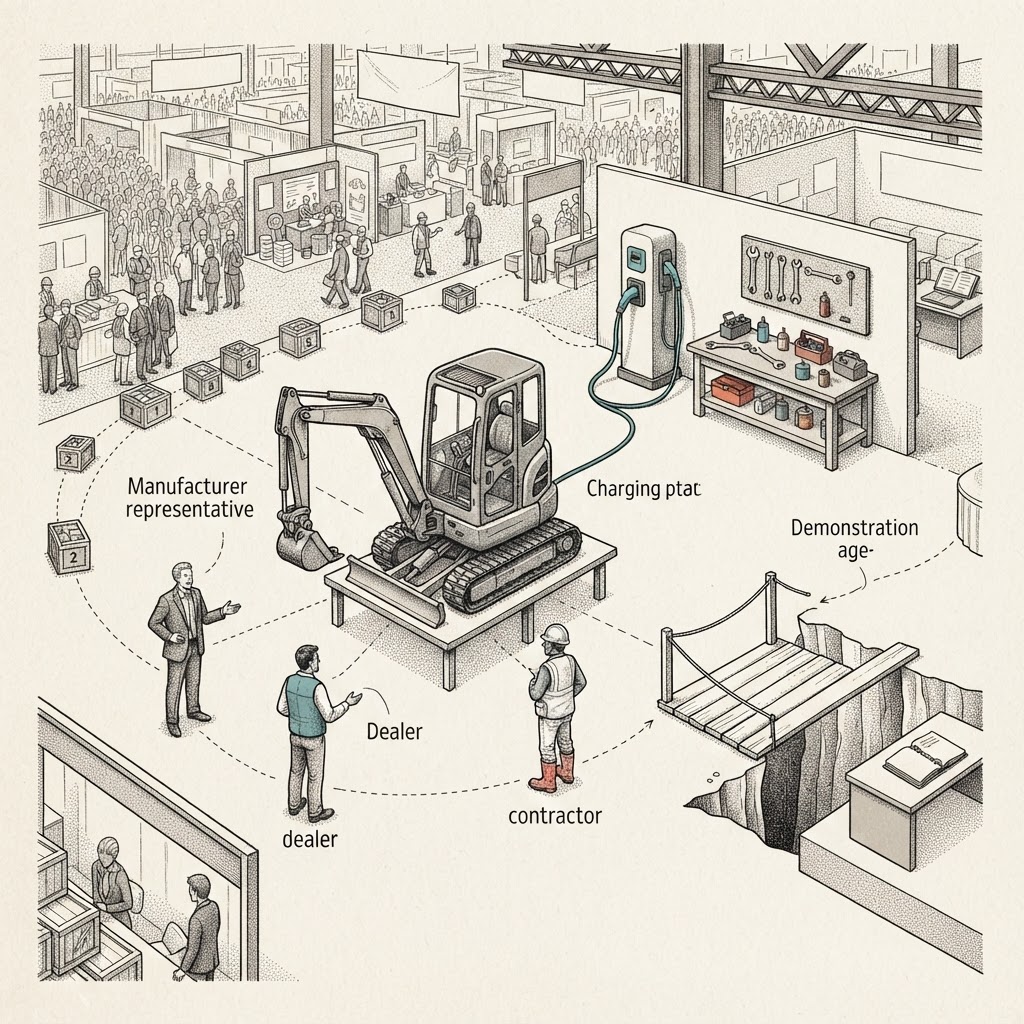
Equip Expo 2026 opened in Louisville with thousands of contractors, dealers and manufacturers in attendance, putting product launches and commercial relationships on the same agenda. For equipment makers, the show is a venue to present new lines and technology integrations; for the rest of the channel, it is a chance to assess what may be sellable, serviceable and financeable in the year ahead.

DIG Analysis — 2026-10-23: The gathering’s value lies in its concentration of buyers and intermediaries, but attendance alone does not establish demand. The test is whether conversations at the show produce orders, dealer commitments or field trials, particularly as companies weigh supply-chain reliability and the cost of electrification.

A channel meeting point

Equip Expo’s role extends beyond demonstrations. Contractors can compare equipment in one place, while dealer representatives can gauge customer interest and discuss product support with manufacturers. That concentration can shorten the distance between a product announcement and a dealer’s judgment about whether it belongs in an inventory plan.

Metal Pless, which announced its participation in a company post, is among the firms using the event to engage with the industry. Its announcement identifies the show as a setting for equipment and dealer networking. It does not disclose a new product, order commitments, pricing, or a specific commercial agreement. Those omissions matter: a company’s presence at a trade show is evidence of outreach, not evidence of sales.

For manufacturers, the economics of exhibiting depend on more than the number of visitors. A new product has to fit customer requirements and dealer capabilities, including parts availability, technician training and the ability to support equipment through peak operating periods. A strong reception on the show floor may indicate interest; it cannot, by itself, establish the cost of converting that interest into revenue.

“The event serves as a critical hub for dealmaking and networking.” Attribution: Metal Pless, in its Equip Expo 2026 announcement.

Electrification meets operating constraints

Industry leaders are also using the event to discuss equipment electrification and supply-chain resilience in North America. The two subjects are connected. Electric equipment can change the requirements for components, service expertise and job-site infrastructure, while procurement teams remain exposed to delays or shortages in parts and materials.

The summary of the event points to discussion, not settled outcomes. It offers no measure of how many electric machines were introduced, how much of the market is ready to adopt them, or what manufacturers expect customers to pay. For contractors, the purchase decision will turn on operating costs, charging access, utilization and downtime as well as acquisition price. For dealers, a new powertrain can require investment in training and service equipment before the volume of machines justifies that expense.

That leaves room for disagreement between manufacturers’ product plans and buyers’ near-term economics. OEMs may see technology integration as a way to differentiate equipment and respond to customer requirements. Contractors facing tight budgets may defer purchases if the return is uncertain or if charging arrangements complicate work across multiple sites. Suppliers, meanwhile, must demonstrate that new components can be sourced consistently enough to support production and parts service.

What the show can signal

Trade shows provide a useful, if incomplete, read on the market. Meetings can reveal which product features draw attention and where channel partners see service or supply risks. They are less reliable as a measure of purchase intent, especially when the announcement provides no order totals, customer commitments or forecasts.

That distinction will matter in the months after Louisville. Manufacturers will need to turn interest into dealer stocking decisions and customer trials. Dealers will be weighing inventory exposure against the prospect of losing a sale to a competitor. Contractors will compare new equipment with the option of extending the life of machines already in their fleets.

Equip Expo has brought those parties together while the industry discusses electrification and supply resilience. The company announcement confirms Metal Pless’s participation; it does not specify a product unveiling or transaction. The next measurable signals will be orders, dealer commitments and field deployments, none of which were detailed in the announcement.

Who This Affects

OEM Impact

OEM channel managers can use the show to test dealer interest in new lines and identify training, parts and service requirements before committing to broader rollout. Without disclosed orders or customer trials, product announcements remain a weak demand signal, and manufacturers may carry inventory or development costs ahead of proven uptake.

Dealer Impact

Dealer principals and equipment sales managers can compare customer reactions across brands and raise concerns about inventory, technician capacity and parts availability directly with manufacturers. Electrified equipment may require added service investment, creating a risk that smaller outlets bear costs before local fleet demand supports them.

Contractor Impact

Fleet managers and landscaping contractors can evaluate equipment and discuss operating requirements with manufacturers and dealers, but a show-floor demonstration cannot establish lifecycle cost or job-site charging feasibility. If supply constraints persist, contractors may face longer waits for new machines and continue extending the service life of existing fleets.

Startup Impact

Early-stage equipment and technology companies can use concentrated access to dealers and contractors to identify trial partners and product gaps. However, without visible order commitments, Series A investors should distinguish conference interest from repeatable sales; established OEM service networks may also raise the bar for startups seeking adoption.

Dealmaker Impact

PE dealmakers and strategic buyers can treat dealer relationships, service capacity and technology readiness as diligence themes when assessing equipment businesses. The event supplies no disclosed transaction or financial data, so it cannot support valuation conclusions; supply-chain exposure and the cost of electrification remain key diligence questions.

Back to News
Equip ExpoMetal Plessequipment dealerselectrificationsupply chaincontractors