
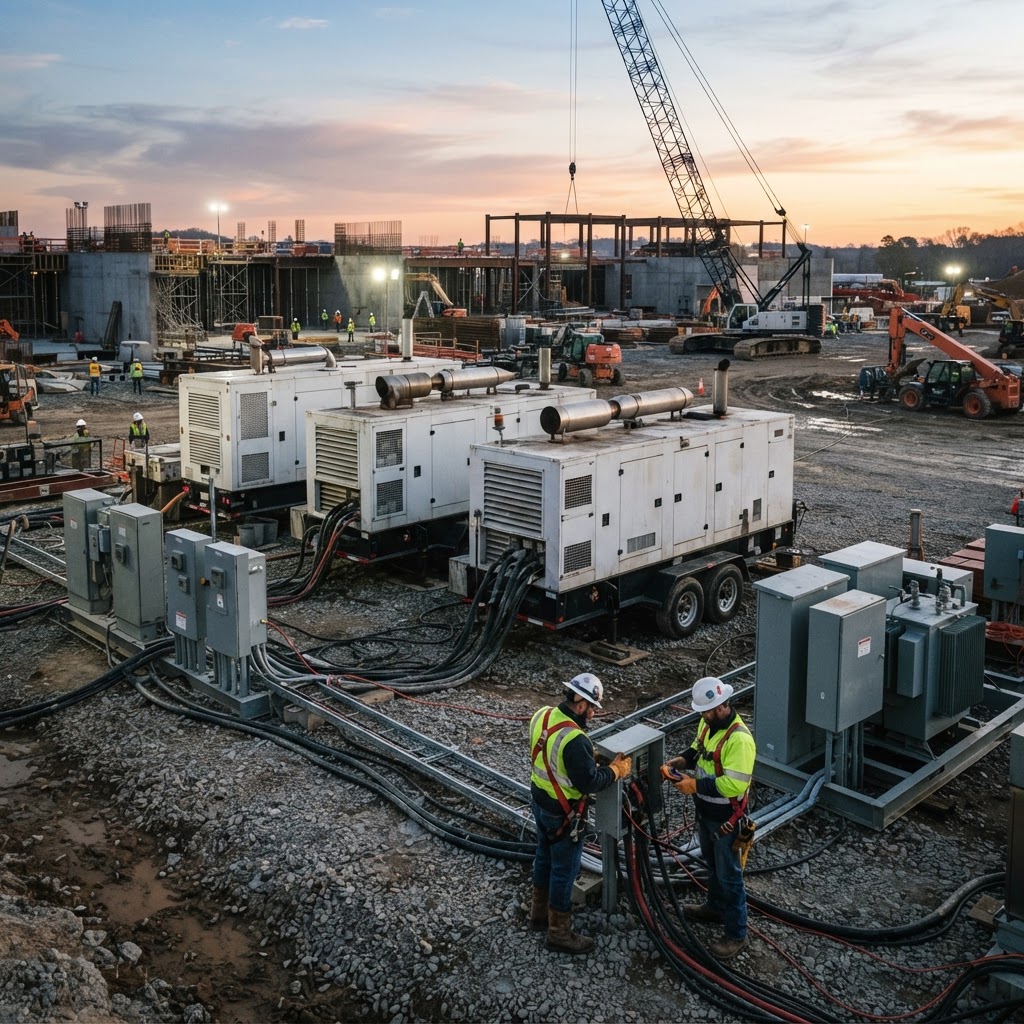
EquipmentShare and Cummins have signed a multi-year fleet agreement that will make EquipmentShare a primary rental and distribution channel for Cummins power solutions, with a stated objective of deploying 1 gigawatt of natural gas generation capacity across the United States. The arrangement targets a practical constraint facing large energy and infrastructure projects: construction schedules are advancing faster than local utility interconnections.
DIG Analysis — 2026-09-29: The significance is not simply the size of the capacity target. It is the creation of a coordinated rental channel for mobile generation, backed by a national jobsite network and connected equipment data. That combination could make temporary power procurement more predictable for projects that cannot wait years for permanent service.
A capacity problem moving onto the jobsite
Large data, industrial, energy and infrastructure developments increasingly require substantial electricity before permanent substations, transmission upgrades or utility connections are available. Developers and general contractors must therefore bridge the gap with temporary generation, often across multiple sites and changing phases of construction.
Natural gas generators are suited to that role because they can provide firm power where pipeline access or delivered fuel logistics are workable. The EquipmentShare-Cummins agreement gives the manufacturers' equipment a defined route into projects that need capacity quickly, while giving customers a rental option rather than requiring immediate ownership of an entire power fleet.
The 1 gigawatt figure should be read as a deployment ambition, not as a single project order. Reaching it will depend on equipment availability, permitting, fuel infrastructure, emissions requirements and the ability to position, service and redeploy units across regions. Those execution details will determine how much of the announced capacity becomes usable field power.
Why the channel structure matters
EquipmentShare brings more than rental inventory to the arrangement. Its connected jobsite platform can provide visibility into equipment location, utilization, operating condition and service needs. For mobile power, that information can help coordinate transfers between projects, identify underused assets and support maintenance planning for equipment operating under demanding load profiles.
Cummins, meanwhile, supplies established generator technology, manufacturing scale and technical support. A channel relationship that combines those capabilities can reduce friction between the power manufacturer, rental provider and project team. It also creates a clearer commercial path for contractors that may need generation for months or years but do not want to own assets after the project phase ends.
“This collaboration reflects our commitment to providing reliable, scalable power solutions that help our customers meet the growing demand for electricity.”
EquipmentShare and Cummins, in the company announcement
The arrangement also places greater importance on field support. Mobile generation is not a simple drop-and-go rental category at this scale. Fuel planning, synchronization, load management, commissioning, emissions compliance and rapid service response can determine whether temporary power protects a schedule or becomes another source of delay.
The competitive and operational read-through
For the rental market, the agreement expands the role of heavy equipment providers into a higher-specification power segment. It may encourage other manufacturers and rental companies to secure similar arrangements, particularly as utility bottlenecks affect semiconductor, battery, data center, pipeline and industrial construction.
For customers, the immediate question is regional execution. EquipmentShare will need sufficient inventory, trained technicians, approved service coverage and dependable fuel solutions near the projects creating demand. Cummins will need to support a distributed rental fleet while maintaining product availability and lifecycle performance.
The deal also establishes connected data as an operating requirement rather than a secondary feature. If utilization and condition data can be tied to dispatch, maintenance and project schedules, mobile generation becomes easier to manage as a portfolio. If not, the 1 gigawatt target will remain primarily a capacity statement. The partnership's real test will be whether it converts stranded construction time into available electrical capacity, project by project.