 Translate

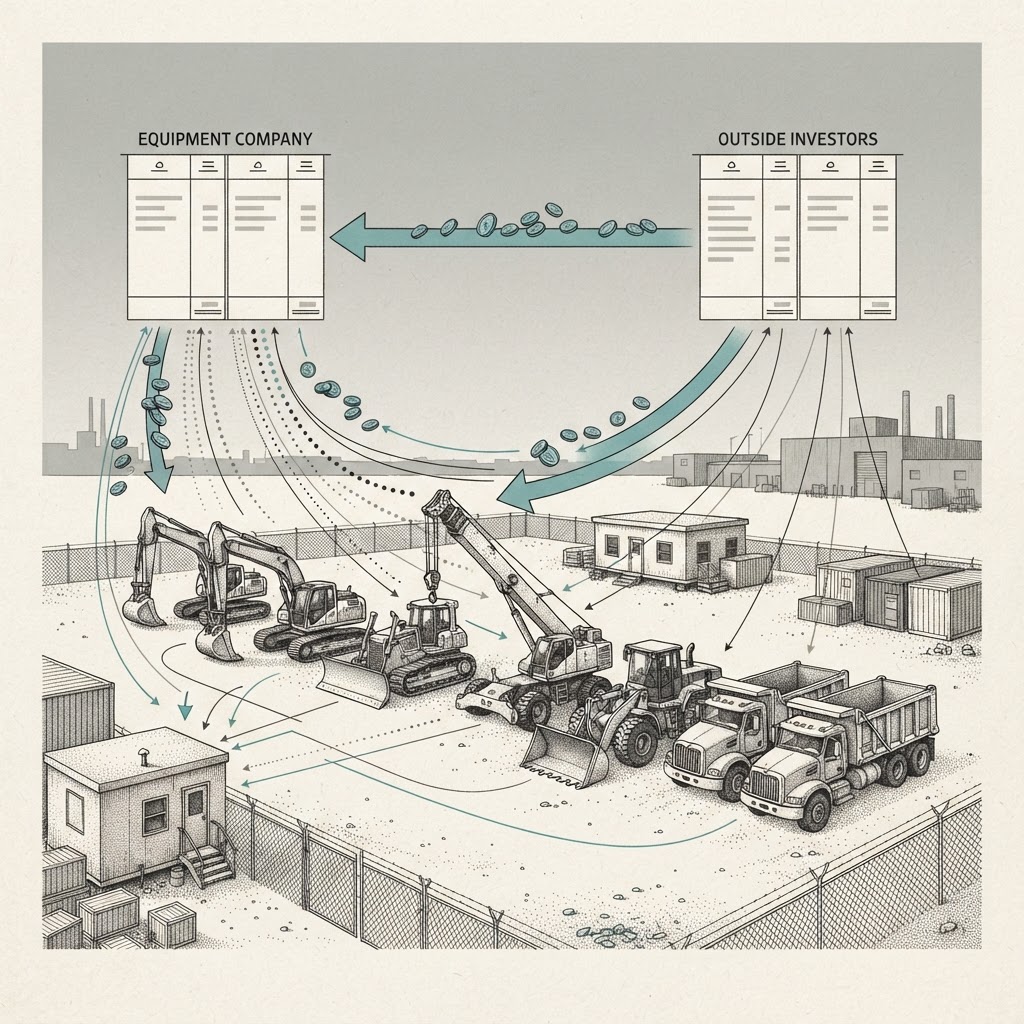
EquipmentShare’s third-quarter revenue rose 55.3% from a year earlier to $1.5 billion, while payouts to investors in its OWN equipment-financing program increased 37.3% to $254 million. The results point to a rental business expanding with outside capital, even as the pace of equipment sales into the program outstripped growth in payouts.
DIG Analysis — 2026-11-15: The figures suggest EquipmentShare is using third-party financing to add fleet capacity without relying solely on its own balance sheet. But the reported growth rates do not show the cost of that capital, the program’s investor returns, or how much of the company’s expansion depends on continued investor demand.
The funding mechanism
OWN allows third-party investors to finance equipment used in EquipmentShare’s fleet. The company reported that equipment sales to program participants increased 133.7% in the quarter. Payouts to those participants rose to $254 million, according to Equipment Finance News, which reported the results.
The gap between those rates matters. Sales into the program grew far faster than payouts, a difference that may reflect the timing of equipment purchases and distributions. It is not, on its own, evidence of improving or deteriorating economics. The reported figures do not specify the assets’ utilization, the duration of financing arrangements, or whether payout obligations vary with rental performance.
For EquipmentShare, the structure can reduce the amount of company capital tied up in fleet ownership and support growth in rental capacity. Investors, meanwhile, fund equipment and receive payouts under program terms that were not detailed in the reported figures. The arrangement shifts part of the funding burden beyond the company, but it does not remove the underlying risks of asset values, maintenance costs, or uneven rental demand.
“Equipment sales to program participants surged 133.7% as the company continues to scale its capital-light fleet model.”
Equipment Finance News, reporting on EquipmentShare’s third-quarter results
Growth and exposure
Revenue growth of 55.3% gives the financing activity a broader operating context. A larger rental business can generate more revenue from equipment, but fleet expansion also requires capital and carries costs whether machines are earning or idle. The quarter’s revenue and program figures do not disclose rental margins, fleet utilization, or the share of equipment funded through OWN.
Those omissions limit what investors can infer about the model’s durability. A rising payout total establishes that more money flowed to program participants; it does not reveal the yield on their invested capital or whether those payments are supported by current rental cash flow, equipment sales, or other sources. Nor do the reported numbers identify how much equipment remains on EquipmentShare’s balance sheet.
EquipmentShare did not, in the reported account, provide further detail on OWN’s financing terms or the composition of its investor base. Without those disclosures, the quarter’s growth rates cannot answer how the program would perform if equipment values weakened, borrowing costs increased, or rental demand slowed. The figures do establish that the model is expanding alongside the company: sales to program participants rose more than twice as fast as total revenue.
What the numbers leave open
The financing structure may help EquipmentShare grow its fleet while conserving corporate capital, but its value depends on the economics for both sides. Investors need returns that compensate for funding and asset risk. EquipmentShare needs continued access to that funding on terms that leave rentals profitable after operating and financing costs.
The reported quarter offers evidence of scale, not a full account of those economics. Revenue reached $1.5 billion, and OWN payouts reached $254 million. Whether the gap between those totals and the program’s faster-growing equipment sales reflects timing or a lasting change in the financing mix remains undisclosed.
