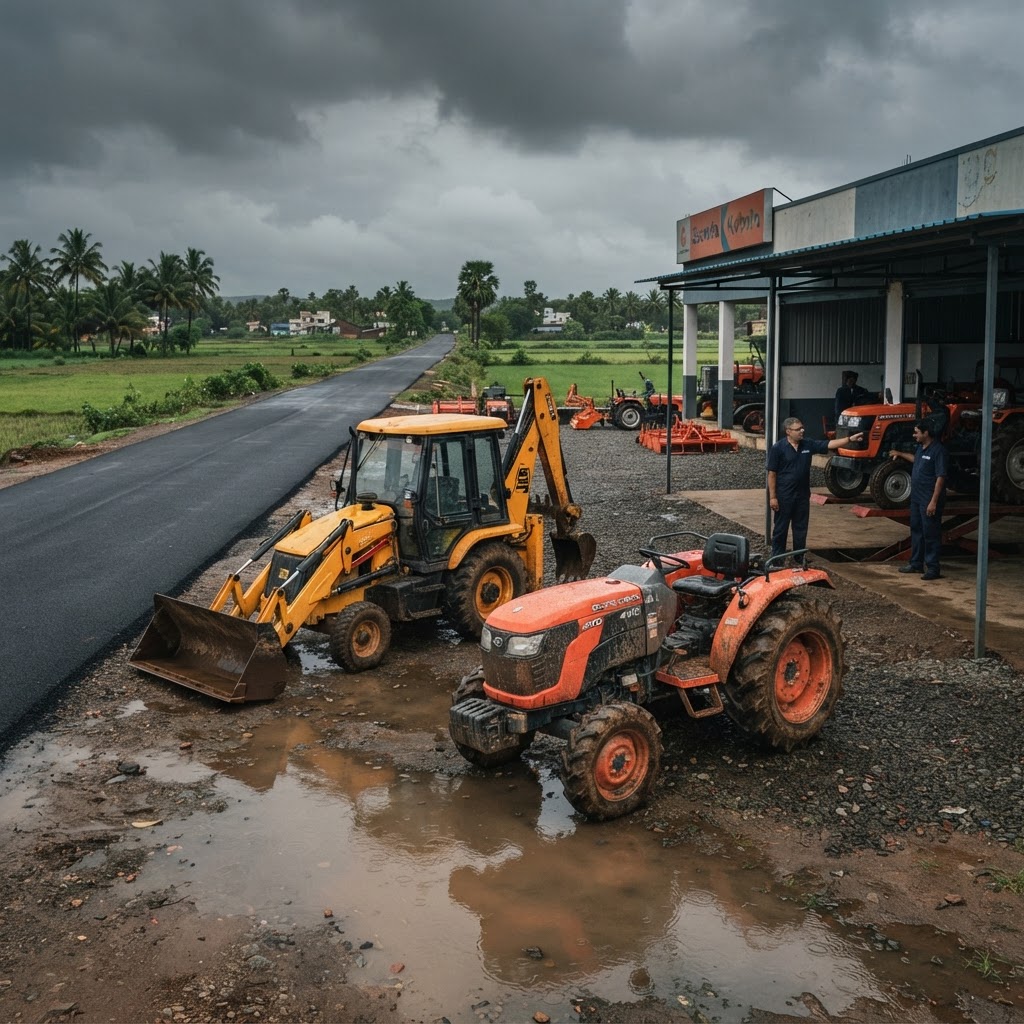
Escorts Kubota reported a strong July with construction equipment volumes rising 49.2% to 534 units and tractor sales up 22% to 8,731 units. Management cites improved monsoon-driven farm demand and steady government-led infrastructure spending, according to Sahi Markets.
Escorts Kubota delivered a clear top-line lift in July 2026 as construction equipment grew sharply and tractor volumes outperformed expectations. The company reported construction equipment sales up 49.2 percent to 534 units and tractor sales rising 22 percent year over year to 8,731 units. Management linked the strength to healthy monsoon support for farm demand and ongoing infrastructure execution, according to Sahi Markets.
DIG Analysis — 2026-08-03: The headline percentages mask two realities: construction equipment is still a smaller business by units, so a strong percentage gain can reflect modest absolute volume changes, while the tractor division’s scale and a 23.7 percent jump in domestic demand matter more for near-term revenues and aftermarket cash flow. Track production, dealer inventories, and incentive levels to see whether the trend is sustainable.
What happened: numbers and drivers
July’s numbers break down into two distinct stories. The construction segment posted a 49.2 percent year-on-year increase to 534 units. That is a meaningful acceleration in demand for compact construction machines and backhoe loaders but remains small in absolute terms relative to the tractor business. The tractor division reported 8,731 units, up 22 percent, driven primarily by a 23.7 percent rise in domestic demand. Escorts Kubota also comes off a record FY26 where continuing operations revenue reached 11,473 crore, giving management momentum heading into the current fiscal year.
Management attributed demand to two concrete factors reported by Sahi Markets: improved monsoon conditions that support sowing and farm activity, and persistent government capital expenditure on infrastructure that sustains construction equipment orders. Those are observable demand levers rather than promotional spikes.
"Robust demand was driven by sustained infrastructure execution and higher government capital expenditure,"
Escorts Kubota management, per Sahi Markets
Why this matters and what to watch next
First, tractor volume leadership matters because it drives recurring aftermarket parts, service, and financing volumes. A 22 percent lift in unit sales will translate into higher spare-parts demand and service throughput over the next 12 to 24 months. Second, the construction segment’s near 50 percent growth signals expanding product acceptance and a potentially higher margin mix if machines sell with attachments and financing. However the base effect is real: 534 units is strong growth but still modest absolute scale.
Near-term upside will depend on supply-side execution. If factory output, logistics, or component availability tighten, favorable demand will convert into longer delivery timelines rather than incremental revenue. Conversely, if Escorts Kubota leans on price or dealer incentives to preserve share, margin dilution could follow. Watch monthly dealer fill rates, average realization per unit, and days-in-inventory at dealer warehouses for early signals.
Policy continuity in government capital expenditure is the second-order variable. Continued pipeline awards and highway, urban, and rural infrastructure spending will sustain construction equipment demand. For tractors, the monsoon is the immediate swing factor. A poor monsoon reversal would reweight the outlook back toward fleet replacement and mechanization demand rather than new acreage-driven purchases.
In short, July’s results are bullish for volumes and serviceable revenue, but the story will be confirmed or disproved by the next two quarters of supply metrics and pricing behavior. The source for the sales reporting is Sahi Markets, which published the company figures and management commentary.
- Key metrics to monitor: dealer fill rates, average selling price, spare-parts revenue, and construction equipment order backlog.
- Risks: supply constraints, higher promotional activity, and a monsoon reversal.
- Opportunities: higher aftermarket revenue and improved utilization of localized manufacturing capacity.