 Translate

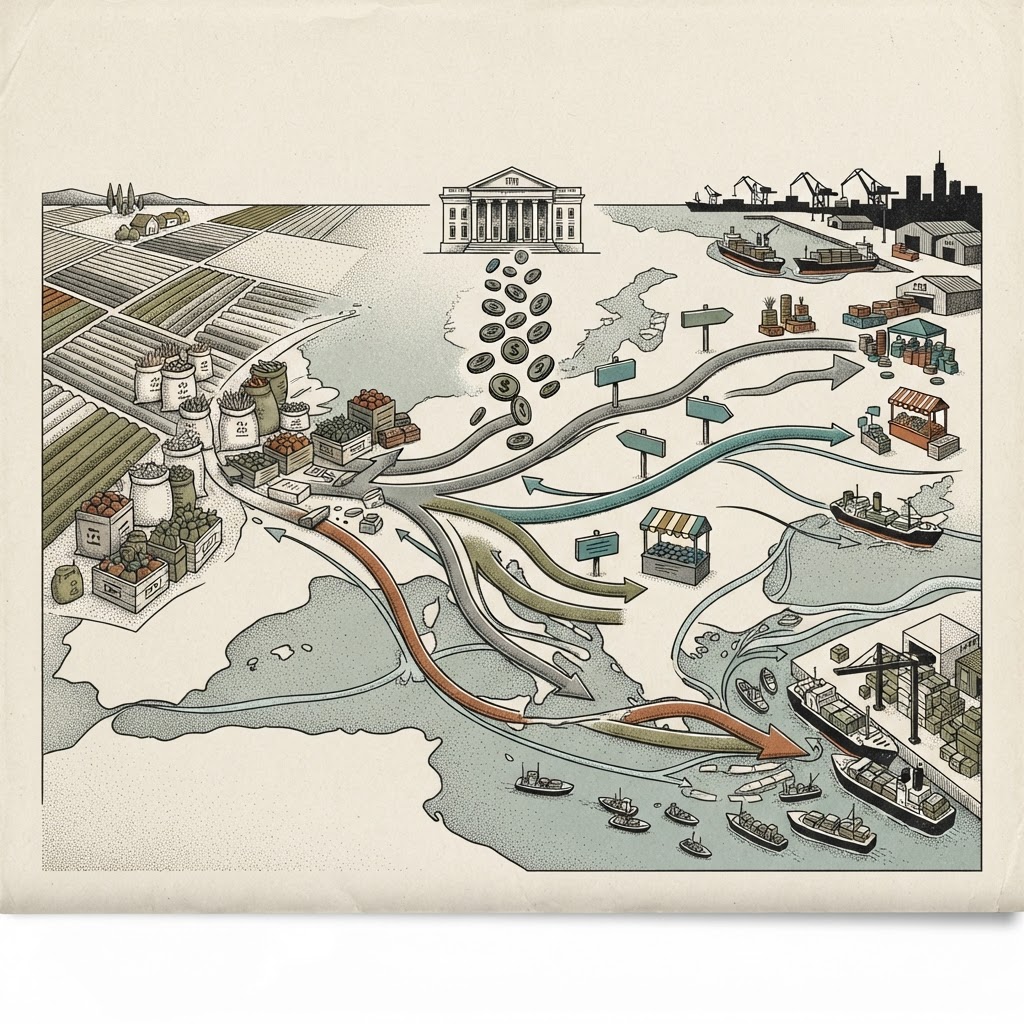
The European Research Executive Agency is funding 80 campaigns to promote European agricultural products worldwide, adding a new round of public support for producers and cooperatives seeking customers beyond the European Union. The program puts export visibility on the policy agenda, but the agency has not disclosed the total funding, the campaigns’ country-by-country allocation or the sales gains it expects.
DIG Analysis — 2026-11-09: The announcement is a demand-side measure, not a production subsidy or trade agreement. Its commercial value will depend on whether campaign spending translates into repeat orders, and on whether producers can supply those orders at prices that compete with local and other imported goods.
Promotion as export policy
The 80 initiatives sit within the 2026 Promotion of Agricultural Products funding program. According to the European Research Executive Agency, the funding is intended to help producers and cooperatives expand their international reach and increase the visibility and market share of European agricultural products. The agency’s announcement describes the scale of the campaign round, but does not identify the individual recipients or the product categories and markets involved.
That omission matters for assessing the likely commercial effect. A campaign for a recognized food category in a mature import market faces different constraints from one introducing an unfamiliar product to consumers. Promotion can support awareness and distribution, but it cannot by itself resolve tariffs, regulatory barriers, exchange-rate shifts or gaps in local logistics. Nor does the announcement say how campaign performance will be measured or how much private money recipients must contribute.
The initiative nevertheless shows how European institutions are using marketing support to address a competitive problem. Producers in the bloc face rivals with established brands and lower-cost supply, while consumer preferences and import rules vary by destination. Public funding can reduce the cost of entering a market, particularly for cooperatives whose members may not have the resources to run international campaigns independently. Whether that advantage endures after the funding period is less clear.
“The investment underscores a significant commitment to bolstering the competitiveness of the European agricultural sector in foreign markets.”
Source: European Research Executive Agency, announcement on the 2026 funding round.
Demand needs a supply response
For the funded groups, the immediate task is to turn promotion into commercial access: identifying buyers, securing distribution and maintaining product availability after initial attention fades. Campaigns may help establish a common European identity for products, but individual producers still need to meet destination-market requirements and deliver consistent volumes. The agency’s announcement does not specify whether the 80 efforts will be coordinated across markets or run separately by product and applicant.
That distinction affects how broadly the money could work. A shared campaign can pool reach and reduce duplicated costs, while a more targeted effort may speak more directly to a specific buyer or consumer group. The announcement provides no budget figures from which to compare the likely scale of the campaigns, and it does not state how the agency will assess additional sales against activity that might have happened without public support.
Export promotion also distributes opportunity unevenly. Producers with export-ready goods, established logistics partners and capacity to respond to new orders may be best placed to convert visibility into revenue. Smaller participants could gain access to markets they could not reach alone, but attention is not the same as shelf space or procurement commitments. If demand rises faster than supply, the beneficiaries may be intermediaries or competing suppliers able to deliver reliably.
Results remain to be seen
The funding announcement establishes a sizable campaign slate, not a forecast of export growth. The agency has not said how many consumers or buyers the campaigns are expected to reach, when results will be reported, or what share of funded activity must produce measurable sales. Those details will determine whether the initiative is judged on awareness, market entry or durable commercial gains.
For now, the stated commitment is 80 new promotional campaigns under the 2026 program, aimed at increasing the global visibility and market share of European agricultural products. The next evidence will be the funded campaigns’ market targets, their execution and the sales data that follows.
