
Powered by Google TranslateTranslate
Markets
CATCaterpillar$510.45-5.01%•
DEDeere & Co.$609.25-2.50%•
CNHCNH Industrial$10.74-2.98%•
AGCOAGCO Corp.$100.93-1.91%•
URIUnited Rentals$973.43-8.13%•
ALTGAlta Equipment$4.33-8.46%•
TTCToro Company$100.82-1.70%•
HRIHerc Holdings$133.55-11.54%•
MGRCMcGrath RentCorp$113.45-6.38%•
MTWManitowoc$20.31-5.58%•

HD Construction Equipment Bets on Manitou to Build a Global Compact-Machine Business

Jon RossiJon RossiFounder & Editor-in-Chief September 24, 2026 3 min read

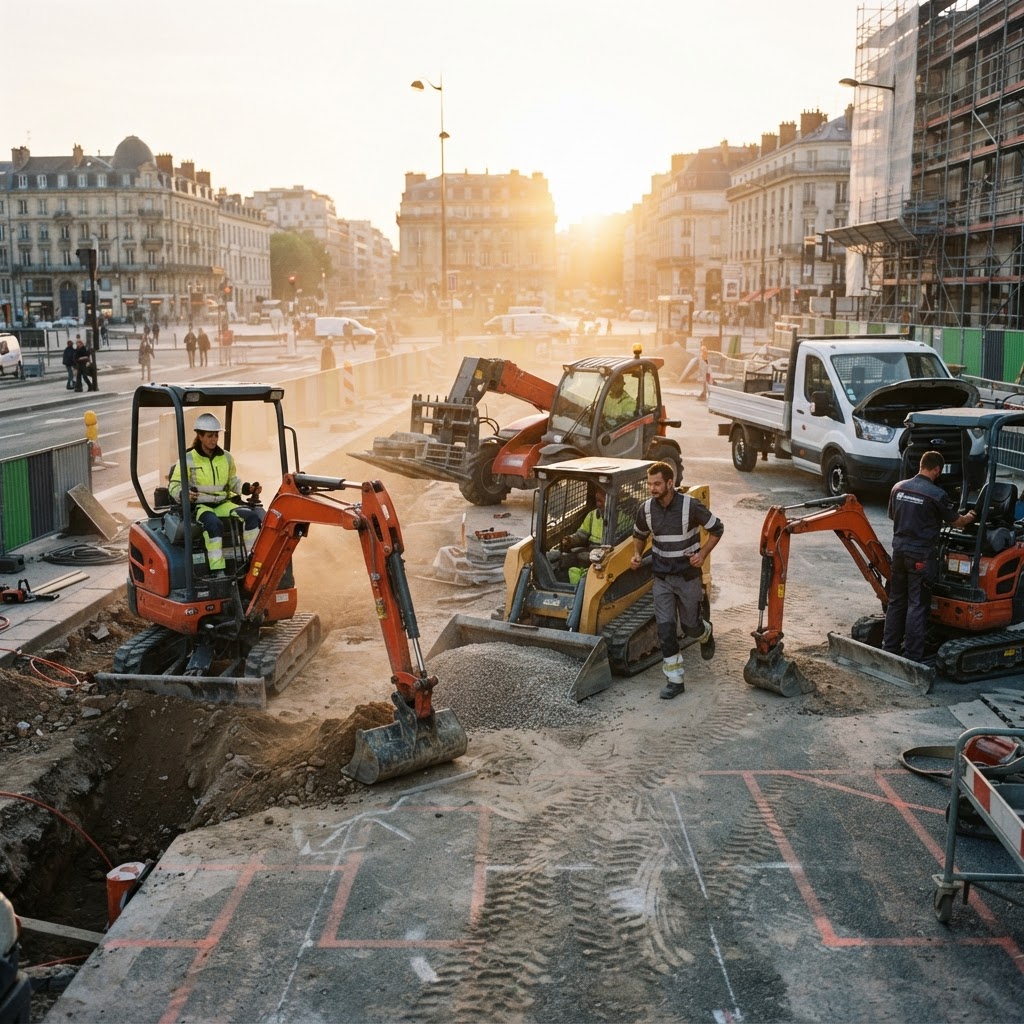
The Hyundai and Develon owner is using Manitou’s product depth and manufacturing base to accelerate its compact-equipment push. The target is clear: 1.3 trillion won in compact-equipment sales by 2030.

HD Construction Equipment Bets on Manitou to Build a Global Compact-Machine Business

HD Construction Equipment is turning to France’s Manitou Group for a faster route into compact machinery, pairing its Hyundai and Develon brands with Manitou-manufactured products in a bid to build a 1.3 trillion won compact-equipment business by 2030. The agreement, reported by The Herald Business, gives HD Construction Equipment access to an established compact-equipment portfolio without requiring the company to develop every machine, production capability, and market channel internally.

DIG Analysis — 2026-09-24: This is a product and market-access decision, not simply a supply arrangement. HD Construction Equipment is addressing a structural gap: compact machines are increasingly important in urban construction, landscaping, rental, utilities, agriculture, and residential work, while the company’s historical strength has been in larger construction equipment.

A faster entry into a crowded compact market

Compact equipment carries different commercial requirements from large excavators and wheel loaders. Buyers often demand broader attachments, tighter transport dimensions, lower operating costs, simple maintenance, and strong local availability. Rental fleets also place a premium on machine commonality, residual values, uptime, and rapid parts support.

Manitou brings relevant experience through a portfolio centered on compact loaders, telehandlers, and access-related machinery. Selling those products under Hyundai and Develon brands can allow HD Construction Equipment to present a wider product range to existing customers and dealers. The arrangement may also help the company reach applications where a full-size excavator or loader is excessive, especially on constrained urban sites and smaller civil projects.

For Manitou, the partnership creates another route to market and potentially greater production utilization. The commercial outcome will depend on how responsibilities are divided across product configuration, certification, warranty, parts, training, and field service. Private-label or co-branded distribution can expand volume, but it also requires clear accountability when machines operate under different brand identities in different territories.

“The partnership positions compact equipment as a central growth category rather than a peripheral addition to the existing construction portfolio.”

Why the 2030 target matters

The 1.3 trillion won target signals that HD Construction Equipment views compact machinery as a material contributor to its future revenue mix. Reaching that level will require more than adding models to a catalog. The company will need reliable supply, competitive specifications, financing support, attachment compatibility, and dealer coverage in markets where compact specialists already have deep customer relationships.

The Hyundai and Develon brands may provide a starting advantage. Their existing dealer and customer networks can support cross-selling, while shared financing, parts logistics, telematics, and service processes could reduce the cost of entering new applications. Yet brand extension also creates risk. Customers will judge the machines against established compact-equipment benchmarks, not only against HD Construction Equipment’s larger machines.

Product overlap will be another issue. Dealers may need a clear explanation of how Manitou-sourced units fit alongside existing Hyundai or Develon products, including differences in specifications, warranty terms, and pricing. If the portfolio is not segmented carefully, channel conflict could weaken dealer confidence and dilute the value of all three brands.

The execution test is in the channel

The partnership’s first proof point will be market execution. HD Construction Equipment must determine where Manitou products will be sold, which brand will lead in each region, and whether dealers receive sufficient training and parts inventory before deliveries scale. Compact-equipment buyers typically compare multiple brands quickly, making availability and service responsiveness as important as headline specifications.

Competitors are unlikely to leave the opening uncontested. Global manufacturers and regional specialists already compete across mini excavators, skid-steer loaders, compact track loaders, telehandlers, and related attachments. HD Construction Equipment’s advantage will therefore depend on reducing customer friction: one dealer relationship, dependable support, attractive financing, and a coherent machine lineup.

The agreement gives HD Construction Equipment a credible way to accelerate its compact strategy. It does not remove the hard work of building demand, protecting residual values, and earning field trust. The 2030 goal will be measured through dealer sell-through, repeat purchases, rental adoption, uptime, and the economics of supporting the installed base.

Who This Affects

OEM Impact

OEM channel managers must define clear brand, territory, warranty, and product-positioning rules before the Manitou-built machines reach dealers. Product planners and aftersales leaders will also face pressure to integrate parts, telematics, training, and service standards without creating confusion between Hyundai and Develon portfolios.

Dealer Impact

Dealer principals may gain a broader compact lineup and more opportunities to sell into landscaping, rental, utilities, and small contractors. They will also need inventory discipline, technician training, attachment support, and a clear explanation of how the new machines differ from existing products to avoid channel conflict and margin compression.

Contractor Impact

Fleet operators and small contractors could gain access to compact machines through familiar Hyundai and Develon channels, potentially improving financing and service coverage. They should scrutinize warranty responsibility, parts availability, residual values, attachment compatibility, and whether local dealers can support the machines at the same level as established compact brands.

Startup Impact

Construction-technology startups focused on fleet management, utilization, attachments, or service workflows may find a larger installed base to address if HD scales the partnership. Series A investors should watch whether brand integration creates open data access and standardized support, or whether multiple OEM systems make deployments more fragmented.

Dealmaker Impact

PE dealmakers and strategic investors should reassess compact-equipment distributors, rental fleets, attachment makers, and aftermarket service providers exposed to the expanded Hyundai and Develon offering. The main diligence questions are dealer consolidation, product overlap, residual-value performance, Manitou supply dependence, and the capital required to support a larger installed base.

Back to News
HD Construction EquipmentManitou Groupcompact equipmentHyundaiDevelonOEM strategydealer network