 Translate

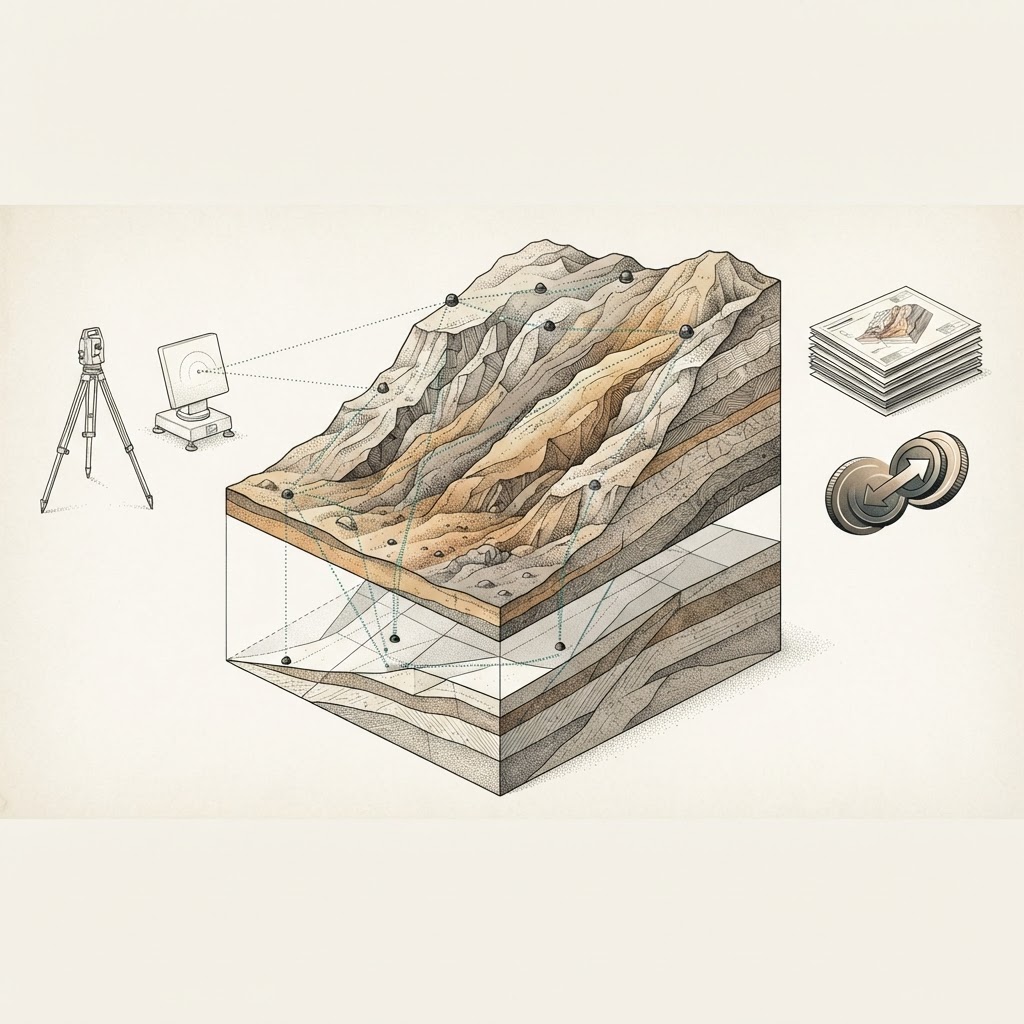
Hexagon AB has agreed to buy Toronto-based Rocscience for an enterprise value of $535 million, placing a substantial bet on the connection between geotechnical monitoring and engineering simulation. The acquisition would give Hexagon, a Swedish measurement-technology group, software that analyzes ground behavior alongside the sensors used to observe it.
DIG Analysis — 2026-10-09: The deal’s logic is operational as well as financial: live measurements can inform geotechnical models, while model outputs can help engineers interpret new readings. Whether customers adopt that continuous process at scale, and how much additional value it creates, remains to be demonstrated.
A connected workflow
Rocscience develops geotechnical engineering software used to analyze issues such as slope stability and underground excavation. Hexagon plans to integrate those tools into its Radar & Monitoring Division, which supplies systems for tracking movement and conditions at sites. The intended result is a workflow in which field data feeds engineering analysis rather than sitting apart from it.
That combination addresses a practical gap. Monitoring systems can report that a slope, mine wall or other structure is moving. Simulation software can help engineers assess what that movement means under different ground conditions and operating scenarios. Linking the two could make it easier to update an analysis as new sensor readings arrive, rather than relying on separate tools and manual handoffs.
The commercial opportunity depends on more than technical compatibility. Engineering teams must trust the underlying data, be able to validate model assumptions and fit the combined software into established review and safety procedures. A model can help organize evidence; it does not remove uncertainty from geology or substitute for the judgment of the engineers responsible for a site.
Recurring revenue and price
Hexagon said Rocscience is projected to generate nearly $50 million in revenue in 2026, with more than 80% coming from recurring revenue streams. That profile gives the buyer a software business with predictable sales relative to project-based equipment, although the disclosed figures do not establish Rocscience’s growth rate, margins or customer-retention levels.
At a $535 million enterprise value, the transaction price is about 10.7 times projected 2026 revenue, using the rounded figures provided. That is a high revenue multiple for a business of Rocscience’s stated size, but the calculation says little about the ultimate return without profit, growth and integration data. Hexagon is paying for a specialist product set and the prospect of attaching it to a broader monitoring business.
