
Powered by Google TranslateTranslate
Markets
CATCaterpillar$510.45-5.01%•
DEDeere & Co.$609.25-2.50%•
CNHCNH Industrial$10.74-2.98%•
AGCOAGCO Corp.$100.93-1.91%•
URIUnited Rentals$973.43-8.13%•
ALTGAlta Equipment$4.33-8.46%•
TTCToro Company$100.82-1.70%•
HRIHerc Holdings$133.55-11.54%•
MGRCMcGrath RentCorp$113.45-6.38%•
MTWManitowoc$20.31-5.58%•
Back to Newsmarket-intelligence

Hitachi Plants Flag in Malawi: Local Sub-Dealer Brings Parts and Service Closer to Contractors

Jon RossiJon RossiFounder & Editor-in-Chief August 19, 2026 3 min read

Hitachi Construction Machinery has appointed a sub-dealer in Malawi to strengthen equipment availability and after-sales support for local earthmoving contractors. The move tightens Hitachi's Africa network and shifts practical service obligations closer to site-level operators.

Hitachi Plants Flag in Malawi: Local Sub-Dealer Brings Parts and Service Closer to Contractors

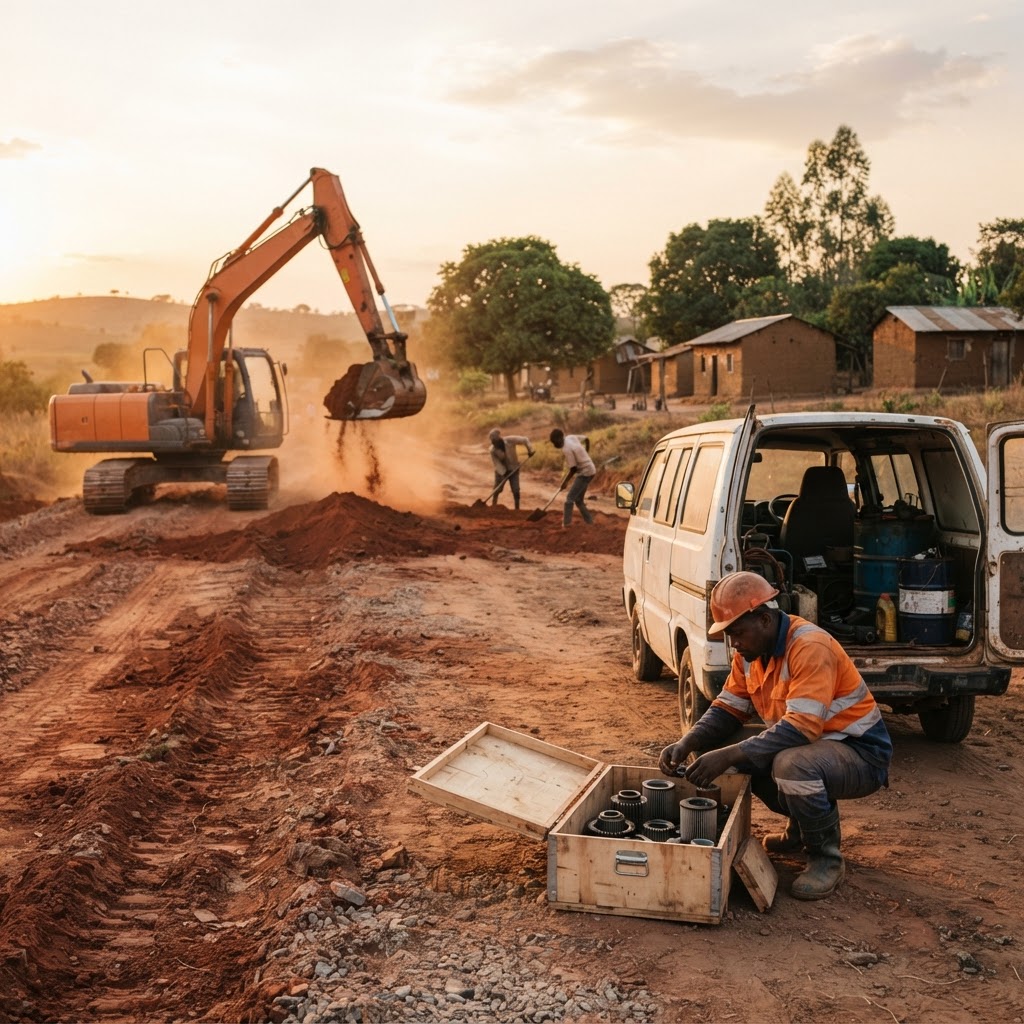
Hitachi Construction Machinery has extended its commercial footprint into Malawi by appointing a local sub-dealer, a pragmatic move aimed at improving access to parts, service and machines for contractors working on roads, agriculture and small-scale mining projects. The appointment, reported by Plant & Equipment News, closes a geographic support gap that has prolonged downtime and raised operating costs for earthmoving fleets in the country.

DIG Analysis — 2026-08-19: This is incremental but operationally meaningful expansion. For Hitachi the decision trades network scale for responsiveness. For Malawi operators the nearest service touchpoint just moved from weeks to days, assuming parts logistics and technical training follow the appointment.

What happened

Hitachi has added a sub-dealer in Malawi as part of a broader push into smaller African markets. The company did not detail the sub-dealer's name in the Plant & Equipment News account, but the structure mirrors Hitachi's established route-to-market elsewhere: a local partner to handle frontline sales, routine maintenance and first-level diagnostics while the principal retains responsibility for warranty policy, parts supply and larger repairs.

The immediate practical effect is improved availability of service technicians and commonly used spare parts within Malawi. Contractors operating with small to medium fleets will see reduced transport time for machines needing basic repairs and less reliance on cross-border logistics from neighboring countries or centralized hubs in South Africa.

"Bringing a sub-dealer into Malawi places technicians and stock within reach of contractors who can ill afford long machine downtime," a local industry contact told Plant & Equipment News.

Why this matters to operators and the channel

Parts and service are the operating margin in construction equipment. For fleet managers in Malawi, faster access to parts lowers mean time to repair and reduces the need for expensive spare machines or extended rental. Reduced downtime is a direct cost saving and increases utilization for contractors on roadworks, irrigation and rural development projects.

For Hitachi, the sub-dealer model is a low-capex way to grow market share where volumes do not yet justify a full dealer investment. However, the commercial upside depends on three execution points: parts inventory planning, technical training and payment terms. Failure to stock critical wear items or to certify local technicians will blunt the operational benefit to customers and erode credibility quickly.

  • Parts planning: demand forecasting must account for seasonal roadworks and rainy-season failures.
  • Training: certified service capability distinguishes a sub-dealer from mere sales representation.
  • Finance and credit: flexible payment options for local contractors will influence machine uptake.

Competitors active in the region will watch closely. Established brands with deeper dealer networks can counter by offering bundled service agreements, short-term rental or centralized parts depots. Hitachi's advantage is agility; it can test the market with a sub-dealer, then scale or consolidate based on measurable uptime improvements and sales lift.

For Malawi the immediate outcome is practical: a shorter supply chain between workshop and jobsite. Longer term, improved local support can enable contractors to bid more competitively on government and donor-funded projects because equipment availability becomes more reliable. The critical next moves to watch are whether Hitachi invests in a stocked parts hub, rolls out technician certification programs, and integrates the sub-dealer into a regional parts logistics plan. Plant & Equipment News provided the initial reporting on the appointment and its stated aims.

Who This Affects

OEM Impact

OEM channel managers and regional product directors will see this as a low-capex method to extend network reach into low-volume markets. They must weigh inventory and training commitments against modest sales uplift and track uptime metrics to justify converting sub-dealers into full dealers.

Dealer Impact

Dealer principals in neighboring countries face increased competition for parts and service contracts as Hitachi shifts frontline coverage into Malawi. They should reassess cross-border service arrangements and consider partnerships or consolidation to protect parts distribution economics and technician deployment.

Contractor Impact

Fleet managers and site supervisors in Malawi gain nearer-term access to parts and first-line service, lowering machine downtime and repair transport costs. Contractors bidding on rural infrastructure and irrigation projects will be able to present tighter availability estimates, which can improve bid competitiveness and cashflow predictability.

Startup Impact

Equipment rental and local service startups can leverage Hitachi’s presence to expand offerings, but must compete on certified service and stock reliability. Companies building telematics, parts-tracking or mobile maintenance platforms may find new customers as dealers and contractors demand better visibility and spare parts forecasting.

Dealmaker Impact

Private equity and strategic investors evaluating African equipment distribution should note the sub-dealer model reduces entry capital while retaining revenue upside if execution succeeds. PE dealmakers must scrutinize working capital needs for parts inventory and the local partner’s operational competence before structuring investments.

Back to News
HitachiMalawidealershipaftermarketconstruction-equipmentAfricaparts-and-service