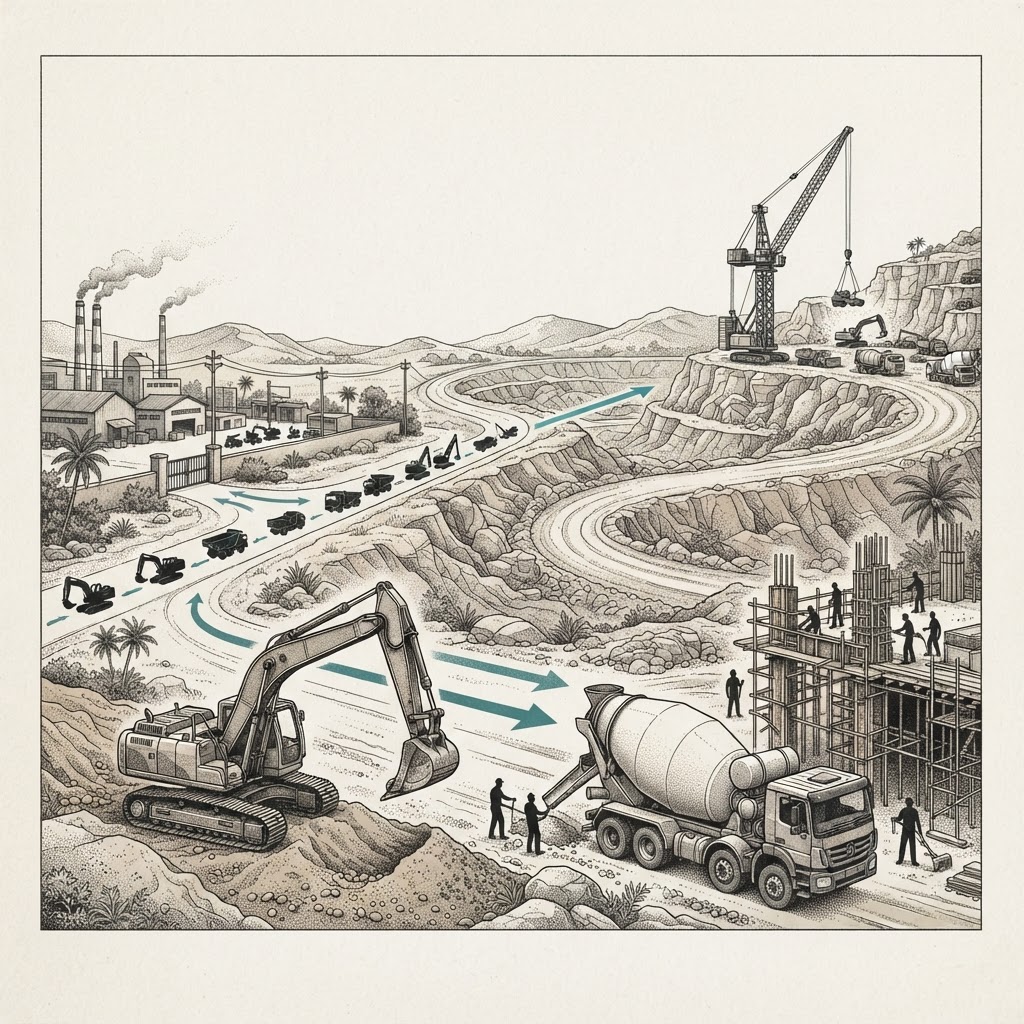
Domestic construction equipment sales in India rose 23% year on year in Q2 FY27, with earthmoving, material handling and concrete machinery leading growth. ICEMA expects demand to remain firm in the second half, though its outlook leaves the pace and breadth of that strength uncertain.
India’s construction equipment market recorded a 23 percent year-on-year increase in domestic sales in Q2 FY27, led by earthmoving, material handling and concrete equipment, according to the Indian Construction Equipment Manufacturers’ Association. ICEMA expects demand to continue strengthening in the second half of the fiscal year, as infrastructure and mining investment support purchases.
DIG Analysis — 2026-11-21: The growth report points to a market benefiting from investment across several equipment categories, rather than a single-product surge. But the figures supplied by ICEMA do not establish whether sales gains reflect more machines entering service, replacement demand, or changes in the timing of deliveries. That distinction will matter to manufacturers planning production and dealers managing inventory.
Growth across equipment types
Earthmoving machinery is closely tied to road building, site preparation and mining activity. Material handling and concrete equipment serve different stages of construction, from moving inputs to placing them. Their inclusion among the growth drivers suggests demand is reaching beyond one narrow segment of the equipment market.
The association attributed the outlook to ongoing infrastructure and mining investments. Those projects can support equipment orders over multiple quarters, but announced investment does not translate immediately into deliveries. Project execution, funding schedules and contractors’ access to credit all influence when machines are purchased and put to work.
Autocar Professional reported ICEMA’s sales increase and its expectation of stronger demand in H2 FY27. The report did not provide category-level growth rates, unit volumes, or a breakdown by equipment class. Without those details, it is difficult to assess which segments contributed most to the 23 percent gain or how evenly the increase was distributed across manufacturers and regions.
“The industry body projects continued demand strength for the second half of the fiscal year, supported by ongoing infrastructure and mining investments.”
ICEMA outlook, as reported by Autocar Professional
The H2 test
ICEMA’s forecast shifts attention from the year-on-year comparison to the durability of orders. A strong quarter can reflect a healthier run rate, but it can also be amplified by a softer comparison period or a cluster of deliveries. The information reported so far does not specify the prior-year base, monthly sales pattern, order backlog or capacity utilization, leaving those explanations open.
For manufacturers, a sustained second-half market would support production planning and supplier commitments. A forecast is not the same as confirmed demand, however. If projects move slowly or customers defer purchases, inventory could build before sales reach the market. The association did not state how much of its H2 expectation rests on booked orders, nor did it quantify the expected growth rate.
Mining investment adds another source of demand, but its effect may vary by project and machine type. Large projects can require specialized equipment and service coverage, while construction activity tends to involve a broader mix of machines. The reported figures do not separate these sources, so the balance between infrastructure-led and mining-led purchases remains unclear.
What the figures leave open
The 23 percent increase is a clear signal of stronger domestic sales in Q2 FY27, but it is not by itself a measure of profitability or utilization. Sales volumes can rise while price competition, financing costs or input expenses pressure margins. Nor does a domestic sales increase show whether exports or other parts of the business moved in the same direction.
ICEMA’s second-half view rests on the continuation of infrastructure and mining investment. The next evidence will come from sales by category and the conversion of project spending into equipment orders and deliveries. For now, the association has offered a directional forecast, not a quantified target: it expects demand strength to continue through the second half of FY27.
 Translate