
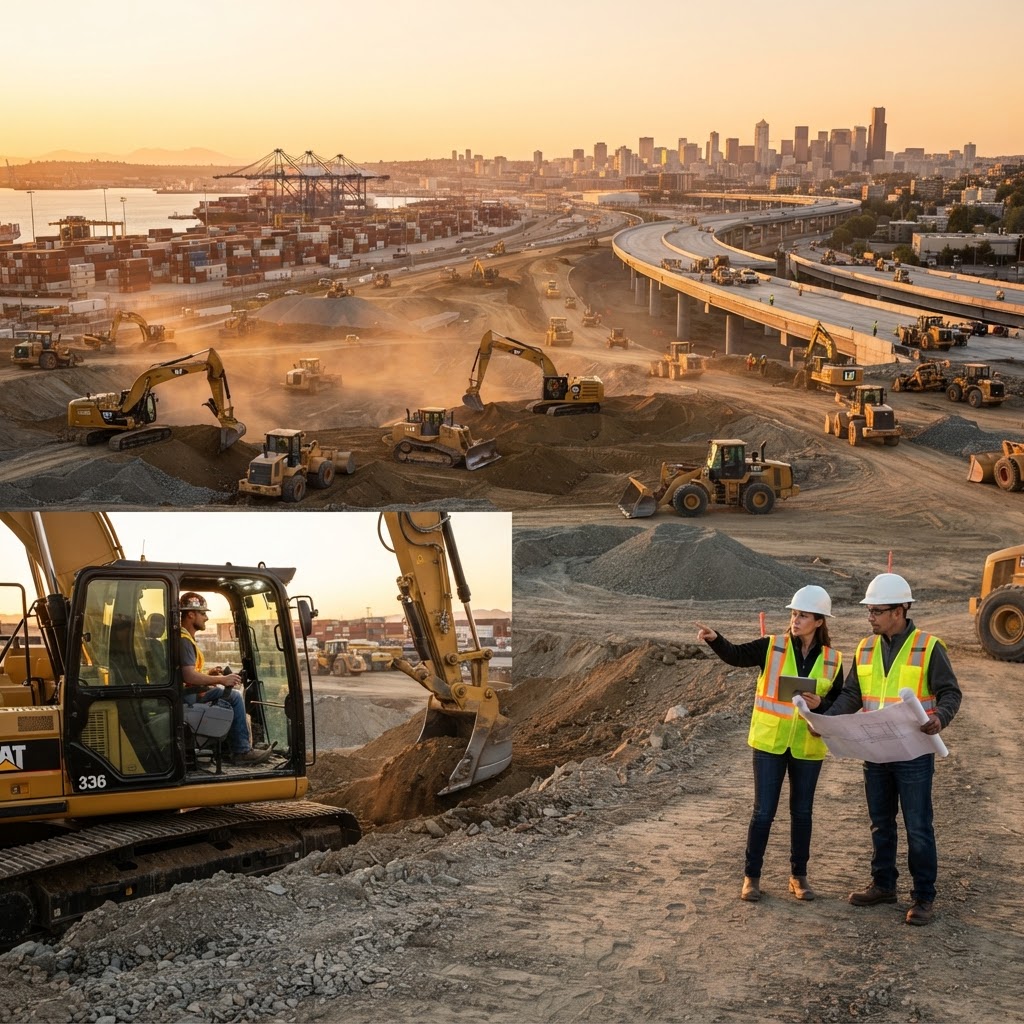
DIG Analysis — 2026-08-26: MarketsandMarkets released a forecast on August 25, 2026 estimating that the global heavy construction equipment market will expand from $160.11 billion in 2026 to $226.91 billion by 2033, representing a 5.1 percent compound annual growth rate. The firm points to concentrated infrastructure spending and a measurable shift toward automated machinery as the primary drivers of demand, particularly for earthmoving assets in emerging markets, according to the report published on Yahoo Finance.
The headline numbers are credible because they align with observable policy and capital trends. National infrastructure programs in Asia, Africa, and Latin America continue to allocate large budgets to roads, ports, and power projects. That direct demand lifts production needs for excavators, bulldozers, wheel loaders, and articulated haulers. At the same time, developed-market fleets are replacing legacy units with higher-spec machines that include automated control systems, telematics, and advanced hydraulics. The combined effect is higher average selling prices and a longer tail for aftermarket revenues.
Where the growth is concentrated
The MarketsandMarkets projection singles out earthmoving equipment as the performance center of gravity. In emerging markets, governments and large contractors are prioritizing heavy civil work that is equipment intensive. Those regions generate volume; North America and Western Europe contribute revenue through higher specification and retrofit activities. OEMs with localized manufacturing or robust global parts networks will capture the most value because transport costs and lead times remain constraints for full-size machines.
Inventory and supply chain stress will not disappear. Component shortages and shipping backlogs in the past two years forced dealers to reprice used equipment and to extend lead times. With demand rising, dealers and OEM channel managers should expect continued pressure on key components such as hydraulic pumps, engine modules, and control electronics. That creates a clear business case for expanding regional parts depots and for prioritized production of high-margin models that incorporate automation packages.
Why investors and contractors should care
For institutional investors and private equity dealmakers, a steady 5.1 percent CAGR is attractive because it is predictable and capital intensive. Heavy equipment has long replacement cycles and significant aftermarket revenue, characteristics that support stable cash flow models. Series A and growth-stage investors in construction automation startups gain optionality: integration partners among OEMs and large fleet operators are actively buying sensor, autonomy, and fleet-management capabilities to reduce operating cost per hour.