
Powered by Google TranslateTranslate
Markets
CATCaterpillar$510.45-5.01%•
DEDeere & Co.$609.25-2.50%•
CNHCNH Industrial$10.74-2.98%•
AGCOAGCO Corp.$100.93-1.91%•
URIUnited Rentals$973.43-8.13%•
ALTGAlta Equipment$4.33-8.46%•
TTCToro Company$100.82-1.70%•
HRIHerc Holdings$133.55-11.54%•
MGRCMcGrath RentCorp$113.45-6.38%•
MTWManitowoc$20.31-5.58%•

John Deere Pushes Diagnostics Closer to the Jobsite

Jon RossiJon RossiFounder & Editor-in-Chief September 23, 2026 3 min read

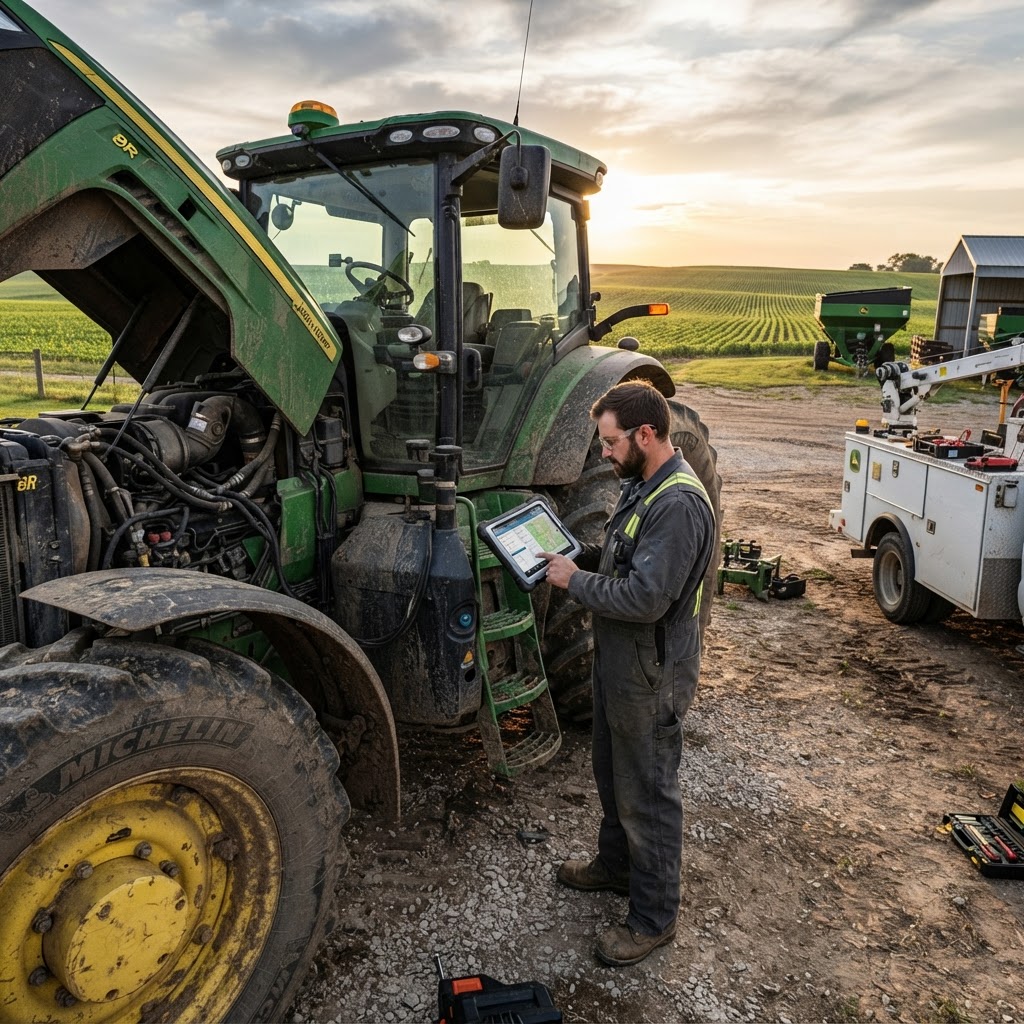
John Deere is expanding AI-assisted service tools and remote diagnostics across construction and agricultural equipment. The move shifts more troubleshooting from the dealership shop to connected machines, field personnel, and customer operations.

John Deere Pushes Diagnostics Closer to the Jobsite

John Deere is expanding its digital service capabilities so customers and dealers can diagnose machine problems remotely, search technical guidance faster, and move more repairs toward the field. The initiative reaches across Deere’s construction and agricultural equipment lines and ties machine connectivity to practical service decisions, with the central objective of reducing the time between fault detection and return to work.

DIG Analysis — 2026-09-23: Deere is not simply adding another software feature. It is extending the service model around connected equipment, giving dealers earlier visibility into machine health and giving operators more structured guidance before a technician arrives. That can compress diagnostic cycles, but it also raises the operating standard for data quality, technician training, and remote support discipline.

From fault code to repair decision

The announcement, reported by the National Association of Manufacturers, centers on two linked capabilities. Deere’s PRO Service platform is adding AI-powered manual search tools intended to help users locate relevant repair information without manually working through large technical documents. Connected Support allows dealerships to monitor machine condition remotely and identify issues through machine data.

The practical value is in connecting those steps. A fault code alone does not tell a fleet operator whether a machine can safely continue working, whether a component should be inspected immediately, or which parts and tools a technician will need. Better search and remote visibility can turn a disconnected service request into a more prepared intervention.

For agricultural customers, the timing of that intervention matters during planting and harvest windows, when a short equipment outage can affect an entire operating schedule. In construction, the same capability can help reduce idle labor, missed production targets, and unnecessary transport of machines to a service facility.

“The ability to remotely diagnose and repair equipment helps our customers get back to work faster.” John Deere, as reported by the National Association of Manufacturers

Dealers become active monitors, not only repair destinations

Connected Support also changes the cadence of dealer service. Instead of waiting for a customer call, dealership personnel can use available machine-health information to identify developing issues, prioritize cases, and prepare a response. That creates an opportunity for more planned service and fewer emergency visits, provided the signals are accurate and the customer has authorized the necessary data access.

This model does not eliminate the need for skilled technicians. It increases the importance of technicians who can interpret diagnostic information, validate a remote recommendation, and complete repairs correctly in variable field conditions. Dealers will need processes for escalating uncertain cases, documenting remote interventions, and separating a software-guided diagnosis from a final mechanical determination.

The competitive meaning of service data

Deere’s expansion reinforces a broader equipment market shift: machine support is becoming a continuous operating function rather than an event that begins after failure. The OEM that can connect machine data, service documentation, parts availability, and dealer response has a stronger position in the customer’s daily workflow.

That position will be tested by execution. Customers will judge the system by diagnostic accuracy, response time, ease of use, and whether recommendations lead to repairs that hold up in the field. Deere will also need to manage cybersecurity, permissions, connectivity gaps, and the limits of AI-generated guidance. Remote diagnostics can reduce wasted time, but it cannot replace physical inspection when safety, wear, or hidden damage is involved.

The near-term measure is straightforward: fewer unresolved fault events, fewer unnecessary service trips, and faster machine recovery. If Deere can show those gains consistently across mixed fleets and demanding seasonal workloads, digital service will become a stronger differentiator in equipment purchasing and dealer retention.

Who This Affects

OEM Impact

OEM channel managers and product-support leaders will need to align Connected Support, PRO Service content, parts logistics, and dealer escalation procedures. Better service data can strengthen retention and aftermarket revenue, but inaccurate guidance or weak connectivity will increase warranty exposure and erode trust with fleet operators.

Dealer Impact

Dealer principals and service managers will face greater expectations to monitor machine health proactively, staff remote-support roles, and train technicians in data-assisted diagnosis. The second-order effect is a shift from reactive repair revenue toward planned interventions, while dealers must protect customer data and avoid treating AI recommendations as final repair authority.

Contractor Impact

Fleet operators and farm equipment managers may reduce diagnostic delays, unnecessary transport, and machine idle time when connectivity and dealer response are reliable. They will also need clearer internal policies for data permissions, remote recommendations, and determining when a field repair requires a qualified technician or safety inspection.

Startup Impact

Series A founders building telematics, maintenance, field-service, and parts-planning tools will face a stronger OEM baseline for connected support. Startups may find opportunities in interoperability, independent repair workflows, and analytics that complement OEM data, but customer acquisition will become harder if Deere absorbs more diagnostic activity inside its own platforms.

Dealmaker Impact

PE dealmakers and strategic acquirers should reassess service-network quality, technician productivity, recurring aftermarket revenue, and OEM data dependence in equipment targets. Businesses with strong field-service execution may gain value, while standalone diagnostic or manual-search products could face pricing pressure unless they serve mixed fleets or offer capabilities Deere does not control.

Back to News
John Deereremote diagnosticsAI serviceequipment uptimedealer servicetelematicsaftermarket