
Markets
CATCaterpillar$510.45-5.01%•
DEDeere & Co.$609.25-2.50%•
CNHCNH Industrial$10.74-2.98%•
AGCOAGCO Corp.$100.93-1.91%•
URIUnited Rentals$973.43-8.13%•
ALTGAlta Equipment$4.33-8.46%•
TTCToro Company$100.82-1.70%•
HRIHerc Holdings$133.55-11.54%•
MGRCMcGrath RentCorp$113.45-6.38%•
MTWManitowoc$20.31-5.58%•
CATCaterpillar$510.45-5.01%•
DEDeere & Co.$609.25-2.50%•
CNHCNH Industrial$10.74-2.98%•
AGCOAGCO Corp.$100.93-1.91%•
URIUnited Rentals$973.43-8.13%•
ALTGAlta Equipment$4.33-8.46%•
TTCToro Company$100.82-1.70%•
HRIHerc Holdings$133.55-11.54%•
MGRCMcGrath RentCorp$113.45-6.38%•
MTWManitowoc$20.31-5.58%•

KKR’s $350 Million Bet on the Next Equipment Finance Platform

Jon RossiJon RossiFounder & Editor-in-Chief September 29, 2026 3 min read

Akrapoint Commercial Capital gives KKR a direct position in mid-ticket financing for vocational assets, specialty trailers, and industrial equipment. The launch puts balance-sheet capacity and sector experience behind a business aimed at small and middle-market borrowers.

KKR’s $350 Million Bet on the Next Equipment Finance Platform

KKR has launched Akrapoint Commercial Capital, a new equipment finance platform backed by a $350 million commitment from KKR’s Asset Based Finance strategy. Led by CEO Nate Smith and chaired by industry veteran Gary Shivers, the company will finance vocational assets, specialty trailers, and industrial equipment for small and middle-market businesses.

DIG Analysis — 2026-09-29: This is more than the creation of another specialty lender. KKR is placing institutional capital behind a focused origination platform at a time when equipment buyers face higher borrowing costs, tighter bank underwriting, and persistent pressure to keep productive assets working. Akrapoint’s opening mandate gives it room to compete where speed, asset knowledge, and flexible structures can matter as much as the headline interest rate.

A focused platform with institutional backing

The $350 million commitment provides Akrapoint with meaningful initial lending capacity without requiring the company to build its funding base from scratch. That matters in mid-ticket finance, where borrowers often need decisions and documentation faster than traditional commercial banks can provide, but transactions remain too specialized for broad consumer or generic small-business programs.

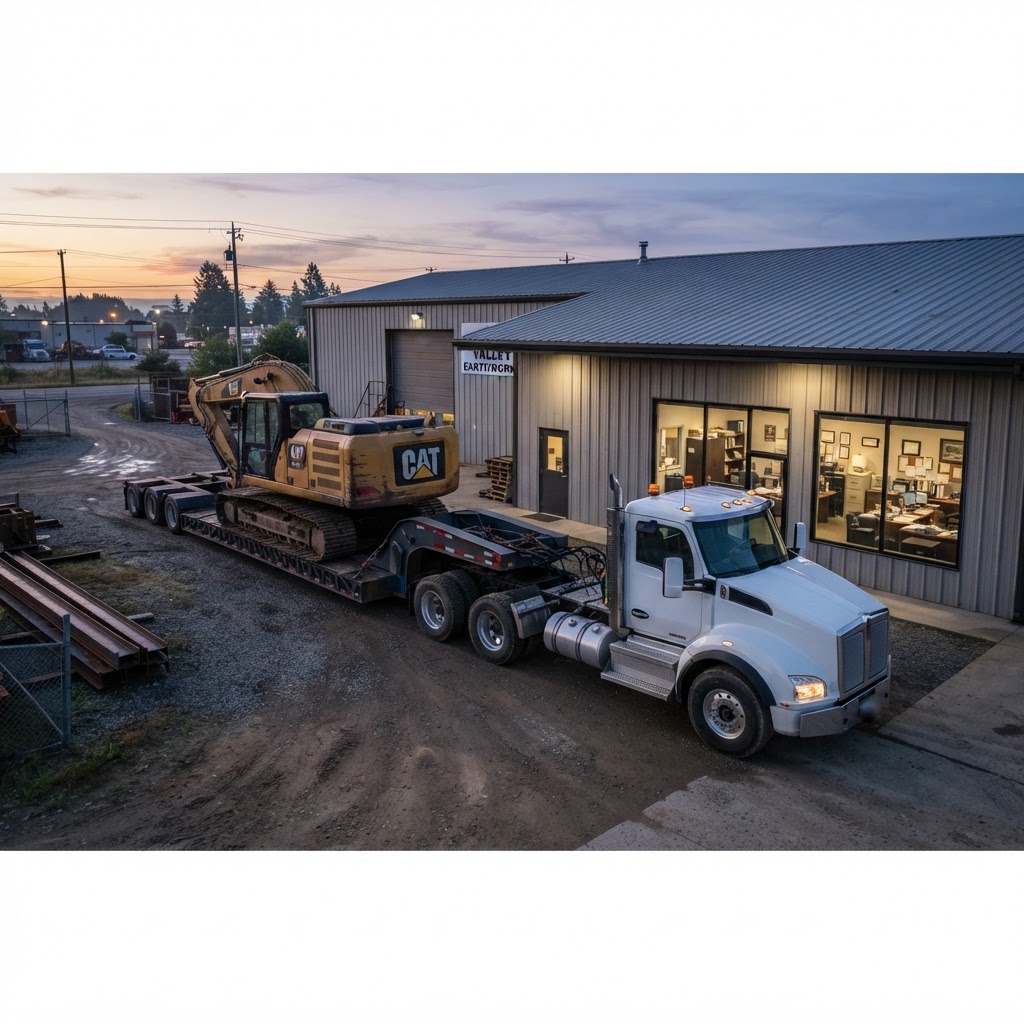
Akrapoint’s target assets are tied directly to operating revenue. Vocational trucks, specialty trailers, and industrial equipment support construction, transportation, field services, manufacturing, and other essential businesses. Their underwriting requires more than a credit score. Lenders must assess utilization, resale value, maintenance, customer concentration, and the borrower’s ability to convert equipment into cash flow.

KKR’s commitment also gives the platform the potential to hold loans through market volatility rather than depend entirely on immediate syndication or securitization. That can support customized terms, but it raises the importance of disciplined credit selection. A large funding authorization does not remove residual-value risk, concentration risk, or the challenge of recovering specialized equipment after a default.

Leadership signals an asset-based finance playbook

Nate Smith will lead the operating company, while Gary Shivers will chair its board. Shivers’ prior role founding Navitas Credit Corp. is notable because it connects Akrapoint to an executive with experience building a commercial finance organization around equipment and business borrowers.

The combination suggests a deliberate division of labor: KKR supplies capital, institutional infrastructure, and portfolio oversight, while the operating team builds origination channels and manages the practical details of equipment credit. The platform’s success will depend on how effectively those functions remain aligned as volume grows.

“Akrapoint is being built to deliver financing solutions tailored to the needs of small and middle-market businesses,” said Nate Smith, CEO of Akrapoint Commercial Capital.

That positioning is important. Borrowers in this segment frequently have strong operating businesses but uneven financial histories, seasonal cash flow, concentrated customers, or equipment that does not fit standardized bank templates. A lender willing to price those variables accurately can win business. A lender that treats flexibility as a substitute for underwriting can accumulate losses quickly.

Why the launch matters to the market

Akrapoint enters a field that includes banks, captive finance arms, independent equipment finance companies, and private credit managers. Its differentiation will likely come from the combination of asset specialization and available capital. The company can pursue transactions that are too complex for automated lenders while maintaining a repeatable focus on equipment-backed credit.

The launch also reflects a broader institutional interest in financing real assets with identifiable collateral and operating use. Equipment finance can produce recurring income, but portfolios are exposed to economic cycles, used-equipment pricing, freight and construction activity, and borrower liquidity. Monitoring those indicators will be central to protecting KKR’s commitment.

For the market, the immediate question is not simply how much Akrapoint can lend. It is whether the platform can build durable relationships with dealers, manufacturers, brokers, and borrowers while maintaining credit discipline. If it does, KKR will have established a scalable channel into a large but fragmented class of commercial equipment demand. If it does not, the size of the initial commitment will make execution issues visible quickly.

Business Wire reported the launch and the company’s leadership and funding details.

Who This Affects

OEM Impact

OEM channel managers and captive-finance leaders should expect another well-funded independent lender competing for vocational and specialty-equipment transactions. Akrapoint could give dealers an alternative when manufacturer programs do not fit borrower credit, asset type, or term requirements, potentially pressuring OEMs to sharpen approval speed and used-equipment support.

Dealer Impact

Dealer principals and finance managers gain a potential funding source for customers seeking trucks, trailers, and industrial equipment outside standard bank boxes. The second-order effect is greater lender competition for dealer-originated deals, but also a need to compare recourse, documentation, residual assumptions, and funding timelines carefully.

Contractor Impact

Fleet operators, specialty contractors, and owner-led industrial businesses may see more options for financing productive assets when cash flow is seasonal or collateral is specialized. Flexible credit can accelerate fleet replacement, but borrowers should scrutinize total cost, covenants, prepayment terms, and how equipment values are treated under stress.

Startup Impact

Series A investors and founders building equipment-finance software, broker platforms, or underwriting tools may find a new institutional customer and competitor in Akrapoint. Its launch could increase demand for asset valuation, servicing, fraud controls, and dealer-integration technology while raising the bar for startups seeking capital in commercial finance.

Dealmaker Impact

PE dealmakers and private-credit teams should view Akrapoint as a credible new platform for originating and holding mid-ticket equipment loans. KKR’s commitment may intensify competition for experienced originators, dealer relationships, and portfolio acquisitions, while creating potential partnership, warehouse, and future securitization opportunities.

Back to News
KKREquipment FinancePrivate CreditCommercial LendingVocational AssetsSpecialty TrailersAsset-Based Finance