
由 Google 翻译翻译强力驱动
Markets
CATCaterpillar$510.45-5.01%•
DEDeere & Co.$609.25-2.50%•
CNHCNH Industrial$10.74-2.98%•
AGCOAGCO Corp.$100.93-1.91%•
URIUnited Rentals$973.43-8.13%•
ALTGAlta Equipment$4.33-8.46%•
TTCToro Company$100.82-1.70%•
HRIHerc Holdings$133.55-11.54%•
MGRCMcGrath RentCorp$113.45-6.38%•
MTWManitowoc$20.31-5.58%•

Klipboard Adds Linxup, Expanding Its North American Fleet Data Footprint

Jon RossiJon RossiFounder & Editor-in-Chief October 8, 2026 3 min read

The acquisition brings roughly 25,000 customers and more than 240,000 connected devices into Klipboard’s portfolio. Its value will depend on whether the company can connect fleet data with field-service workflows without disrupting a sizable installed base.

Klipboard Adds Linxup, Expanding Its North American Fleet Data Footprint

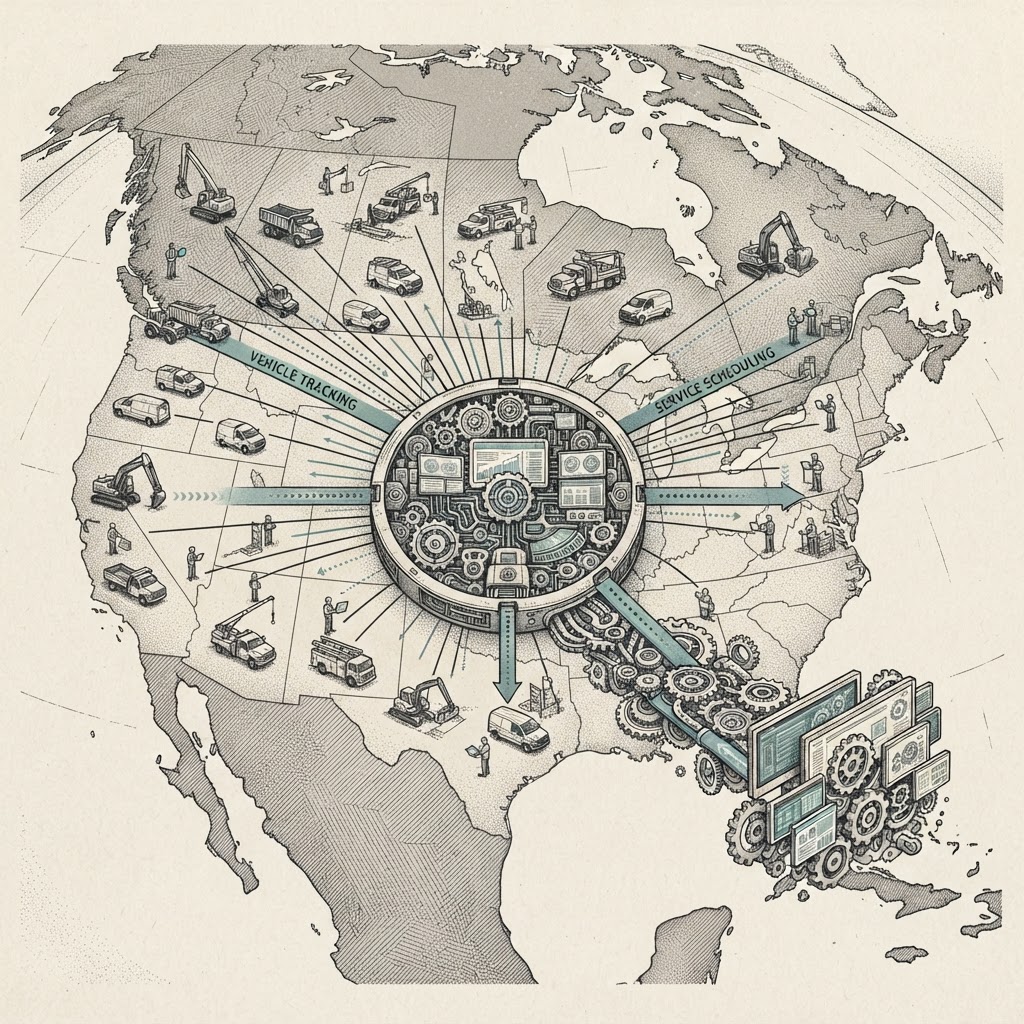
Klipboard has completed its acquisition of Linxup, adding a U.S. fleet-management platform with approximately 25,000 customers and more than 240,000 connected devices. The purchase gives the software group a larger North American presence in construction and heavy equipment, while extending its reach from fleet tracking into field-service management.

DIG Analysis — 2026-10-08: The deal is a scale move in a market where software vendors are trying to connect vehicle location and utilization data to the work performed in the field. Klipboard now has a substantial installed base to build on, but the announcement does not specify the purchase price, expected financial contribution or integration timetable. Those omissions leave the strategic logic clearer than the transaction’s economics.

Scale and workflow

Linxup’s device count is the most concrete measure of what Klipboard is buying. Connected units can report location and other operating information, giving fleet managers a view of vehicles and equipment that would otherwise require manual checks or separate systems. For field-service operators, those records may sit alongside dispatch, scheduling and job-management software, where the commercial opportunity is to reduce gaps between equipment status and the work assigned to crews.

The acquisition announcement describes Linxup as a way to enhance Klipboard’s connected fleet-management and field-service offering in North America. That framing points to a broader product strategy: assemble software that can follow an asset from the road or job site into the administrative systems used to schedule and service it. But the release does not explain how deeply the products will be integrated, whether customers will be moved to common systems, or how pricing and support will change.

Those are material questions for a business with 25,000 customers. A connected-device base is valuable only if the service remains reliable and the information is useful to operators. If integration adds friction to installation, support or data access, the installed base could become a retention risk rather than a ready-made growth channel.

“The acquisition adds approximately 25,000 customers and more than 240,000 connected devices to Klipboard’s North American footprint.”

Transaction scale stated in the Klipboard announcement, via PR Newswire

A repeated acquisition strategy

The Linxup purchase follows Klipboard’s acquisition of RAM Tracking earlier in 2025. Together, the transactions suggest a deliberate effort to expand the company’s fleet-management reach through acquisitions rather than relying solely on organic customer growth. The sequence also gives Klipboard more operating scale in North America, where a broader customer base could support cross-selling across fleet and field-service products.

That opportunity is not automatic. Fleet operators may already use systems from vehicle manufacturers, telematics specialists or their own enterprise-software providers. Contractors, in particular, often manage mixed fleets of trucks and equipment, which can make a single vendor’s coverage and data compatibility as important as its feature set. Klipboard will have to show that its products can work across those varied fleets and fit existing workflows.

There is also a potential cost to the acquisition-led approach. Combining customer support, product road maps and data systems can compete for management attention, especially when businesses serve operators who depend on connected devices for daily dispatch and asset visibility. The announcement did not disclose whether Linxup will retain its brand, how its products will be positioned alongside RAM Tracking, or what changes customers should expect.

What remains unknown

PR Newswire’s release establishes the scale and stated purpose of the transaction, but not its financial terms. Klipboard did not disclose the purchase price, revenue, profitability or expected savings. It also provided no timetable for product integration or detail on how the acquisition will affect its North American investment plans.

That information will matter to investors and customers assessing whether the deal is chiefly a customer-base expansion, a product integration bet or both. For now, the clearest signal is the scale Klipboard has added: Linxup’s approximately 25,000 customers and more than 240,000 connected devices, following the earlier RAM Tracking acquisition in 2025.

Who This Affects

OEM Impact

OEM channel managers and connected-services leaders gain another scaled software provider seeking to link equipment visibility with field-service workflows. They may face greater pressure to offer open data access and clarify how OEM telematics will coexist with third-party fleet platforms.

Dealer Impact

Dealer principals and service directors should watch for changes to Linxup support, product integration and customer routing as Klipboard combines its fleet and service software holdings. If fleet records become easier to connect to maintenance workflows, dealers may see more informed service requests, but could lose customer access if software vendors own the operator relationship.

Contractor Impact

Fleet managers and construction operations directors gain a larger provider whose device base spans vehicles and equipment, with potential value in connecting location data to dispatch and service tasks. They should confirm device compatibility, data portability, contract terms and support continuity before relying on any promised integration.

Startup Impact

Telematics and field-service software founders may face a tougher competitive set as Klipboard adds customers and connected devices through acquisitions. Series A investors should weigh the potential for larger incumbents to cross-sell across product lines against the integration costs and customer-retention risks that can limit acquisition-led growth.

Dealmaker Impact

PE dealmakers and strategic acquirers have another example of a software platform using serial acquisitions to build scale across fleet and field-service categories. The undisclosed purchase price and financial contribution leave valuation benchmarks unclear, while the RAM Tracking and Linxup sequence raises the importance of post-close integration and retention diligence.

Back to News
KlipboardLinxupFleet managementField service softwareTelematicsConstruction technologyM&A