
Markets
CATCaterpillar$510.45-5.01%•
DEDeere & Co.$609.25-2.50%•
CNHCNH Industrial$10.74-2.98%•
AGCOAGCO Corp.$100.93-1.91%•
URIUnited Rentals$973.43-8.13%•
ALTGAlta Equipment$4.33-8.46%•
TTCToro Company$100.82-1.70%•
HRIHerc Holdings$133.55-11.54%•
MGRCMcGrath RentCorp$113.45-6.38%•
MTWManitowoc$20.31-5.58%•

KOBELCO Raises the Bar for High-Reach Demolition Iron in North America

Jon RossiJon RossiFounder & Editor-in-Chief September 11, 2026 3 min read

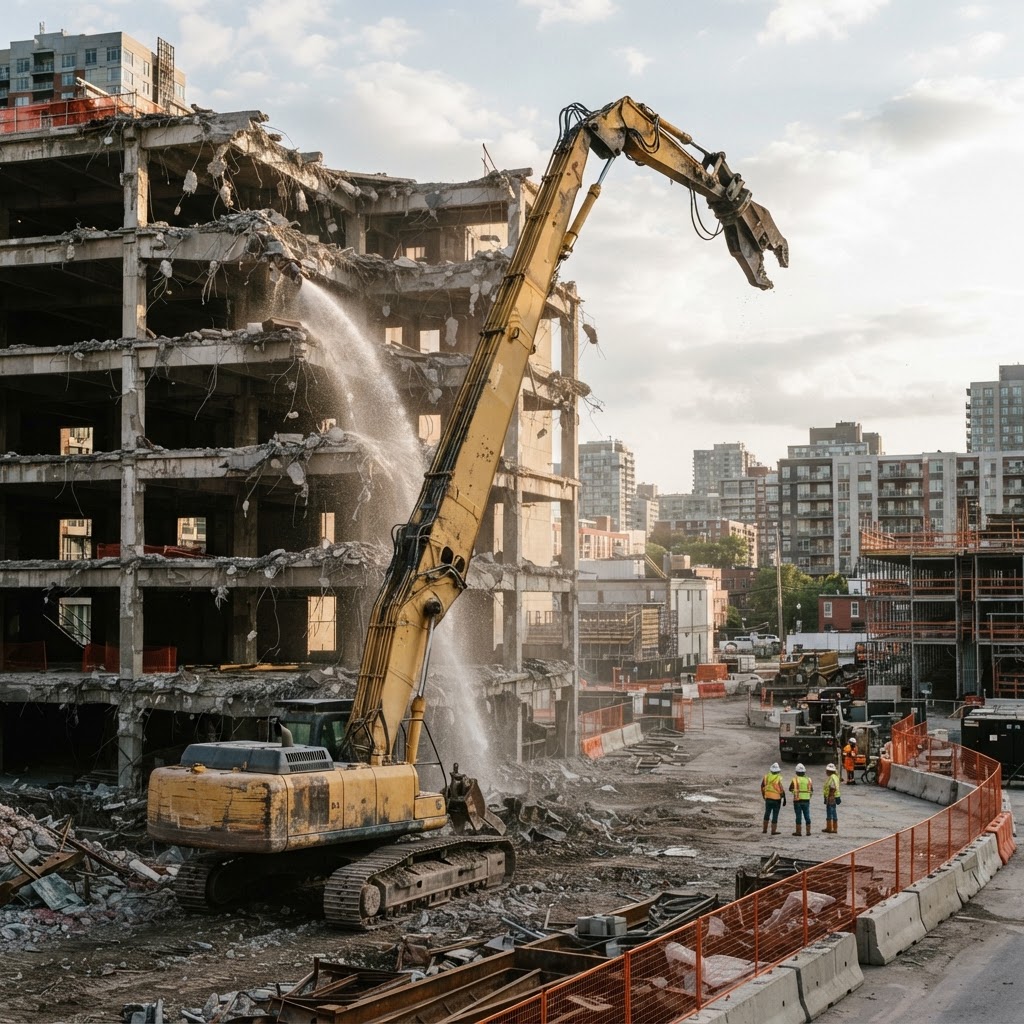
The new SK650DLC-11 High Reach Excavator gives KOBELCO a larger, more specialized platform for urban teardown and industrial demolition. Its reach, hydraulic capacity, and transport profile point to a market where access, cycle time, and mobilization costs increasingly determine equipment decisions.

KOBELCO Raises the Bar for High-Reach Demolition Iron in North America

KOBELCO Construction Machinery USA is expanding its demolition offering with the SK650DLC-11 High Reach Excavator, a purpose-built machine aimed at contractors handling demanding urban teardown and industrial infrastructure work. The launch puts extended reach, stronger hydraulic performance, and transportability at the center of the product proposition as North American demolition firms pursue larger and more complex projects.

DIG Analysis — 2026-09-11: The SK650DLC-11 is more than a larger excavator entering a crowded category. It is a targeted response to the operating constraints that define high-reach demolition: limited working room, strict separation distances, heavy attachments, frequent relocation, and the need to remove structures in controlled stages.

A specialized answer to tighter demolition sites

High-reach demolition is a different buying decision from conventional excavation. Contractors are not simply comparing horsepower or bucket capacity. They are evaluating maximum working height, machine stability, hydraulic responsiveness, attachment compatibility, visibility, transport requirements, and the ability to maintain production while working around occupied buildings, roads, utilities, and other active assets.

That distinction matters as urban renewal projects move into denser corridors and industrial owners retire aging facilities. A machine designed for specialized teardown can reduce the need to improvise with standard excavators, temporary access measures, or additional support equipment. The value is often measured in safer sequencing and fewer repositioning delays rather than a single headline specification.

“The SK650DLC-11 is positioned for contractors who need reach and control without treating mobilization as an afterthought.”

Reach and hydraulics are only part of the equation

The machine’s extended-reach configuration is intended to help crews work from a more controlled stand-off position while dismantling taller structures. That can support more deliberate top-down demolition methods and help keep the carrier outside the immediate fall zone, subject to project engineering, site conditions, and local safety requirements.

Higher hydraulic performance also has practical consequences. Large demolition attachments place sustained demands on flow, pressure, cooling, and structural durability. When the hydraulic system can maintain useful attachment performance through repeated cycles, contractors have a better chance of preserving output as material thickness, reinforcement, and building height increase. The operating result will depend on attachment selection, maintenance discipline, operator skill, and the specific demolition plan, but the platform is clearly aimed at heavier work than general-purpose excavator configurations.

Transportability is an equally important part of the proposition. High-reach machines can spend significant time moving between sites, and every additional permit, disassembly step, or escort requirement affects utilization. A configuration that can be mobilized with fewer complications may improve scheduling reliability and widen the range of projects a contractor can pursue.

What the launch signals for the demolition market

Construction Equipment Guide reported the introduction as KOBELCO Construction Machinery USA broadens its demolition product portfolio. The timing reflects a durable project pipeline rather than a narrow equipment trend. Aging industrial plants, bridge and facility replacements, redevelopment of obsolete commercial properties, and public-sector renewal programs all create work where controlled dismantling is a core requirement.

For the North American market, the competitive question will be how effectively the SK650DLC-11 performs beyond its launch specifications. Contractors will look at field uptime, attachment support, parts availability, transport planning, operator acceptance, and residual value. Dealers will need to sell an application and service package, not simply a carrier. KOBELCO’s ability to support commissioning, technical training, and demolition-specific parts demand will influence whether the machine becomes a repeat fleet purchase.

The product also gives KOBELCO a clearer position in a segment where buyers often require specialized advice before they require iron. High-reach demolition is won through project fit, engineering confidence, and dependable support. The SK650DLC-11 enters that conversation with a defined purpose: help contractors reach higher, manage heavier attachments, and move a specialized machine between North American jobs with fewer compromises.

Who This Affects

OEM Impact

KOBELCO product managers and OEM channel managers must support the launch with demolition-specific attachment guidance, transport documentation, field training, and uptime data. A successful platform could strengthen KOBELCO’s position in specialized demolition while raising expectations for dealer service capability and parts readiness.

Dealer Impact

Dealer principals and heavy-equipment sales managers will need to qualify demolition contractors by project profile, attachment mix, haul route, and utilization rather than sell the machine as a larger excavator. The second-order effect is greater demand for application engineers, commissioning support, transport coordination, and service technicians familiar with high-reach configurations.

Contractor Impact

Fleet operators and demolition project managers gain another purpose-built option for tall structures, industrial teardown, and constrained urban sites. They will also need to budget for specialized transport, attachment compatibility, operator training, inspection, and site-engineering requirements, with utilization determining whether ownership or rental is financially preferable.

Startup Impact

Construction-tech startups serving demolition estimating, site monitoring, attachment tracking, safety documentation, or fleet telematics may see stronger demand for tools built around high-reach work. Series A investors should note that OEM-specific integrations, fragmented contractor data, and field-service requirements can lengthen sales cycles and raise implementation costs.

Dealmaker Impact

PE dealmakers and equipment-finance executives should treat specialized demolition iron as an application-specific asset with different residual-value and utilization assumptions than standard excavators. Acquisition models for demolition contractors may need to account for attachment packages, transport capability, skilled operators, and customer concentration in urban renewal or industrial projects.

Back to News
KOBELCOdemolition equipmenthigh-reach excavatorsconstruction machineryurban renewalfleet strategyNorth America