
Powered by Google TranslateTranslate
Markets
CATCaterpillar$510.45-5.01%•
DEDeere & Co.$609.25-2.50%•
CNHCNH Industrial$10.74-2.98%•
AGCOAGCO Corp.$100.93-1.91%•
URIUnited Rentals$973.43-8.13%•
ALTGAlta Equipment$4.33-8.46%•
TTCToro Company$100.82-1.70%•
HRIHerc Holdings$133.55-11.54%•
MGRCMcGrath RentCorp$113.45-6.38%•
MTWManitowoc$20.31-5.58%•

Kubota’s Autonomous M5L Moves Toward a Dealer-Led Launch

Jon RossiJon RossiFounder & Editor-in-Chief October 25, 2026 3 min read

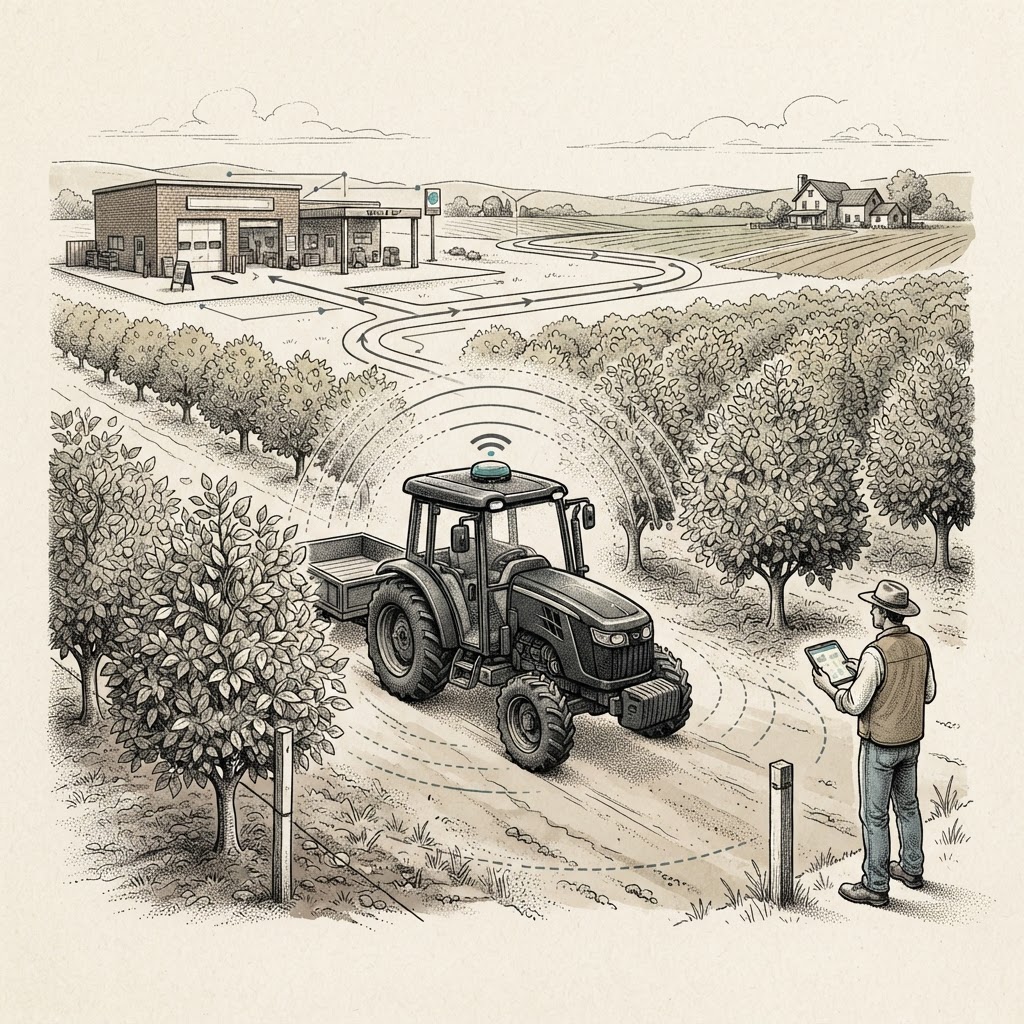
Kubota and Agtonomy are expanding tests of autonomous M5 Low Profile tractors for spraying, mowing and underplant cultivation. The early-2027 target puts product validation and dealer readiness on the same timetable.

Kubota’s Autonomous M5L Moves Toward a Dealer-Led Launch

Kubota North America is expanding its work with autonomy developer Agtonomy, bringing driverless operation closer to the company’s M5 Low Profile diesel tractor line. The pilot targets spraying, mowing and underplant cultivation, tasks that can consume labor across specialty-crop operations. Autonomous M5L tractors are expected to reach the market in early 2027, though neither a final specification nor a commercial rollout plan has been disclosed.

DIG Analysis — 2026-10-25: The expanded pilot is a product and channel test as much as a technology test. Kubota is putting autonomy onto an existing tractor platform, a route that may reduce the need for growers to buy a separate machine. But the timetable leaves little room for unresolved questions about field reliability, service procedures and who bears the cost when a machine stops working mid-task.

Autonomy on an existing platform

The M5 Low Profile is designed for work in settings where a lower profile can matter, including orchards and vineyards. Automating operations such as spraying and mowing addresses recurring work rather than a single specialized application. That focus gives Kubota and Agtonomy a practical way to test whether autonomy can fit established farm routines and equipment configurations.

Starting with a diesel tractor also places the project within Kubota’s current product base. The approach may appeal to growers who want to automate selected jobs without shifting an entire fleet to a new powertrain or vehicle type. It also makes integration a central engineering challenge: autonomous controls must work with the tractor, implements and operating conditions growers already use.

Equipment Finance News reported the expanded pilot and the early-2027 market expectation. The companies have not publicly detailed the number of machines involved, the pilot’s geographic scope, pricing, or the specific performance thresholds that would trigger a broader release. Those omissions make it difficult to judge how far the program has progressed from field evaluation toward a saleable product.

The dealer test

Kubota’s dealer network is expected to help growers adopt the technology, giving dealers a role beyond selling the tractor. They will need to explain operating requirements, support setup and respond when autonomy or an implement does not perform as expected. That service burden could shape customer acceptance as much as the machine’s ability to complete a task without an operator aboard.

For an established equipment maker, dealer involvement can provide local support and a route to customers. It can also expose friction. Dealers may need new training, diagnostic tools and protocols for software-related faults, while growers will want clarity on how autonomous operation affects warranty coverage and existing service agreements. Kubota has not said what commercial or service arrangements it plans to use.

“Autonomous M5L tractors are currently expected to reach the market in early 2027.”

Equipment Finance News

The timing gives Kubota and Agtonomy a defined milestone, but not a guarantee of broad availability on that date. Field conditions vary, and spraying or mowing performance depends on more than navigation: implement control, obstacle handling and consistent operation across a workday all matter. A pilot can establish whether the system functions under selected conditions; commercial deployment must establish whether it does so reliably enough to justify its cost.

What remains unproven

The near-term business case will depend on how much labor the system can displace or reassign, how many hours the tractor can operate autonomously, and what growers must spend on hardware, software and support. No pricing or productivity data have been announced. Without those figures, buyers cannot compare the system’s cost with seasonal labor, conventional equipment or other automation options.

Agtonomy’s role gives Kubota access to a technology partner while the tractor maker supplies the platform and dealer reach. The arrangement also leaves execution dependent on coordination between two companies, particularly as the product moves from controlled trials into a wider range of farms. Early 2027 is the stated market expectation; the next evidence will be whether the pilot produces a repeatable operating package that dealers can support and growers can evaluate against a clear price.

Who This Affects

OEM Impact

Kubota product and channel managers must convert pilot performance into specifications, warranty terms and service procedures that dealers can execute. A delay or limited initial release could complicate M5L planning, while successful integration may offer a lower-friction path to adding autonomy to an existing platform.

Dealer Impact

Dealer principals and service managers will need to assess training, diagnostics and field-response capacity before taking on autonomous M5L sales. Software and implement failures may shift workload from routine mechanical service toward technical support, making labor planning and reimbursement terms important.

Contractor Impact

Farm operators and specialty-crop contractors may gain an option to automate repetitive spraying, mowing and underplant work, but the economics remain unknown without pricing and productivity figures. Fleet managers should account for training, integration and downtime risk rather than treating autonomy as an immediate substitute for labor.

Startup Impact

Agtonomy gains an OEM platform and dealer channel through the expanded Kubota pilot, strengthening its route to commercial deployment. The company still needs to demonstrate reliable operation across field conditions and clarify how support, software updates and ongoing customer relationships will be divided with Kubota.

Dealmaker Impact

PE investors and equipment-sector dealmakers will watch for evidence that autonomous systems can be sold and serviced through incumbent dealer networks. Commercial terms, recurring software revenue, support costs and measurable labor savings remain undisclosed, limiting near-term valuation conclusions for autonomy suppliers and adjacent technology firms.

Back to News
KubotaAgtonomyautonomous tractorsagriculturedealer networkspecialty crops