
Markets
CATCaterpillar$510.45-5.01%•
DEDeere & Co.$609.25-2.50%•
CNHCNH Industrial$10.74-2.98%•
AGCOAGCO Corp.$100.93-1.91%•
URIUnited Rentals$973.43-8.13%•
ALTGAlta Equipment$4.33-8.46%•
TTCToro Company$100.82-1.70%•
HRIHerc Holdings$133.55-11.54%•
MGRCMcGrath RentCorp$113.45-6.38%•
MTWManitowoc$20.31-5.58%•
Back to Newstechnology

Lumina’s Modular Machines Put Fleet Versatility to the Test

Jon RossiJon RossiFounder & Editor-in-Chief October 2, 2026 3 min read

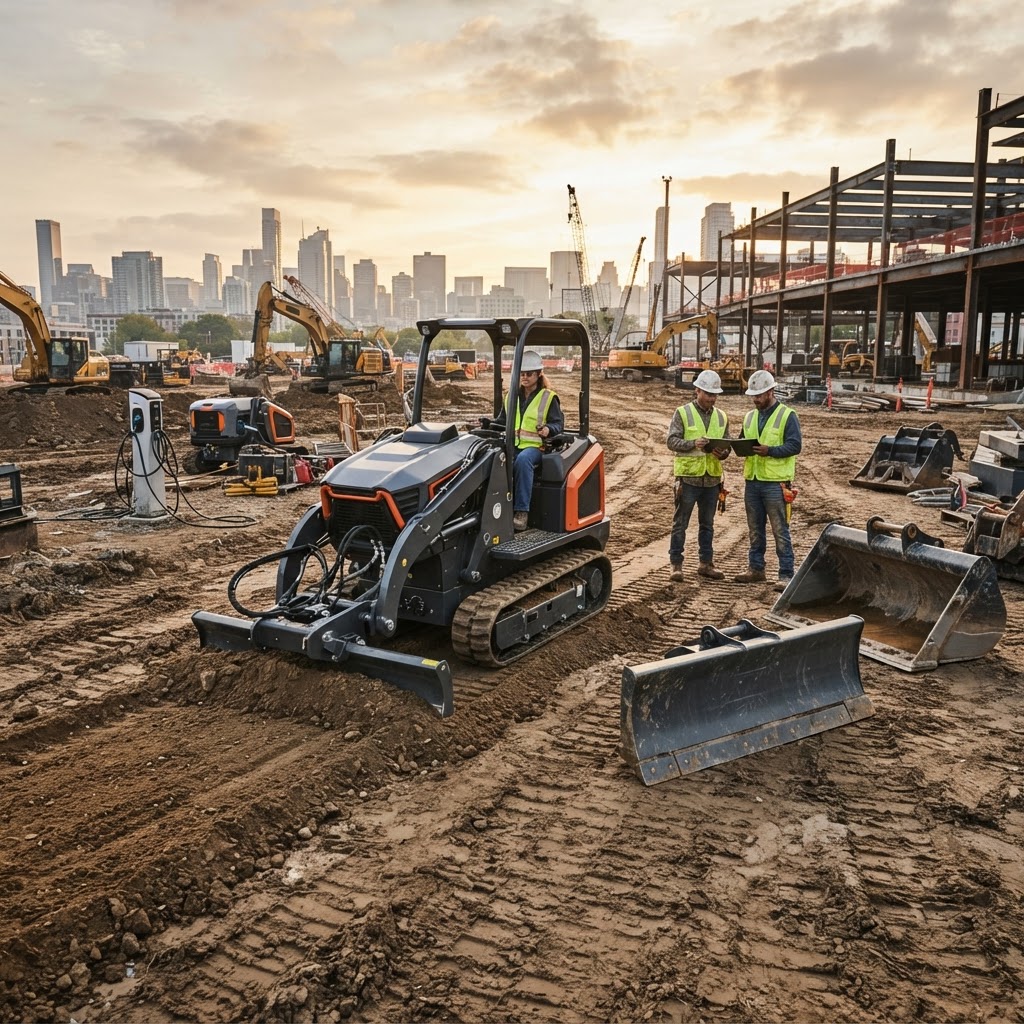
Lumina’s Bladerunner, Moonlander and Roadrunner pair electric powertrains with configurations spanning excavator, dozer and wheel loader roles. The commercial question is whether one adaptable machine can deliver enough uptime and task performance to replace several specialized units.

Lumina’s Modular Machines Put Fleet Versatility to the Test

Lumina’s Bladerunner, Moonlander and Roadrunner frame a consequential equipment proposition: use modular, electric machines to cover work typically assigned to multiple machine types. The company says the units can convert among excavator, dozer and wheel loader configurations, targeting contractors seeking flexibility without adding specialized equipment to every job.

DIG Analysis — 2026-10-02: The pitch is compelling, but the business case will turn on conversion time, attachment performance, serviceability and utilization. A machine that changes roles quickly could reduce idle iron and simplify fleet planning. If conversions are cumbersome or compromise output, contractors may still prefer dedicated machines for demanding, repetitive work.

Modularity is a utilization strategy

Equipment World reports that Lumina has introduced the three machines as a modular construction line. Their stated ability to shift between excavator, dozer and wheel loader configurations addresses a familiar fleet problem: work scopes vary, while capital, transport and maintenance costs persist whether a machine is busy or parked.

For smaller contractors and firms working across short-duration projects, versatility could improve the amount of productive work generated by each capital purchase. A common machine platform may also reduce the number of units that must be hauled to a site, stored, insured and maintained. Those savings are not automatic. They depend on how many configurations a buyer needs, how often the machine changes roles, and whether the converted unit can meet the required production rate.

The three names suggest a product family rather than a single prototype, but the available announcement does not establish specifications, pricing, delivery timing or operating-cost figures. Nor does the summary detail how the conversion process works. Those omissions matter: a modular design can look efficient in a product demonstration yet perform differently under a full workday of digging, grading and material handling.

“A machine that changes roles quickly could reduce idle iron and simplify fleet planning. If conversions are cumbersome or compromise output, contractors may still prefer dedicated machines for demanding, repetitive work.”

Electric power adds a second operating test

Lumina’s electric powertrains make operating conditions central to the evaluation. Buyers will need clear information on usable work time, charging requirements, energy consumption under different tasks and performance in varied temperatures. Jobsite charging access and the ability to coordinate charging around shifts can determine whether an electric machine is ready when crews need it.

Modularity also creates integration questions. Attachments and machine configurations must work reliably with the electrical and control systems, while operators need to understand safe, repeatable conversion procedures. Contractors will want to know which tasks can be handled with a changeover and which still require a dedicated machine. Field demonstrations should test those transitions under real site conditions, not just show that they are technically possible.

For fleet planners, the right comparison is not simply one modular unit against three separate purchases. It is the modular machine’s total cost and output against the actual mix of jobs, labor, hauling, charging and service support. A contractor with varied, intermittent work may value flexibility more than a high-volume operator whose dedicated machines run continuously in one role.

Proof will come from support and field economics

The launch puts execution as much as engineering in focus. Buyers will look for parts availability, technician training, diagnostic capability and warranty coverage across configurations. Dealers will need practical answers on how to stock service parts and support machines that may be set up differently from site to site. Without dependable support, potential savings from fewer units could be offset by downtime.

The next evidence to watch is specific: published performance data by configuration, conversion procedures and times, battery and charging details, pricing, delivery plans and results from customer deployments. These will help determine whether Bladerunner, Moonlander and Roadrunner can move from an intriguing product concept to a fleet tool with measurable economics.

Lumina has put flexibility at the center of its equipment proposition. The opportunity is to make fewer machines cover more work without asking crews to accept a meaningful loss in output or readiness. Until operating data and field experience are available, the machines are best viewed as a promising approach whose value remains to be demonstrated.

Who This Affects

OEM Impact

OEM product leaders and channel managers will need to validate performance and service requirements across every configuration, not just the base platform. If conversion and support prove straightforward, the design could influence product planning toward shared platforms; if not, warranty exposure and dealer workload could rise.

Dealer Impact

Dealer principals and service managers will need to assess technician training, diagnostic tools, parts stocking and warranty procedures for machines that shift roles. Successful support could create a differentiated sales case, while unclear configuration-specific repairs may lengthen downtime and complicate used-equipment valuation.

Contractor Impact

Fleet operators and construction business owners should compare the machines against their real task mix, utilization, charging access and cost of hauling specialized units. The second-order effect is fleet simplification only if changeovers are quick and output remains competitive; otherwise, crews may face added scheduling risk without eliminating dedicated iron.

Startup Impact

Series A investors and early-stage equipment founders should watch for customer evidence on modular machine economics, electric duty cycles and dealer serviceability. Lumina’s approach may validate demand for adaptable platforms, but capital requirements for manufacturing, field support and attachment integration remain material execution risks.

Dealmaker Impact

PE dealmakers and strategic buyers evaluating equipment manufacturers should treat modularity as a diligence question rather than a valuation premium by itself. Adoption could affect aftermarket revenue, service labor and residual values, so transaction models should test whether fewer machines per fleet reduce parts demand or increase utilization and customer retention.

Back to News
Luminamodular equipmentelectric constructionfleet utilizationconstruction machineryequipment technology