 Translate

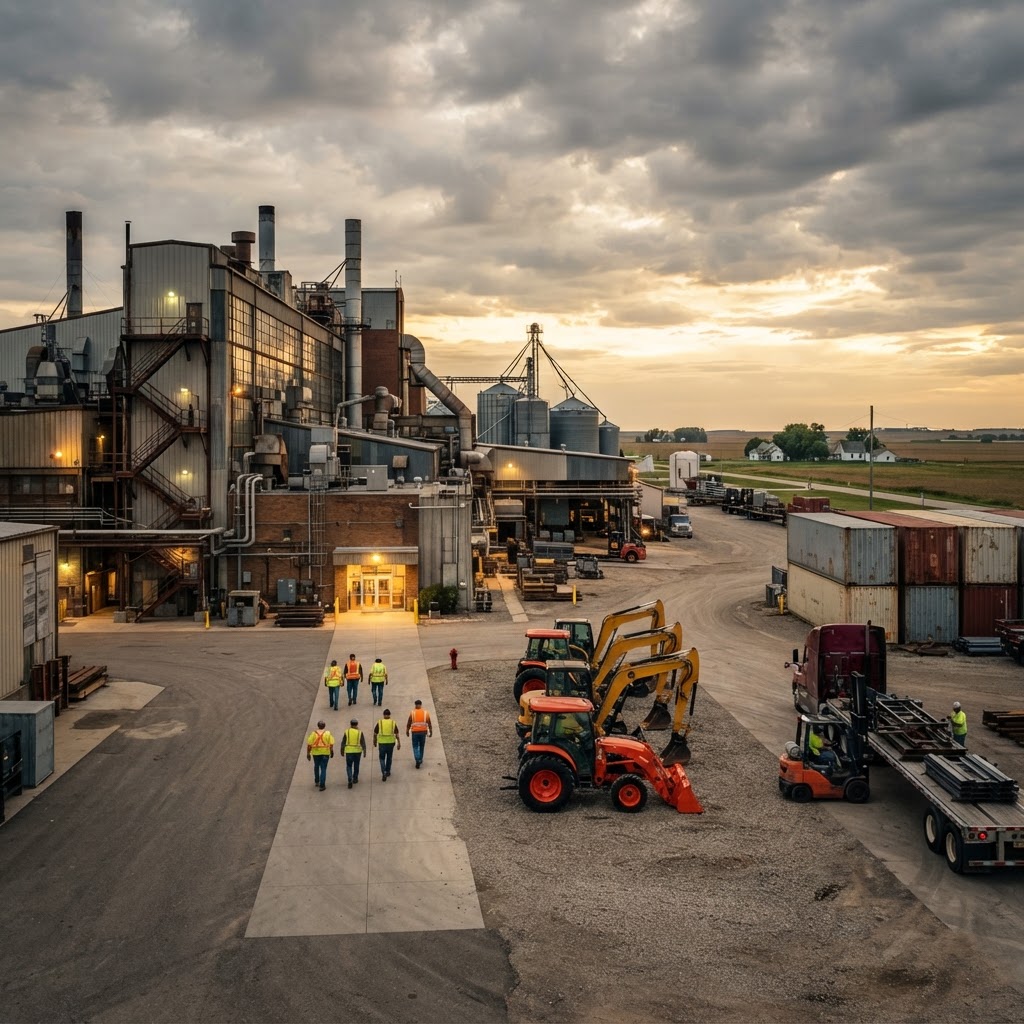
The Midwest remains the production and export heart of agricultural and construction machinery, but a new University of Illinois report posted on farmdoc daily makes plain that the business is at a crossroads. Major original equipment manufacturers including John Deere, Caterpillar, CNH and Vermeer still support large regional supply chains and payrolls, yet slowing farm incomes and declining equipment orders are accelerating a strategic shift: manufacturers are expanding capacity outside the United States to serve local markets and reduce trade exposure.
DIG Analysis — 2026-08-07: The report confirms a trend Digital Iron Group has tracked: OEMs are reallocating capital and capacity to international plants to shorten delivery chains, stabilize margins against currency and tariff swings, and follow end markets that are growing faster than core U.S. demand.
What the report found: employment, supply chains, and exports
The University of Illinois analysis documents how machinery manufacturing remains a major employer and exporter across Midwestern states. Factories for large OEMs anchor an extended industrial base of tier suppliers, parts distributors and logistics businesses. That base sustained good employment through recent cycles but is sensitive to farm economics. With farm incomes under pressure, dealer orders thin and factory utilization rates are slipping, creating immediate downward pressure on overtime, temporary labor use and supplier order volumes.
The export role is twofold. Finished equipment and components flow overseas from Midwest plants, supporting trade balances and keeping high-skill assembly jobs in place. But OEMs are explicitly repricing that role. The report documents decisions by manufacturers to add capacity in Brazil, India, and Eastern Europe to serve those markets locally, reducing long shipping lanes and hedging against protectionist policies.
Why OEMs are shifting production and what that means
Manufacturers are responding to three concrete pressures. First, end-market demand is weaker at home because farm operators have curtailed capital spending. Second, trade policy and logistics costs have made distant markets more expensive to serve from U.S. factories. Third, unit economics favor local assembly where import tariffs, freight and lead times can be avoided. The net effect is targeted investment away from export-dependent lines in the Midwest toward onshore facilities in growth regions.
