
Markets
CATCaterpillar$510.45-5.01%•
DEDeere & Co.$609.25-2.50%•
CNHCNH Industrial$10.74-2.98%•
AGCOAGCO Corp.$100.93-1.91%•
URIUnited Rentals$973.43-8.13%•
ALTGAlta Equipment$4.33-8.46%•
TTCToro Company$100.82-1.70%•
HRIHerc Holdings$133.55-11.54%•
MGRCMcGrath RentCorp$113.45-6.38%•
MTWManitowoc$20.31-5.58%•
CATCaterpillar$510.45-5.01%•
DEDeere & Co.$609.25-2.50%•
CNHCNH Industrial$10.74-2.98%•
AGCOAGCO Corp.$100.93-1.91%•
URIUnited Rentals$973.43-8.13%•
ALTGAlta Equipment$4.33-8.46%•
TTCToro Company$100.82-1.70%•
HRIHerc Holdings$133.55-11.54%•
MGRCMcGrath RentCorp$113.45-6.38%•
MTWManitowoc$20.31-5.58%•
Back to Newsmarket-intelligence

One Dealer Voice: NAEDA and AED Move to Consolidate North America’s Equipment Lobby

Jon RossiJon RossiFounder & Editor-in-Chief September 25, 2026 3 min read

NAEDA and AED are combining their dealer constituencies into one organization spanning agricultural and construction equipment. The merger could sharpen advocacy, reduce duplicated services, and alter how manufacturers and policymakers engage the channel.

One Dealer Voice: NAEDA and AED Move to Consolidate North America’s Equipment Lobby

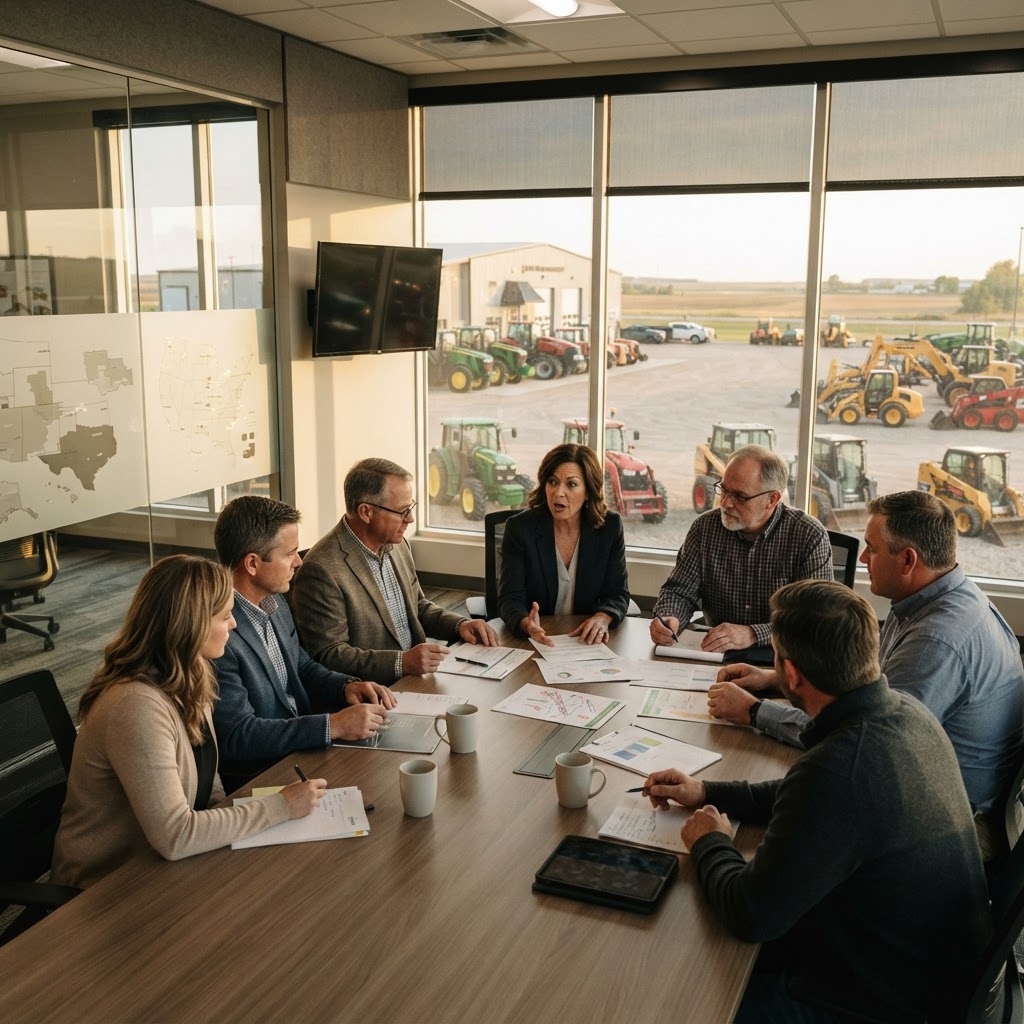
NAEDA and the Associated Equipment Distributors have announced a merger that will create one organization representing equipment dealers across North America’s agricultural and construction markets. The decision brings two established dealer associations under a common structure at a time when distribution economics, technician shortages, digital retailing, right-to-repair rules, and manufacturer channel policies are all under pressure.

DIG Analysis — 2026-09-25: This is more than an administrative combination. The central question is whether a unified association can turn fragmented dealer concerns into a clearer negotiating position without losing the distinct priorities of agricultural and construction distributors.

Why the merger matters now

Dealer representation has often been divided by equipment segment, geography, and business model. Agricultural dealers face issues tied to seasonal utilization, precision technology, warranty administration, and manufacturer concentration. Construction distributors contend with rental competition, fleet replacement cycles, public infrastructure spending, and a customer base that can include contractors, municipalities, and national accounts.

A single organization can give those concerns greater weight in Washington, state capitals, and provincial governments. It can also reduce the possibility that separate associations pursue overlapping positions on issues such as equipment access, emissions policy, data rights, labor availability, taxation, and financing. The value will depend on disciplined governance and a clear process for resolving differences between sectors.

“The merger creates an opportunity to speak with greater clarity and reach while preserving the expertise dealers need in their specific markets.” Digital Iron Group analysis

Advocacy is the immediate test

The strongest case for consolidation is political. Manufacturers, technology suppliers, contractors, farmers, and public agencies increasingly operate across traditional market boundaries. Policy affecting machine software, telematics, repair access, safety standards, import costs, and environmental compliance can reach both construction and agriculture, even when the commercial impact differs.

A combined association should be able to maintain a larger policy staff, coordinate state and federal priorities, and provide members with more consistent guidance. It may also improve the quality of dealer data available to policymakers. However, scale by itself will not produce influence. The organization will need transparent dues structures, regional representation, sector-specific committees, and measurable member services.

Farm Equipment, which reported the announcement in its industry news coverage, identified the merger as a strategic consolidation intended to provide a stronger, more cohesive dealer voice and share resources across North America. The next phase will be defined by the operating details: leadership, branding, membership terms, governance, and the treatment of existing programs.

What to watch after the announcement

Manufacturers will likely assess whether the new association becomes a more consistent counterpart in channel discussions. That could affect negotiations around inventory commitments, warranty labor, parts availability, customer data, online sales, and territory policy. A larger dealer body may also be better positioned to document the financial and operational costs of policy changes before they take effect.

The merger also creates execution risks. If members see the new organization as dominated by one sector, participation could weaken. If consolidation produces higher fees or slower decision-making, smaller independent dealers may question the value. And if advocacy remains broad but noncommittal, the organization may gain size without gaining leverage.

For now, the announcement signals a clear direction: dealer associations believe their interests are better advanced collectively. The outcome will be judged less by the merger announcement than by whether members receive stronger representation, faster intelligence, and practical tools for running equipment businesses through the next cycle.

Who This Affects

OEM Impact

OEM channel managers and dealer-development executives will face a more centralized counterpart on warranty, parts, inventory, data access, and distribution policy. A unified association could standardize dealer feedback and increase pressure for documented responses to channel concerns, while reducing the value of company-by-company advocacy outreach.

Dealer Impact

Dealer principals and general managers may gain stronger policy representation and shared research, training, and legal resources. They will also need to evaluate governance, dues, sector representation, and whether the combined organization protects the distinct needs of agricultural and construction dealerships.

Contractor Impact

Fleet operators, construction contractors, and agricultural producers could see indirect effects through dealer policies on parts availability, service access, telematics, and machine support. A stronger dealer association may improve consistency in channel advocacy, but any change in dealer costs or OEM negotiations could eventually affect service pricing and equipment availability.

Startup Impact

Series A founders building dealer software, service platforms, parts marketplaces, or machine-data tools may gain a more concentrated channel for customer discovery and policy engagement. The combined association could also raise the standard for security, interoperability, and dealer value propositions before startups earn broad adoption.

Dealmaker Impact

PE dealmakers, M&A advisers, and strategic acquirers should treat association consolidation as a signal that dealer bargaining power and policy exposure are becoming more material diligence items. Future platform acquisitions may require closer analysis of OEM agreements, advocacy positions, member obligations, and the risk of sector-specific policy changes.

Back to News
equipment dealersNAEDAAEDdealer advocacyagricultureconstructionchannel strategy