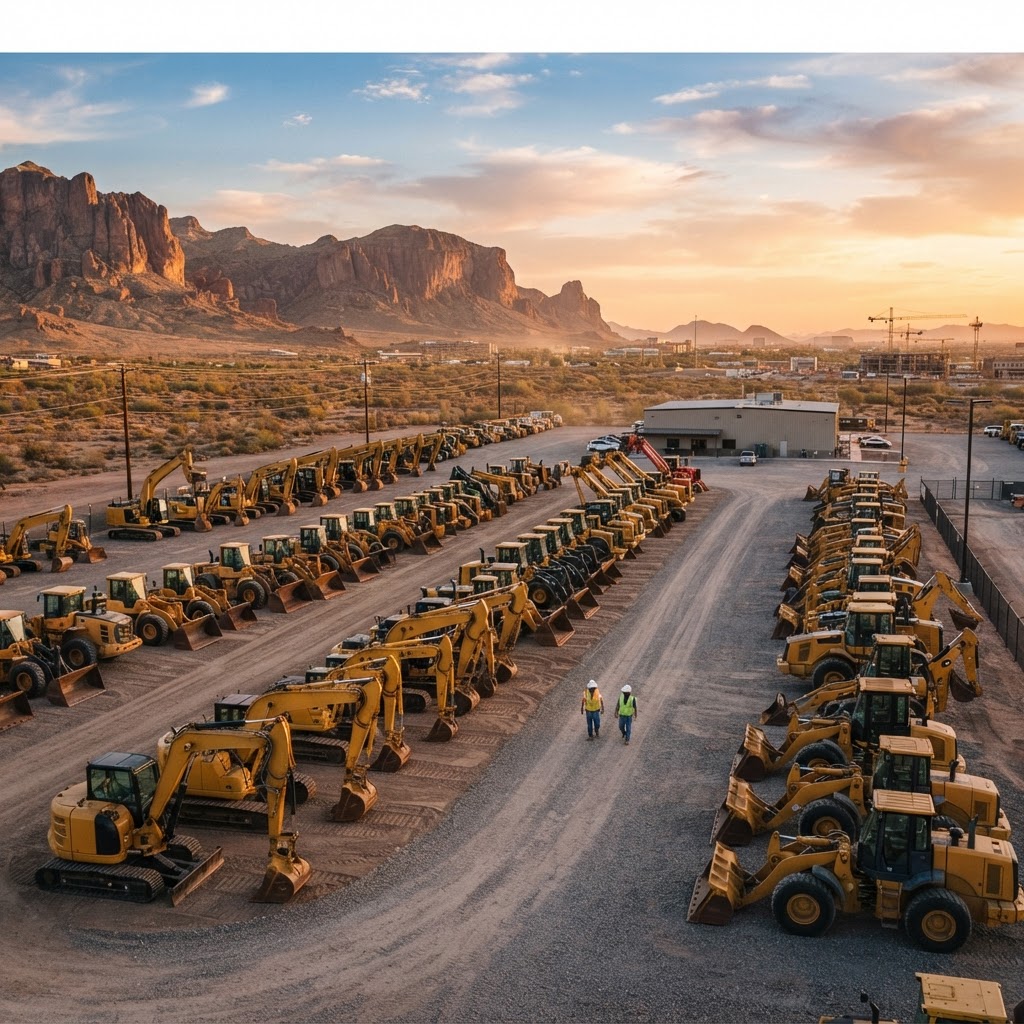
The acquisition of ECCO Equipment gives Opifex-Synergy a foothold across five Western states and access to nine of the country’s 11 largest equipment rental markets. The move materially broadens its addressable market and raises the competitive stakes for dealers, OEMs, and fleet operators.
Opifex-Synergy has acquired ECCO Equipment Company, LLC from an affiliate of Hitachi Construction Machinery Co., Ltd., establishing a direct operating presence across California, Arizona, Nevada, Utah, and Idaho. The transaction is more than a geographic add-on: it gives Opifex-Synergy access to nine of the 11 largest U.S. equipment rental markets and nearly doubles the company’s total addressable market.
DIG Analysis — 2026-09-30: The ECCO purchase signals that scale in equipment rental is increasingly being built through regional density, not isolated branch expansion. Opifex-Synergy now has a broader platform for fleet deployment, customer coverage, and future acquisitions, while the Western market becomes more contested for established dealers and rental operators.
A Western foothold with national implications
ECCO gives Opifex-Synergy an operating base in a region defined by large infrastructure programs, commercial construction, logistics development, mining activity, and uneven equipment utilization across major metropolitan areas. California alone offers substantial rental demand, while Arizona, Nevada, Utah, and Idaho add exposure to fast-growing construction corridors and resource-driven work.
The strategic value is not limited to the number of states involved. A Western branch network can improve equipment repositioning across neighboring markets, support larger accounts with work in multiple territories, and reduce dependence on any single local cycle. It also gives Opifex-Synergy a larger installed customer base from which to sell ancillary services, maintenance, attachments, and replacement equipment.
Morningstar, citing the company’s announcement, reported that the acquisition nearly doubles Opifex-Synergy’s total addressable market. That measure matters because it frames the deal as a platform expansion rather than a simple change in ownership. The company is acquiring market access, personnel, locations, customer relationships, and operating knowledge that would take years to replicate organically.
Why ECCO matters to the competitive field
ECCO’s ownership by an affiliate of Hitachi Construction Machinery adds an OEM-linked dimension to the transaction. The sale places a dealer and rental footprint into a broader independent operating structure, potentially changing how equipment brands, customer accounts, and fleet decisions are managed across the territory.
For Opifex-Synergy, the immediate challenge is integration. Western markets differ sharply in customer mix, utilization patterns, labor availability, transportation costs, and local regulations. Preserving ECCO’s relationships while standardizing purchasing, fleet planning, systems, and service processes will determine whether the expanded footprint produces operating leverage or merely adds complexity.
“This acquisition marks a significant milestone in Opifex-Synergy’s growth and establishes our presence in the Western United States.”
The statement, as reported in the company’s announcement, captures the central point: the transaction changes Opifex-Synergy’s geographic identity. It is no longer concentrated in a narrower regional footprint. Its operating decisions now have relevance across a much larger share of the U.S. rental market.
The next test is execution, not territory
The acquisition also creates a new benchmark for future growth. With operations in nine of the 11 largest U.S. equipment rental markets, Opifex-Synergy can pursue denser coverage, larger national and regional accounts, and additional tuck-in acquisitions. Those opportunities will depend on disciplined capital allocation and the ability to keep fleet availability high without allowing transportation, refurbishment, or service costs to erode returns.
Competitors will be watching branch-level performance, pricing behavior, used-equipment disposition, and the company’s approach to OEM relationships. If Opifex-Synergy can connect ECCO’s Western presence with its existing operations, the deal may become a template for further market entry. If integration lags, the enlarged footprint could expose the company to duplicated costs and inconsistent customer experience.
The broader signal is clear. Equipment rental remains attractive to consolidators because geographic reach can compound fleet productivity and customer retention. Opifex-Synergy’s acquisition of ECCO is therefore both a Western expansion and a declaration that the next phase of competition will be fought over network density, capital discipline, and control of high-value rental markets.
 Translate