 Translate

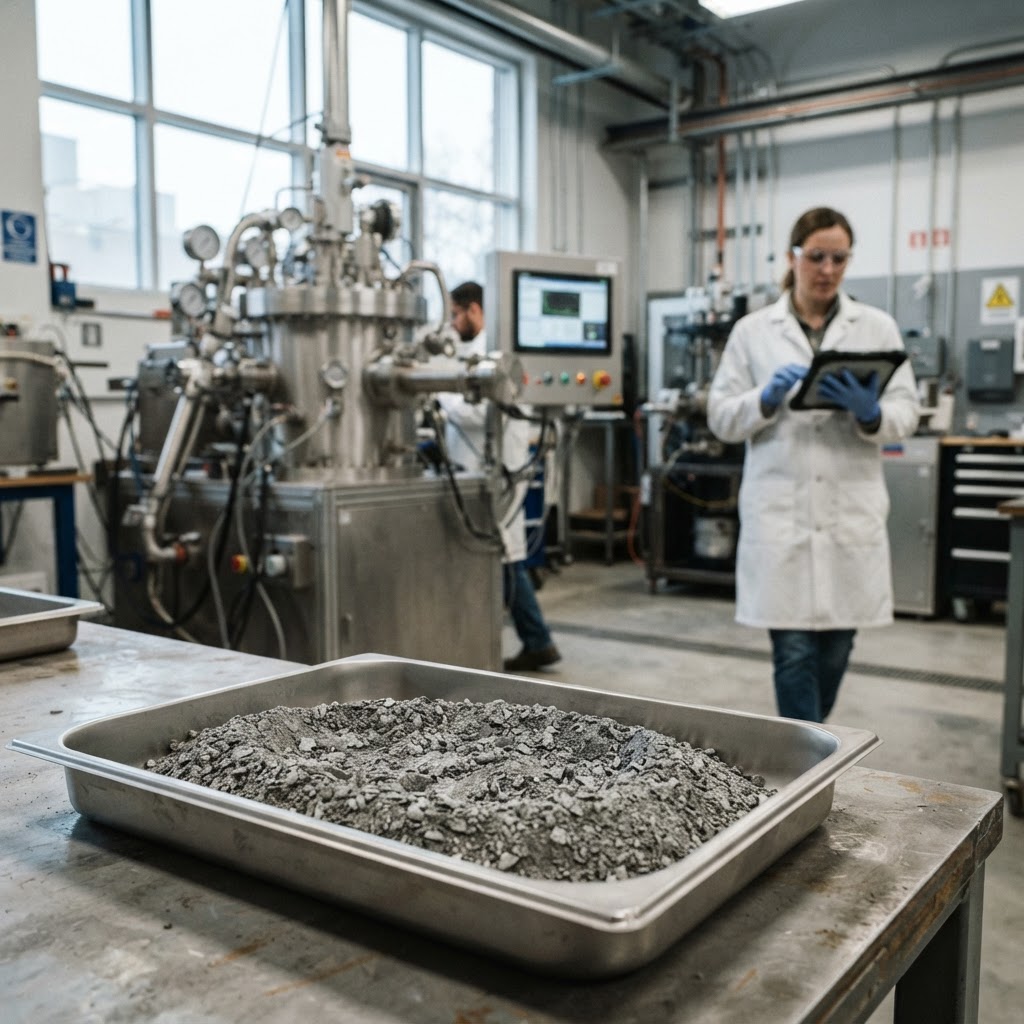
PyroGenesis Inc. of Montreal announced a second contract in seven days to supply coarse-cut titanium powder to a U.S.-based original equipment manufacturer that builds metal additive machines. The most recent order is worth approximately US$73,700 or CA$102,132 and will be produced using PyroGenesis proprietary NexGen plasma atomization process. The news was reported via GlobeNewswire and published by The Manila Times on August 31, 2026.
DIG Analysis — 2026-09-01: This repeat order is not a large revenue event on its own but it is a concrete signal that at least one U.S. metal additive OEM is actively qualifying plasma-atomized titanium as a production feedstock. Expect a follow-up focus on lot-to-lot consistency, particle-size distribution and certification steps that precede larger commercial buy volumes.
What happened: details and context
PyroGenesis has developed a plasma-based atomization system, branded NexGen, that yields coarse-cut titanium powder intended for directed energy deposition and binder-jet platforms as well as some laser powder-bed systems that accept larger particle distributions. The reported contract value of US$73,700 is small compared with typical annual OEM materials procurement, but it is the second confirmed sale announced in one week, which suggests the company is moving beyond initial sampling into repeatable supply. The buyer is a U.S. original equipment manufacturer focused on metal additive production. PyroGenesis positioned the product as a proprietary offering produced in Canada and shipped to the United States.
Why it matters: calibration, qualification and supply options
Metal additive OEMs are in a narrow window where material quality and supply security are as important as machine performance. Titanium feedstock is subject to strict quality control because minor variations in oxygen, nitrogen or particle morphology can materially change mechanical properties in printed parts. A repeat order indicates the OEM has progressed through early testing steps and is either continuing a qualification run or starting to align incoming lots with internal acceptance criteria. For buyers and spec writers, the presence of a plasma-atomized option matters because it diversifies sources beyond conventional water-atomized or gas-atomized producers.
"A second small order in short sequence is how material suppliers graduate from sample status to partner status. The critical next steps are consistent chemistry, narrow size distribution and transparent lot documentation." — Jon Rossi, Founder & Editor-in-Chief, Digital Iron Group
From a supply chain perspective, OEMs that secure multiple qualified vendors can reduce single-source risk and push for better lead times and price terms. For PyroGenesis, the challenge is scaling production without losing the particle-level controls that make plasma-atomized powder attractive for high-performance applications. The company must also demonstrate repeatable batch certification to move from one-off orders to framework agreements that generate predictable revenue.
Market signals and likely next moves
Expect three immediate developments. First, PyroGenesis will emphasize technical data packages on chemistry, particle-size analysis and flow characteristics to convert the OEM into a longer-term customer. Second, competing powder makers and independent distributors will monitor the performance of NexGen powder in customer applications and may adjust their own offerings or certification campaigns. Third, OEM procurement and additive engineering teams will expand in-house testing to include fatigue, tensile and microstructure comparisons between plasma-atomized and incumbent powders.
Financially, the order size is not material to PyroGenesis near term, but a pattern of repeat orders can justify incremental production investments and attract strategic customers wanting multiple qualified suppliers. The broader implication for heavy industry buyers is incremental confidence that alternative atomization processes can meet the documentation and consistency demands of load-bearing metallic components.
