 Translate

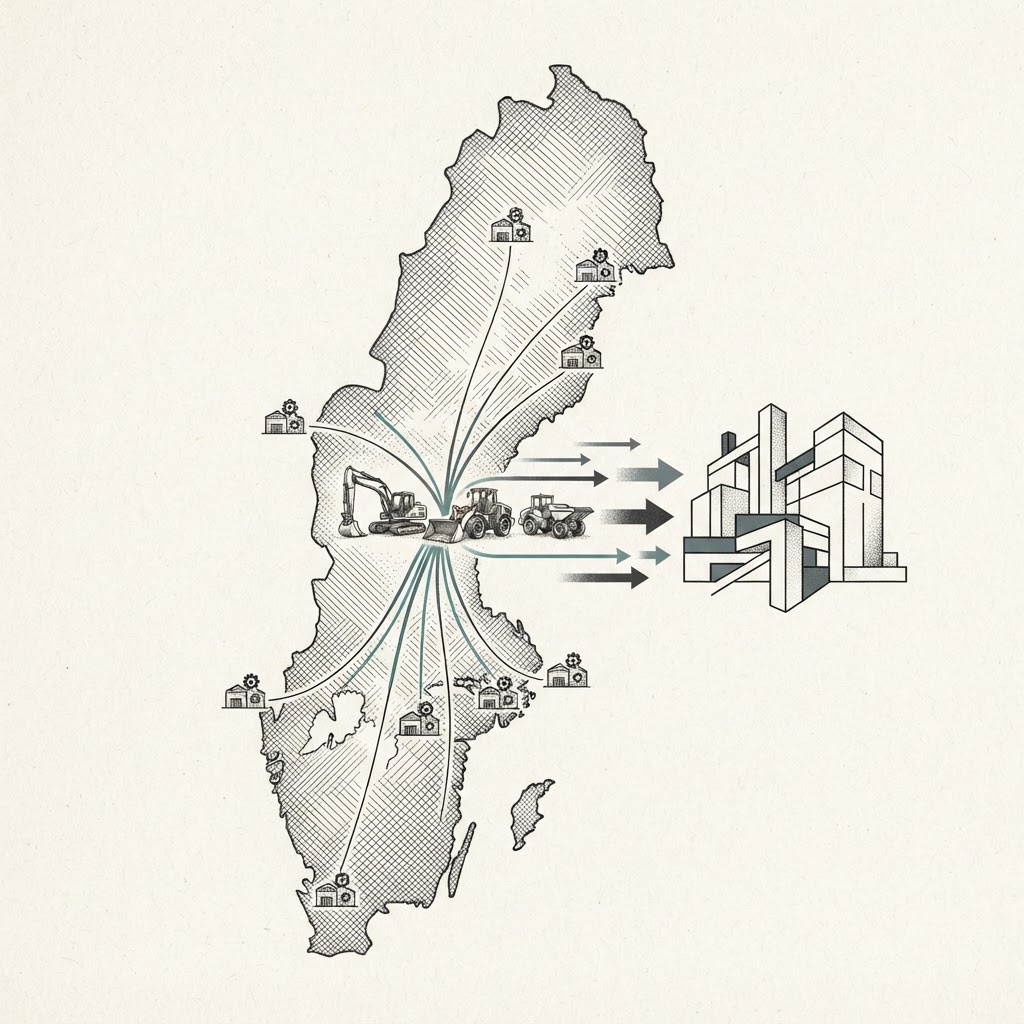
Renta Group is expanding its Swedish rental operation with the acquisition of Arema Heavy Rental Sverige, adding eight depots, 45 employees and a fleet of excavators, loaders and dumpers with capacities up to 40 tonnes. Arema generates about SEK 200 million, or €18 million, in annual revenue, according to International Rental News.
DIG Analysis — 2026-11-01: The deal gives Renta more than incremental equipment capacity. It adds a specialist network tied to infrastructure and foundation projects, where machine weight, availability and local service coverage can determine whether a rental company earns repeat work. The commercial test will be whether Renta can retain Arema’s customer relationships and operating knowledge while bringing the business into a larger group.
A denser Swedish footprint
Arema’s eight depots provide Renta with a ready-made presence across the Swedish market, rather than requiring the company to build locations one at a time. The acquired fleet extends into heavy earthmoving equipment, including machines up to 40 tonnes, a segment that can be costly to serve without enough local demand and maintenance capacity.
The target’s concentration in infrastructure and foundation work gives the acquisition a defined customer base. Such projects often require equipment for extended periods and depend on access to machines suited to site conditions. A nearby depot can reduce transport time and support service response, while a broader fleet may help meet a contractor’s requirements across multiple stages of a job.
Those advantages are not automatic. The available information does not identify Arema’s depot locations, utilization rates, customer concentration or the age and condition of its fleet. Nor has Renta disclosed how much overlap exists between the companies’ existing operations. Without those details, the revenue figure indicates scale, but not the amount of earnings or operational improvement the buyer is acquiring.
“The acquisition adds eight depots and 45 employees to Renta’s footprint.”
The employee base is part of the asset. Local staff carry knowledge of customers, equipment and regional project schedules that may be difficult to replace quickly. If the company combines functions or changes fleet allocation, it will need to preserve that operating continuity while making the depots work as part of a larger network.
Scale without a disclosed price
Renta has not disclosed the purchase price or outlined how it will finance the acquisition. That leaves investors and competitors without a basis for judging the valuation against Arema’s approximately SEK 200 million in annual revenue. Revenue alone also says little about margins, debt, maintenance spending or the cash needed to keep a heavy fleet productive.
For a rental group, the economics depend on utilization as well as scale. Heavy machines represent significant capital tied up in equipment, and returns can weaken if project delays leave assets idle or if several suppliers compete for the same work. Acquiring an operating fleet can shorten the time needed to enter a niche, but it also transfers those utilization and lifecycle risks to the buyer.
International Rental News reported the transaction as an expansion of Renta’s Swedish business. The report did not provide details on closing conditions, management arrangements or a timetable for integrating the two businesses. Those omissions matter because depot networks and fleet systems do not become more productive simply by sharing ownership.
Execution is the next measure
The acquisition places Renta in a stronger position to offer heavy equipment near infrastructure and foundation projects, while giving Arema access to a wider corporate platform. Whether that translates into more rental days, lower operating costs or broader customer coverage will depend on execution at depot level.
Renta’s immediate task is to maintain service and equipment availability across the eight incoming depots as it assesses where the networks complement one another. The disclosed transaction adds 45 employees and a fleet reaching 40 tonnes; the purchase price and integration plan remain unreported.
