
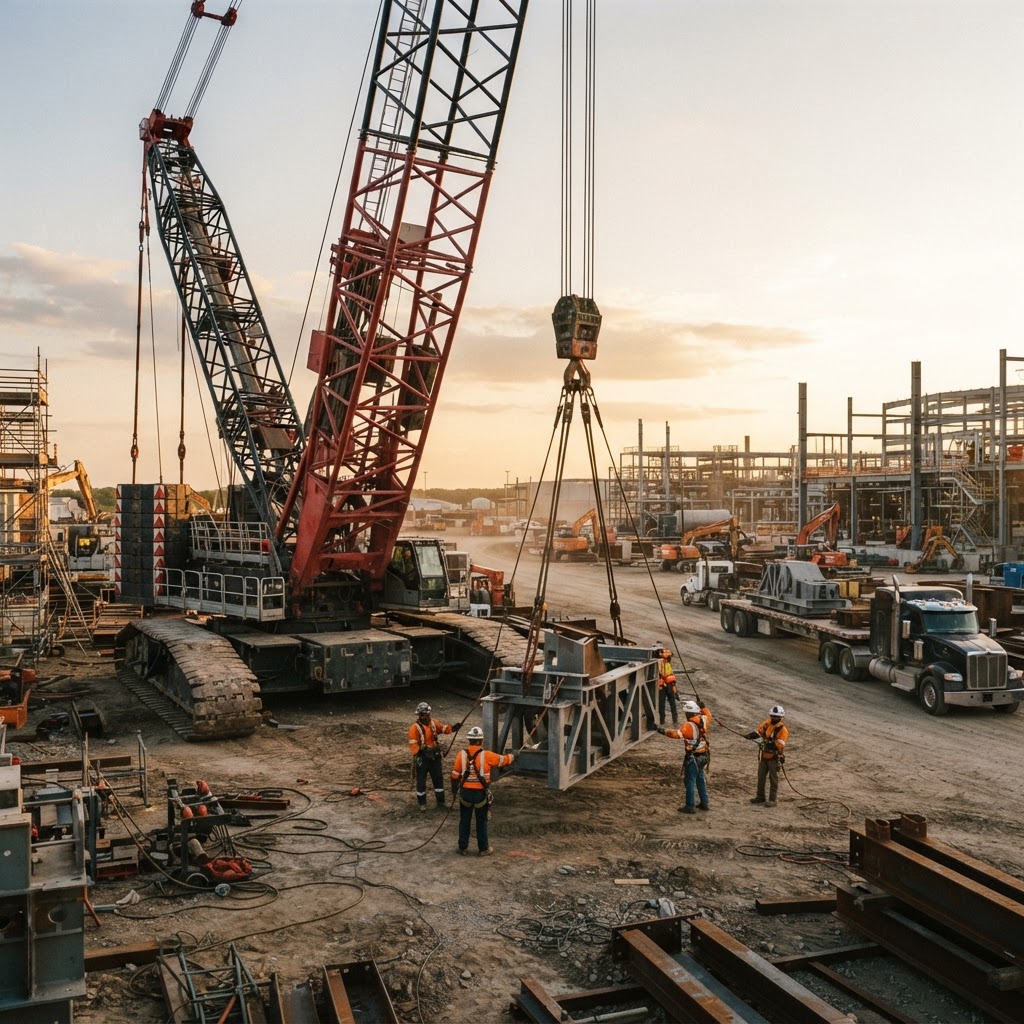
Salim Equipment has taken delivery of a 280-tonne Hitachi Sumitomo crawler crane, expanding its ability to serve large-scale infrastructure and industrial projects across the region. According to Plant & Equipment, the acquisition marks a deliberate push by the dealer into higher-capacity lifting work that typically requires specialist machines and logistics. This is a capital decision with immediate implications for project bidding, fleet utilization and maintenance planning.
DIG Analysis — 2026-08-23: The purchase signals that Salim Equipment expects near-term demand for heavy lifts to outpace what standard mobile cranes can handle, and that it is prepared to invest in the transport, crew training and parts support required to keep a 280-tonne crawler productive and compliant.
What Salim bought and why it matters
Hitachi Sumitomo’s 280-tonne crawler sits in a segment where rental day rates and mobilization fees rise sharply. For dealers, the calculus is straightforward. One high-capacity unit can unlock projects that previously required subcontracting or loss-leading bids. Salim Equipment will be able to quote on heavier lifting scopes for bridges, power substations, petrochemical modules and heavy plant erections without relying on outside lift contractors.
Beyond the headline capacity, deploying a crane of this class requires attention to transport routes, road permits, crane assembly crews and certified operators. Those costs drive a higher effective hourly rate than smaller cranes. The asset will only justify its acquisition if utilization targets are met or if the presence of the machine expands the dealer’s addressable market enough to offset idle time and the elevated cost of parts and counterweight handling.
Operational and market implications
Operationally, the new crawler places new demands on Salim Equipment’s supply chain and service capability. Heavy crawler cranes need specific spare parts inventories, hydraulic and winch expertise and rigorous inspection intervals. Dealers that do not pre-position parts or train technicians risk longer downtime and warranty exposure. The OEM relationship matters; Hitachi Sumitomo support for initial commissioning, warranty work and parts logistics will be a crucial determinant of operating costs.