 Translate

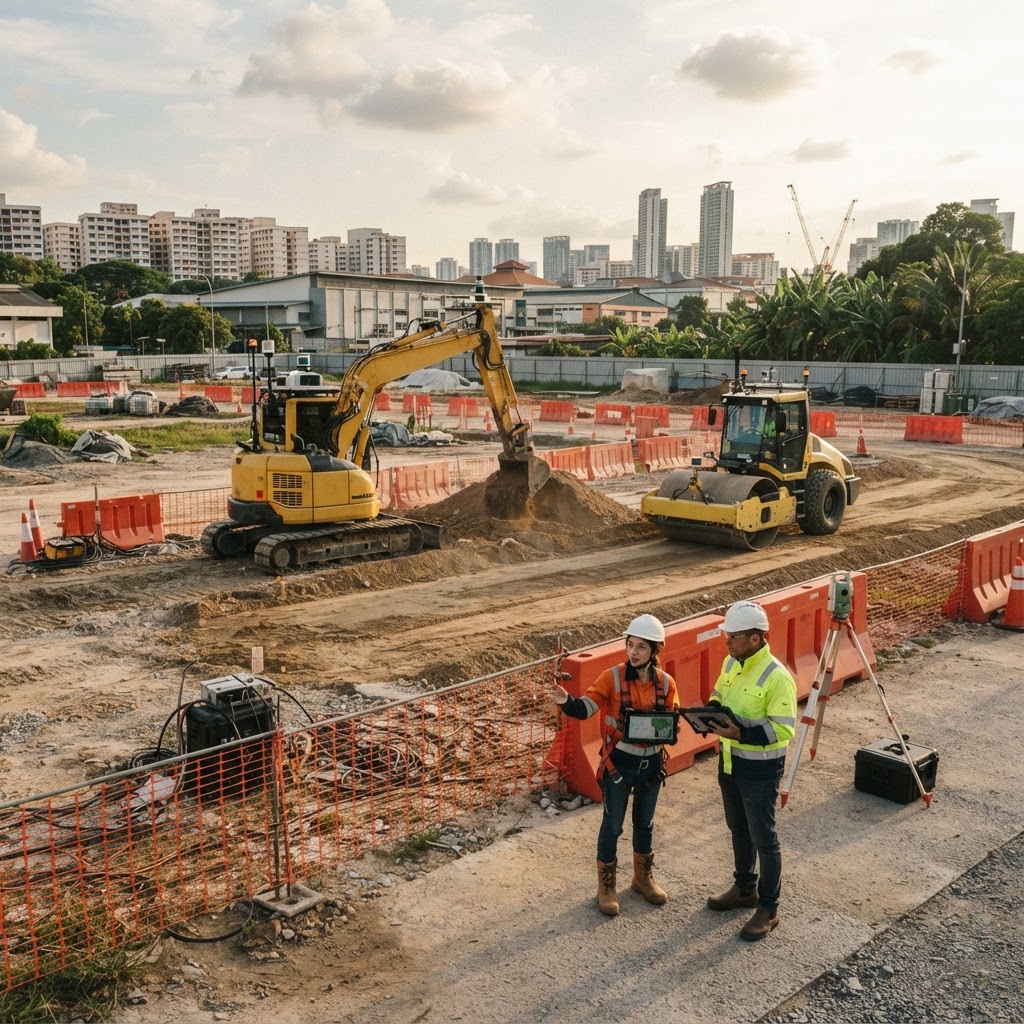
Singapore has moved autonomous construction equipment from demonstration to supervised field testing. JTC Corporation and Kajima Corporation have launched a pilot at the Bulim Autonomous Yard, where excavators and compactors are being retrofitted with autonomous capabilities and evaluated in operating conditions. The project brings local contractor Kok Tong Construction and equipment provider Tractors Singapore Limited into the program, linking technology validation with operator and engineer training.
DIG Analysis — 2026-09-21: The important signal is not simply that machines can operate with reduced direct control. It is that Singapore is testing a retrofit pathway around existing equipment, local skills and defined site conditions. That approach lowers the barrier to adoption, while exposing the operational, safety and maintenance requirements that a broader rollout would have to meet.
A field test built around existing machines
Rather than treating autonomy as a clean-sheet vehicle program, the pilot is focused on conventional heavy equipment modified with autonomous functions. That distinction matters for contractors. Most construction fleets are accumulated over years, with mixed brands, varying ages and established maintenance practices. A retrofit model could allow selected machines to gain new capabilities without forcing an immediate replacement cycle.
The Bulim site provides a controlled environment for evaluating how autonomous excavators and compactors perform across repeatable tasks. The test can reveal more than basic machine movement. It can expose how systems respond to changing ground conditions, worksite boundaries, other equipment and interruptions. It also gives project teams a setting in which operating procedures can be documented before the technology is introduced to less structured jobsites.
“The pilot is a practical test of how autonomous capabilities can be integrated into existing construction operations while building local expertise.”
Labor pressure is only part of the business case
JTC and Kajima have identified manpower constraints and worksite safety as central reasons for the initiative. Singapore’s construction sector has a direct need to increase output with limited labor availability, but autonomy will not remove the need for people. It changes where their time is spent and raises the value of workers who can supervise systems, manage exceptions and maintain sensor and control hardware.
That is why Kajima’s collaboration with Kok Tong Construction and Tractors Singapore Limited is significant. Training local operators and engineers makes workforce preparation part of the pilot rather than an afterthought. Operators will need to understand task planning, system status and safe intervention. Engineers will need to diagnose technology layered onto mechanical equipment, including communications, sensors and software-related faults.
Safety claims will also depend on operating discipline. Autonomous functions may reduce exposure to repetitive or hazardous tasks, but they introduce new failure modes and responsibilities. Clear rules will be needed for site access, emergency stops, manual takeover, equipment separation and accountability when a machine leaves its planned operating envelope.
What the pilot will prove, and what it will not
The pilot should be judged on measurable operating outcomes: productive hours, unplanned stoppages, intervention frequency, task accuracy, maintenance burden and safety performance. Cost is equally important. A retrofit may be less expensive than a new autonomous machine, but the total deployment cost includes sensors, connectivity, software support, training, calibration and changes to site procedures.
The program will not by itself establish that autonomous equipment is ready for every construction application. Excavation and compaction can be structured around defined work zones, while urban projects often contain unpredictable interactions, shifting plans and tight access constraints. Results from Bulim will need to be tested against those conditions before contractors can make fleet-wide investment decisions.
Still, the Singapore pilot creates a useful reference point for the regional market. It combines a public-sector site owner, a major construction company, a local contractor and an equipment provider around a practical deployment question: how to make existing machines safer and more productive while retaining people who can control the work. The answer will be determined less by demonstrations than by uptime, training results and the cost of operating the system every day.
