 Translate

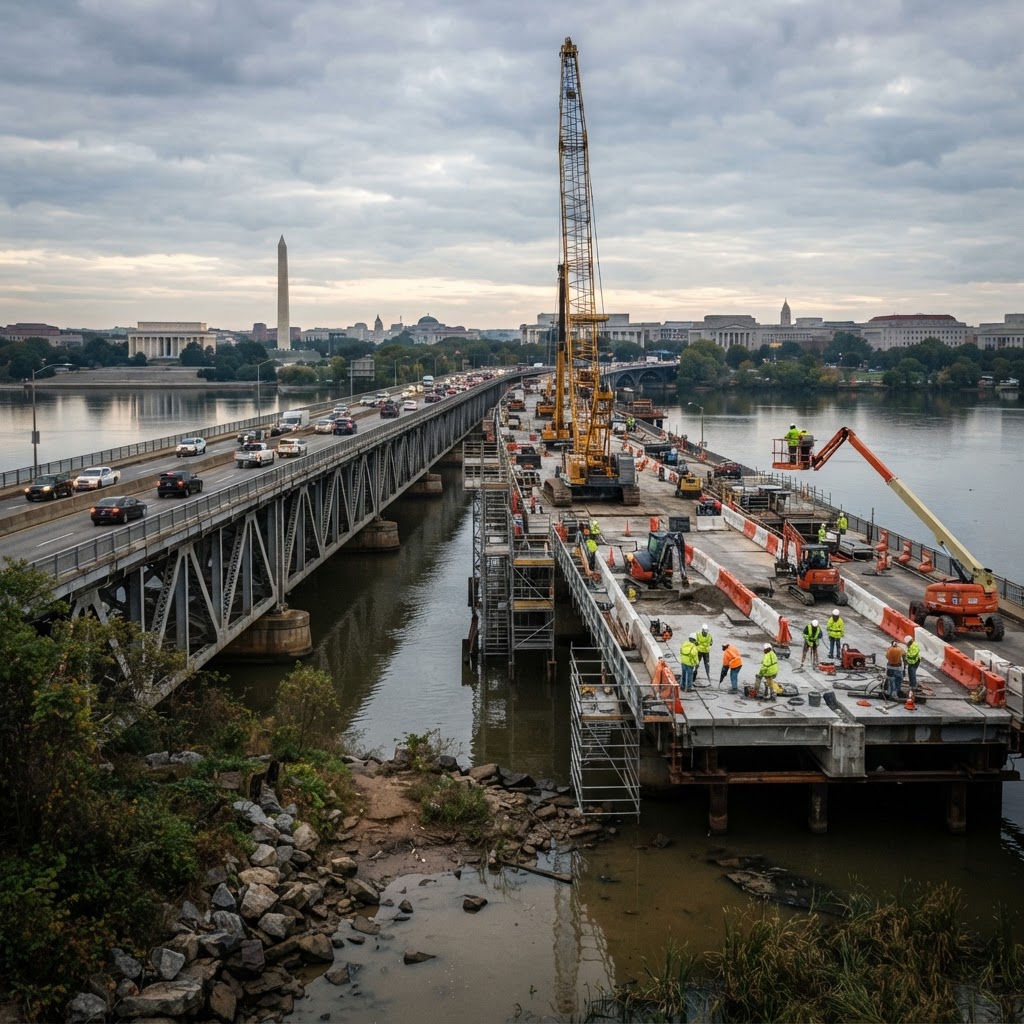
Skanska has secured a $114 million contract to rehabilitate the I-395 bridge spanning the Potomac River, adding another sizeable public-works award to a civil construction market still supported by critical transportation needs. The project is not simply a bridge repair. It is a demand signal for specialized equipment, experienced crews, traffic-control capability, and the financial capacity required to execute work in a high-consequence corridor.
DIG Analysis — 2026-09-17: The award reinforces that major infrastructure spending is reaching the field through complex rehabilitation packages, not only through new-build megaprojects. That distinction matters for contractors and suppliers because bridge work typically requires a different mix of access systems, lifting equipment, concrete and structural-repair tools, inspection technology, and scheduling discipline than conventional road construction.
Rehabilitation work is becoming a core civil market
The I-395 crossing is part of a transportation network connecting the Washington, D.C., region across the Potomac River. Keeping that link operational requires work to be staged around existing traffic, constrained work zones, environmental requirements, and narrow windows for disruptive activity. Those conditions raise execution risk and favor contractors with deep bridge-rehabilitation experience, robust project controls, and the balance sheet to manage long-duration field operations.
For Skanska, the contract adds to a portfolio profile built around large, technically demanding civil projects. The award also illustrates why rehabilitation is increasingly important to the heavy construction sector. Aging bridges and transportation assets require recurring intervention even when public agencies are not pursuing entirely new corridors. That creates a steadier pipeline for firms capable of inspection, structural repair, deck work, expansion-joint replacement, concrete remediation, and related roadway operations.
“The I-395 bridge award is a useful indicator of how infrastructure dollars are translating into specialized, field-intensive work rather than remaining confined to planning and procurement.”
Digital Iron Group analysis
Why the equipment signal matters
Bridge rehabilitation places a premium on machines that can work productively in restricted footprints. Depending on final work packages, demand may include compact and conventional excavators, telehandlers, cranes, aerial access equipment, concrete pumps, milling and demolition attachments, generators, compressors, lighting systems, and specialized containment or dust-control equipment. Fleet managers will also need to balance utilization against redundancy, since schedule delays can make unavailable equipment more expensive than ownership costs suggest.
