
Markets
CATCaterpillar$510.45-5.01%•
DEDeere & Co.$609.25-2.50%•
CNHCNH Industrial$10.74-2.98%•
AGCOAGCO Corp.$100.93-1.91%•
URIUnited Rentals$973.43-8.13%•
ALTGAlta Equipment$4.33-8.46%•
TTCToro Company$100.82-1.70%•
HRIHerc Holdings$133.55-11.54%•
MGRCMcGrath RentCorp$113.45-6.38%•
MTWManitowoc$20.31-5.58%•
CATCaterpillar$510.45-5.01%•
DEDeere & Co.$609.25-2.50%•
CNHCNH Industrial$10.74-2.98%•
AGCOAGCO Corp.$100.93-1.91%•
URIUnited Rentals$973.43-8.13%•
ALTGAlta Equipment$4.33-8.46%•
TTCToro Company$100.82-1.70%•
HRIHerc Holdings$133.55-11.54%•
MGRCMcGrath RentCorp$113.45-6.38%•
MTWManitowoc$20.31-5.58%•

SoftBank’s $200M Bet on Gravis Signals Accelerated Push for Autonomous Heavy Machinery

Jon RossiJon RossiFounder & Editor-in-Chief August 18, 2026 3 min read

SoftBank led a $200 million round in Zurich’s Gravis Robotics to speed development of autonomous heavy equipment. The funding targets chronic labor shortages and on-site risk by backing physical AI that can operate without human crews.

SoftBank’s $200M Bet on Gravis Signals Accelerated Push for Autonomous Heavy Machinery

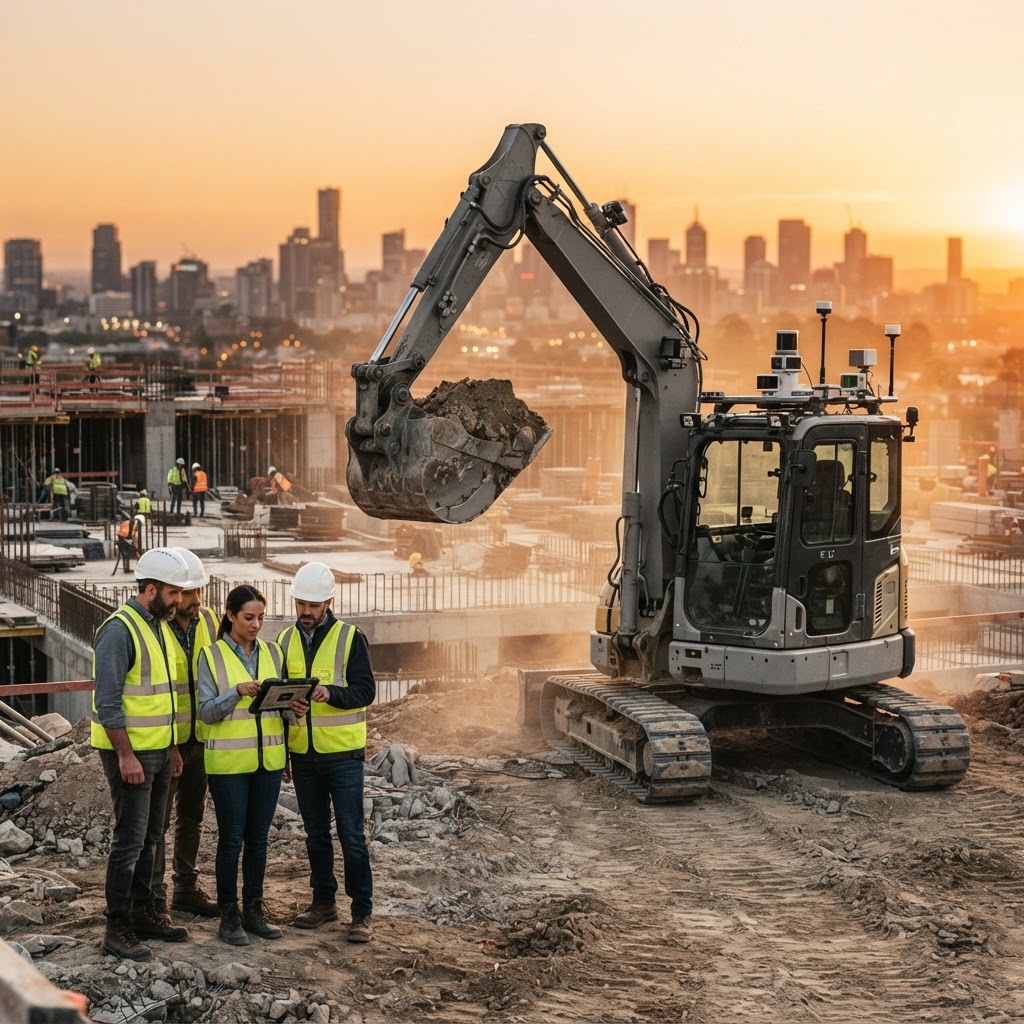
SoftBank Group has committed $200 million to Gravis Robotics, a Zurich startup building physical artificial intelligence to run heavy machinery on construction sites. The capital is explicitly aimed at moving autonomous machines from controlled demonstrations into continuous operation in active work zones, according to reporting by CEO Insights Asia.

DIG Analysis — 2026-08-18: The size and profile of this round mark a clear stage shift. SoftBank is no longer testing the category with token bets. It is funding scaled engineering and pilot deployments that must solve reliability, safety and integration challenges within live construction projects.

What happened: the financing and the technical focus

Gravis Robotics raised the round to expand engineering teams, buy heavy test hardware and field multi-machine systems that can operate without a human in the cab. The company focuses on physical AI, meaning onboard perception, control and task planning that run on the vehicle rather than relying only on remote teleoperation. SoftBank led the round, a single anchor investor that brings appetite for multi-year capital intensity and operational support for rapid hardware iterations. CEO Insights Asia reported the investment details.

That technical choice matters. Running a hydraulic excavator or a paver requires real-time control across variable ground, changing loads and human crews nearby. Gravis is placing its bet on integrated stacks of sensors, model-based control and continuous learning to manage those edge cases. The new funds will go to prove those stacks under real working conditions where uptime and safety are non negotiable.

Why it matters to the construction sector now

Construction faces two acute problems that make this investment consequential. First, labor shortages are persistent in many developed markets, pushing contractors to accept higher labor costs and schedule risk. Second, jobsite safety remains a primary driver of costs and liability. Autonomy that reliably reduces human exposure to hazards and that can operate across long shifts could lower both direct labor spend and safety incidents, if systems meet regulatory and insurer requirements.

SoftBank’s approach signals a shift from proof of concept work to industrialization. Expect Gravis to pursue bundled pilots with equipment owners and selected contractors, trading early discounts for operating data and site time. Those pilots will stress integration requirements for OEM controls, telematics and dealer service networks. If Gravis achieves consistent uptime and predictable maintenance needs, OEMs will face pressure to open control stacks or partner to avoid being sidelined by third party automation platforms.

"The defining test for this capital is not lab performance. It is whether autonomous rigs can reliably finish multiweek contracts on commercial sites while meeting insurers and regulators." — Jon Rossi, Digital Iron Group

What to watch next

Key variables to monitor are pilot scope, fleet scale and data ownership. Watch for deals that include machine vendors, insurers or large contractors; those align incentives for machine uptime and operator training. Also track regulatory responses in major markets where Gravis plans pilots. Approvals, liability frameworks and insurer acceptance will either accelerate adoption or create costly delays.

Finally, expect a competitive response from OEMs and their captive finance arms. Whether manufacturers open interfaces or push hardline integration deals will determine if startups like Gravis become channel partners or upstream threats. SoftBank’s capital gives Gravis runway to prove its technical claims and to force the market to make that choice.

Who This Affects

OEM Impact

OEM channel managers and product teams will need to decide quickly whether to open machine control interfaces to third parties or to integrate autonomy as a proprietary option. Expect pressure on engineering and aftermarket support to certify autonomous stacks and to adjust warranty and telematics contracts to accommodate machine learning driven control.

Dealer Impact

Dealer principals and service managers will face new demands for remote diagnostics, software updates and sensor calibrations outside traditional hydraulics and engine work. Dealers that invest in training and tools for sensor alignment and data-driven maintenance can protect their margins; those that do not risk losing install and service revenue to specialist integrators.

Contractor Impact

Site superintendents and fleet operators should prepare for pilots that trade lower crew counts for new oversight responsibilities, such as supervising autonomous runs and handling exceptions. Contractors that secure early pilots can cut labor exposure and schedule risk, but must also budget for integration engineering, safety planning and potential downtime during technology maturation.

Startup Impact

Series A and growth-stage robotics startups will see fundraising bar raise materially; investors will expect clear pathways to industrial uptime and regulatory compliance. Startups that can demonstrate data ownership agreements, insurance acceptance and machine-level reliability will attract capital; others will face tougher diligence and consolidation pressure.

Dealmaker Impact

Private equity firms and strategic dealmakers need to reprice risk for asset-heavy automation plays where capital intensity and long development cycles are front loaded. Mergers and acquisitions will likely focus on deals that combine autonomy software with parts supply, service networks or contractor relationships to secure routes to market and recurring revenue.

Back to News
construction roboticsphysical AISoftBankGravis Roboticsautonomyinvestmentheavy equipment