 Translate

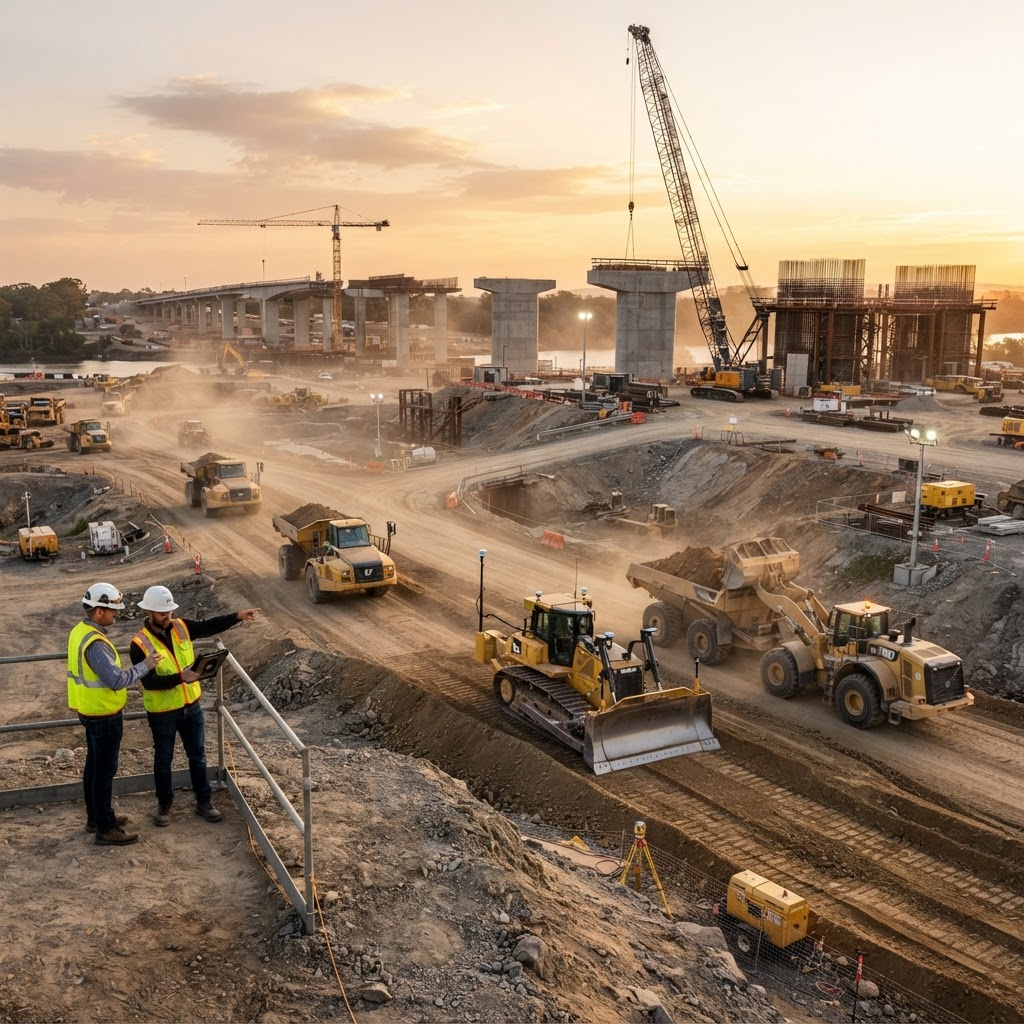
Autonomous Solutions, Inc. and SoftBank Group are forming a joint venture aimed at moving autonomous construction equipment into large-scale infrastructure work. SoftBank is investing $225 million in ASI, providing capital to expand commercial operations and develop the company’s Mobius fleet management platform. The stated target is an OEM-agnostic system capable of coordinating mixed fleets, including haul trucks, dozers, and loaders, across complex jobsites.
DIG Analysis — 2026-09-29: This is a scale and deployment announcement, not simply a software partnership. The central commercial question is whether ASI can make autonomy operate reliably across different machine brands, jobsite conditions, work plans, and contractor workflows. SoftBank’s investment gives the effort a meaningful financial runway, but the hard test will be repeatable production use with measurable gains in safety, utilization, cost, and schedule performance.
Capital moves the target from pilot to portfolio
Construction autonomy has often advanced through individual machine demonstrations or tightly bounded site trials. Large infrastructure projects require something broader: multiple machine types working within a shared operating picture, with supervisors able to assign tasks, monitor status, intervene when conditions change, and document performance. That requirement makes fleet coordination as important as the autonomy stack on any single machine.
ASI’s Mobius platform is positioned to provide that coordination layer. The platform’s role will be especially important where contractors operate mixed fleets assembled from several OEMs, rental channels, and legacy machine populations. An OEM-agnostic approach could reduce the need to standardize every machine before a project begins. It also places more responsibility on ASI to integrate controls, sensors, safety systems, communications, and maintenance data across equipment with different architectures.
“This partnership is designed to accelerate the commercialization of autonomous construction equipment at scale.” Source: Autonomous Solutions, Inc.
The jobsite is the real integration test
Autonomous haulage is relatively easy to describe when routes are fixed and operating boundaries are controlled. Construction sites are less predictable. Survey changes, utility conflicts, weather, changing haul roads, human-operated equipment, subcontractor activity, material variability, and emergency work all create conditions that an autonomy provider must handle without slowing the project.
That is why mixed-fleet deployment matters. A dozer creating a work surface, a loader feeding material, and haul trucks moving it are part of one production chain. If one machine operates autonomously while the rest of the process remains manually coordinated, the available benefit may be limited. The commercial value increases when the system can manage task sequencing and exceptions across the full work package.
ASI will also need to establish clear operating rules. Contractors and owners will want to know who approves autonomous work plans, who can stop a machine, how incidents are investigated, and how the system performs when connectivity is degraded. Those questions affect procurement, insurance, labor planning, cybersecurity, and project acceptance as much as they affect engineering.
Why the partnership matters beyond ASI
SoftBank’s investment signals confidence that autonomous construction can become a substantial technology market rather than a collection of isolated demonstrations. The joint venture may give ASI the resources to build field support, implementation teams, training, customer success, and product certification capacity alongside its core technology.
For the broader equipment industry, the development raises a competitive question. If an independent platform can coordinate machines from several manufacturers, OEMs may face pressure to make their controls and data interfaces easier to integrate. They may also need to sharpen their own autonomy offerings, define where responsibility sits between the machine and third-party software, and decide how much customer relationship control they are willing to share.
The investment does not remove the barriers to adoption. Autonomous construction still depends on site economics, regulatory acceptance, worker training, reliable communications, and proof that production gains justify implementation costs. But the structure of this deal gives ASI a stronger opportunity to address those barriers at commercial scale. The next evidence to watch is not another demonstration video. It is sustained deployment across multiple projects, machine classes, and operating conditions with independently credible results.
