
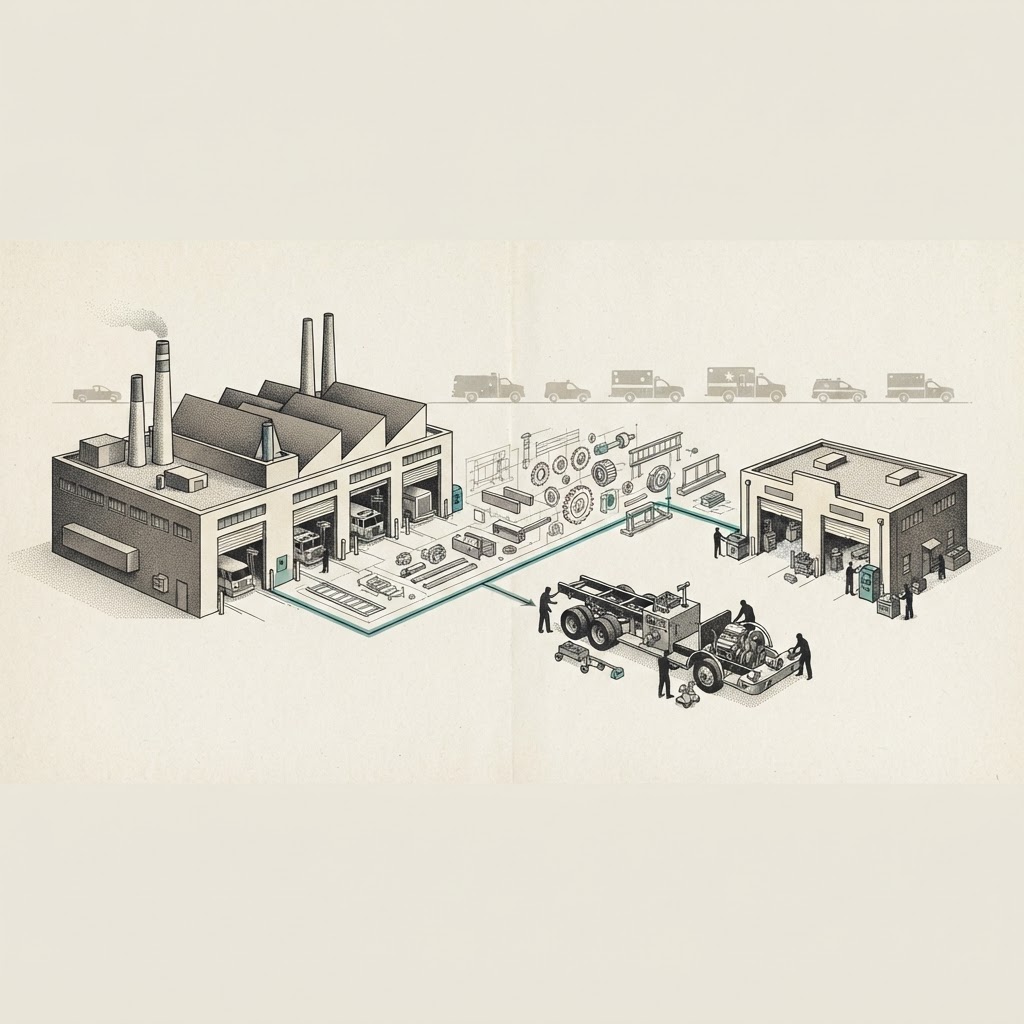
Stellar Industries has acquired a Midwest-based fire apparatus manufacturer, adding a new category of emergency equipment to a business already focused on utility and specialized vehicles. The deal gives the Iowa-based manufacturer a route into fire apparatus production, though the available announcement does not identify the acquired company, disclose a purchase price or detail how the operations will be combined.
DIG Analysis — 2026-10-16: The acquisition extends Stellar’s reach by product line rather than simply adding another vehicle configuration. Fire apparatus has distinct engineering, procurement and customer requirements, and the value of the deal will depend on whether Stellar can preserve those capabilities while bringing them into its broader manufacturing and distribution structure. The announcement establishes strategic intent, not the scale of the expected contribution.
A broader product mix
Stellar makes specialized equipment and vehicles for utility, construction and related commercial applications. Fire apparatus expands that portfolio into a market where the vehicle is often configured to meet a department’s operational needs, with equipment and body specifications shaped by local requirements. That makes the acquired manufacturer’s product knowledge and customer relationships potentially as important as its physical plant.
For Stellar, a broader offering could create opportunities to serve customers whose fleets include both utility vehicles and emergency equipment. It may also give the company a larger base over which to spread engineering, purchasing and production resources. Those benefits are not automatic: fire apparatus production involves its own design work, component sourcing and order cycles, and those processes may not fit neatly into existing vehicle programs.
For Construction Pros reported the acquisition as an expansion of Stellar’s specialized equipment portfolio. The source account and the company summary available for this analysis do not provide enough detail to determine whether the acquired operation will retain its name, management or independent sales channel. Nor do they state whether Stellar plans to add capacity, consolidate facilities or change the range of products being built.
Integration is the test
In specialized manufacturing, the acquisition price is only one measure of a deal. The buyer must retain experienced employees, maintain supplier continuity and meet delivery commitments while introducing new systems or production practices. Fire departments and municipal buyers can face long planning and procurement cycles; disruption during a transition could affect orders well after an ownership change.
Stellar’s existing experience with utility and emergency vehicles offers some relevant operating knowledge, but the announcement does not establish how much overlap exists in platforms, components or production equipment. If the acquired manufacturer has a strong regional reputation, customers may value continuity more than a unified corporate identity. A change in the sales or service structure could therefore carry costs even if manufacturing efficiencies emerge.
“The acquisition is expected to enhance the company's footprint in the specialized heavy equipment and apparatus market.”
Company summary supplied for this report
The statement describes the direction of the deal, but leaves several measures unresolved. Stellar has not, in the information reviewed, quantified the acquired business’s revenue, workforce or annual production. It has also not said whether the acquisition is expected to affect near-term capital spending or whether the fire apparatus line will be sold through Stellar’s existing channels.
What remains undisclosed
Those omissions matter because the market’s assessment will turn on execution as much as portfolio breadth. A modest operation with scarce manufacturing expertise could be strategically useful without moving Stellar’s financial results materially. A larger business, by contrast, could require more working capital and integration spending, particularly if orders are customized and production lead times are long. Without transaction terms or operating data, the size of either possibility remains unclear.
The acquisition also changes the competitive frame. Stellar will be entering or expanding in a segment where buyers weigh specification, reliability, service support and delivery timing. Established apparatus makers may face a more diversified rival, while suppliers and customers will be watching for changes in purchasing arrangements and product support. The available announcement does not name the manufacturer or identify any planned changes to its product lineup.
The next evidence will come from operating decisions: whether Stellar maintains the acquired facility and leadership, how it handles the existing order book, and whether it reports the fire apparatus business separately or folds it into a broader segment. For now, the confirmed change is ownership, with the acquired manufacturer’s identity and the terms of the transaction not stated in the available source material.