
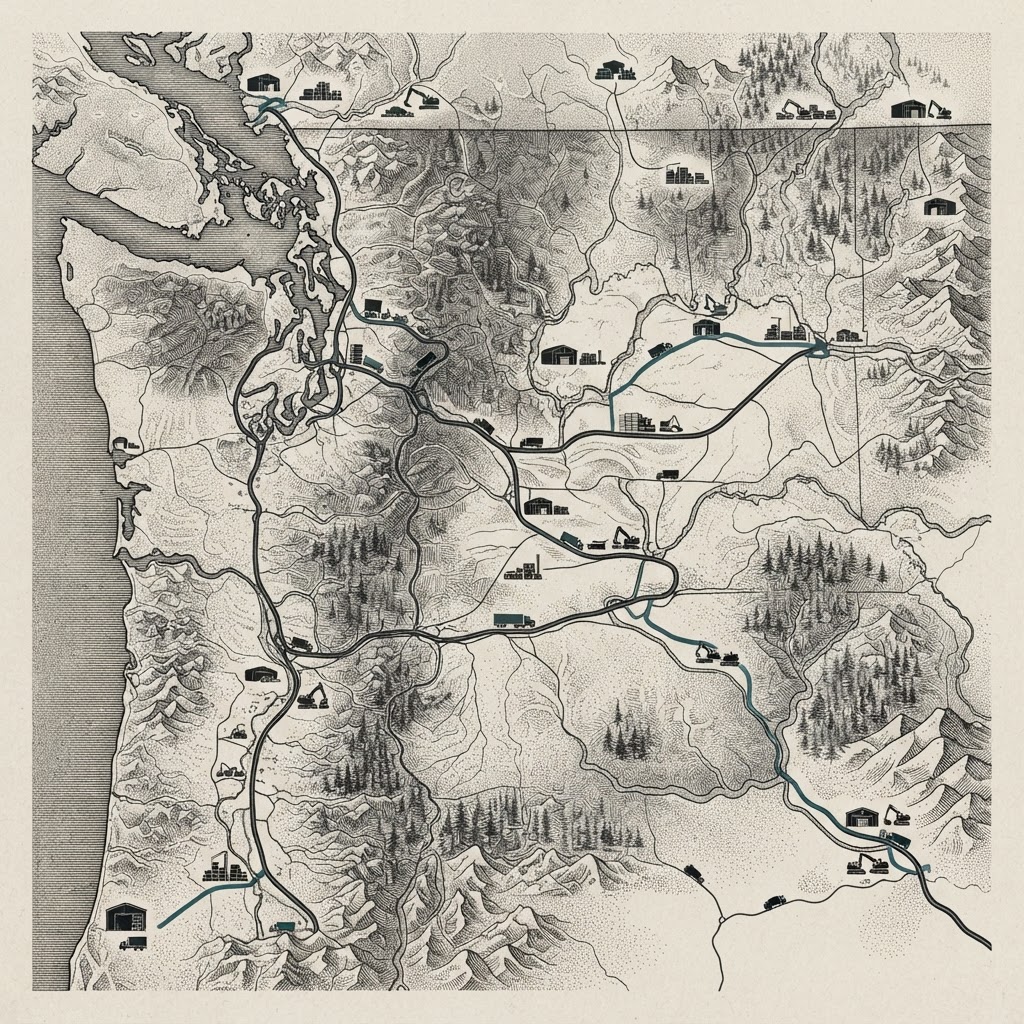
Sunbelt Rentals has completed an acquisition that adds several specialized heavy-equipment locations in the Pacific Northwest, extending the company’s reach in a region where infrastructure work can require equipment positioned close to job sites. The purchase gives Sunbelt more local capacity, but the available account does not identify the seller, disclose the transaction price or specify the locations and equipment involved.
DIG Analysis — 2026-11-02: The strategic logic is density, not simply a larger map. Rental companies need local branches and fleets to serve projects whose schedules, transport costs and equipment requirements can vary sharply by site. Adding established locations may give Sunbelt a faster route to that density than building branches from scratch. The value will depend on how well the acquired operation fits the existing network and whether its customers, staff and equipment remain in place.
Density over distance
Rental Equipment Register reported that the acquisition bolsters Sunbelt’s Pacific Northwest footprint and adds several specialized heavy-equipment locations. The publication’s account describes the move as part of Sunbelt’s continuing effort to consolidate fragmented regional markets and increase service density. It does not provide a timeline for integration or detail how the branches will be incorporated into Sunbelt’s operating structure.
That distinction matters. A location can broaden geographic coverage without improving service economics if it sits outside the company’s practical dispatch radius or lacks the fleet and technicians needed for local demand. Conversely, a handful of strategically placed branches can reduce equipment transfers, shorten delivery distances and support customers managing projects across multiple sites. Those benefits are plausible consequences of the deal, not reported outcomes; Sunbelt has not disclosed operating targets or projected savings.
Specialized equipment can also serve as a point of differentiation in a business where availability often determines whether a rental order is won. The acquisition may add capabilities that are difficult to reproduce quickly through ordinary fleet purchases. But the account does not name the specialties, so it is not possible to assess whether the added equipment fills gaps in Sunbelt’s fleet or overlaps substantially with existing inventory.
“This move aligns with Sunbelt’s ongoing strategy to consolidate fragmented regional markets and increase service density.”
Rental Equipment Register, reporting on the acquisition
Integration is the test
Scale can improve purchasing power and fleet utilization, but it can also make local execution harder. The acquired provider’s customer relationships and knowledge of regional demand may be part of what Sunbelt is buying. Retaining that knowledge, while bringing the operation into a larger dispatch, maintenance and pricing system, is a practical test that the announcement alone cannot resolve.
The transaction also leaves open questions about competitive effects. In fragmented markets, a larger operator may become a more capable supplier for contractors that need equipment across a wider geography. Independent rental companies, meanwhile, may face a stronger competitor with greater fleet depth and more locations. The effect will vary by equipment category and local market; the supplied report does not identify the seller or describe Sunbelt’s existing share in the affected areas.
For infrastructure customers, proximity can matter as much as fleet size. Equipment staged near a project can reduce delivery time and transport expense, especially when schedules shift or machines need replacement. Yet a larger network does not guarantee that the right unit will be available at the right branch. Fleet utilization, maintenance turnaround and the ability to move equipment between locations will determine whether the additional footprint changes service on the ground.
What remains undisclosed
Sunbelt has not provided, in the account available here, the purchase price, revenue contribution, employee count or expected financial return. Nor is there detail on whether the acquired company’s name will remain in the market, whether management will stay, or how quickly its systems and fleet will be integrated. Without those facts, the deal’s scale cannot be compared precisely with other acquisitions or measured against Sunbelt’s broader capital allocation.
The stated rationale is nevertheless clear: add specialized locations in the Pacific Northwest and deepen coverage for large infrastructure projects. The next evidence will be operational, including whether the branches retain their local customer base and whether the expanded network can serve work across the region with less equipment movement. The acquisition is complete; the report identifies no further integration milestones.