
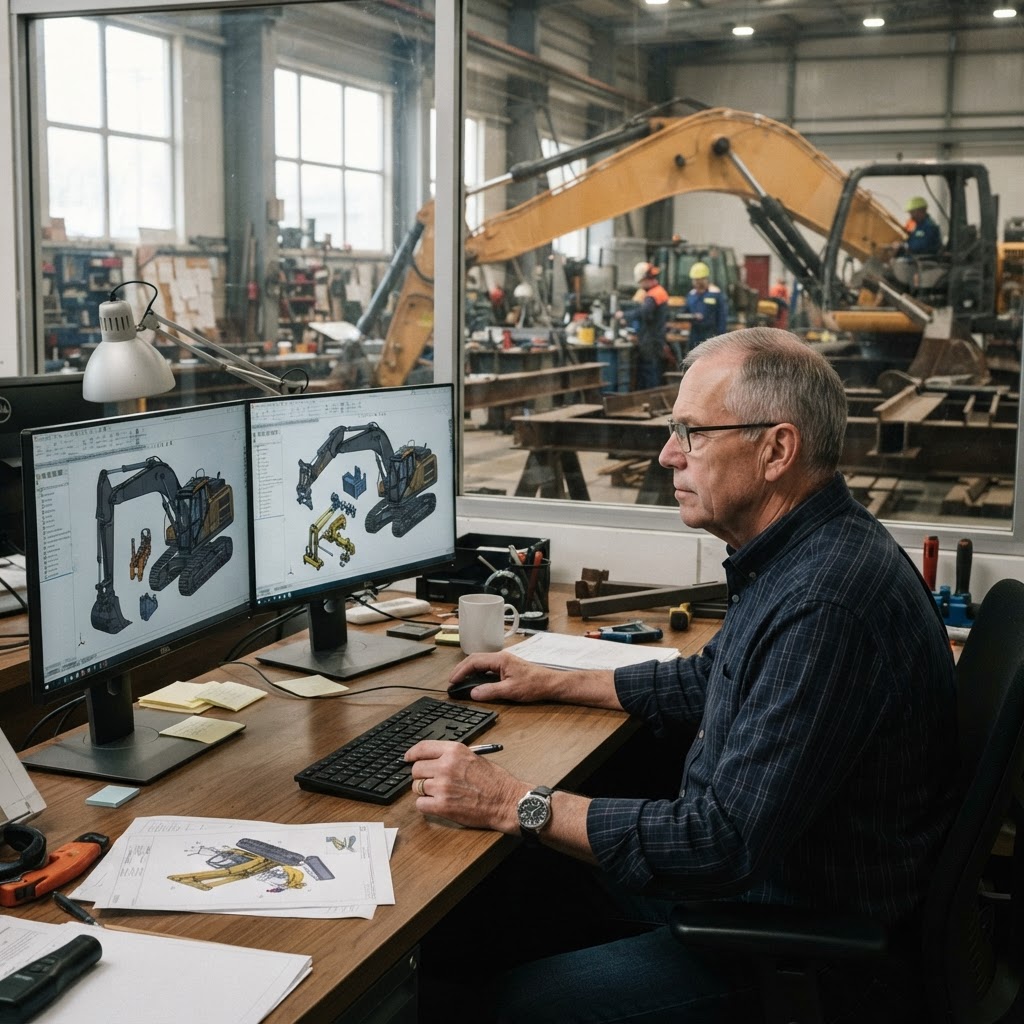
Tiger Construction LLC is expanding its heavy construction machinery engineering and design services from its Lake Elmo, Minnesota headquarters, placing greater emphasis on technical consulting for a sector under pressure to deliver more capable, compliant, and serviceable equipment. The company does not manufacture machinery. Its stated role is to help clients develop, refine, and support heavy equipment through engineering and design work delivered nationwide.
DIG Analysis — 2026-09-17: The announcement points to a widening market for independent engineering capacity in heavy machinery. Equipment makers, contractors, and other sector participants increasingly need specialized design support without necessarily adding permanent engineering headcount or building every capability internally.
A Specialist Position in a Capital-Intensive Industry
Tiger Construction’s expansion is notable because it is centered on expertise rather than physical production. Heavy construction machinery requires coordinated work across structural design, hydraulics, power systems, controls, safety requirements, manufacturability, and field maintenance. An outside engineering partner can be brought in for a defined program, a backlog surge, a redesign, or a product issue that requires focused technical attention.
That model can be useful for both established businesses and smaller equipment companies. A manufacturer may have strong fabrication and distribution capabilities but limited internal bandwidth for a new attachment, chassis revision, specialized carrier, or customer-specific modification. A contractor or fleet owner may also need design input when standard equipment does not fit a demanding application, provided the project is properly scoped and supported by qualified engineering resources.
WBOC reported the company’s expansion and described Tiger Construction as focused exclusively on advanced technical consulting and design support rather than equipment manufacturing. That distinction matters. It allows the firm to present itself as an engineering resource that can serve multiple clients without competing with them as a machinery producer.
“Tiger Construction is expanding its heavy construction machinery engineering and design services to support clients nationwide.”
Source: WBOC, reporting on Tiger Construction LLC
Why Outsourced Engineering Capacity Matters Now
Heavy equipment programs are increasingly shaped by requirements that extend beyond basic mechanical performance. Buyers expect improved uptime, safer operation, better operator interfaces, lower fuel consumption, and compatibility with evolving electronic systems. At the same time, manufacturers must manage documentation, testing, supplier constraints, and increasingly specific customer requirements.
Those demands create a practical opening for firms that can translate operating requirements into buildable designs. The commercial value is not simply producing drawings. It is reducing late-stage rework, identifying integration problems earlier, and helping a client move from a field need to a technically supportable machine or component.
For a nationwide client base, execution will depend on more than engineering credentials. Clients will likely assess Tiger Construction on responsiveness, documentation quality, design ownership, confidentiality, software compatibility, and the ability to work alongside internal engineers, suppliers, fabricators, and service teams. In heavy machinery, a design that cannot be fabricated, maintained, or supported in the field has limited value.
The Signal for the Machinery Market
Tiger Construction’s move also reflects a broader preference for variable technical capacity. Companies can engage outside specialists when demand rises, when a product line requires modernization, or when an internal team lacks a particular discipline. That can shorten the path to a decision, but it also places greater importance on clear scopes of work and measurable deliverables.
The opportunity is therefore substantial but execution-sensitive. Tiger Construction will need to demonstrate relevant project experience, disciplined engineering processes, and an ability to connect design decisions with equipment economics. Clients will want evidence that outside support improves launch timing, reliability, compliance, or lifecycle cost rather than adding another layer of coordination.
From Lake Elmo, the company is seeking a national role in a market where technical talent is costly and machinery failures are expensive. Its expansion is less about adding another equipment brand and more about building an independent engineering position behind the brands, fleets, and applications that keep heavy construction moving.