
Markets
CATCaterpillar$510.45-5.01%•
DEDeere & Co.$609.25-2.50%•
CNHCNH Industrial$10.74-2.98%•
AGCOAGCO Corp.$100.93-1.91%•
URIUnited Rentals$973.43-8.13%•
ALTGAlta Equipment$4.33-8.46%•
TTCToro Company$100.82-1.70%•
HRIHerc Holdings$133.55-11.54%•
MGRCMcGrath RentCorp$113.45-6.38%•
MTWManitowoc$20.31-5.58%•
Back to Newsdealership

Two Dealer Associations Set a Single Table for 2027

Jon RossiJon RossiFounder & Editor-in-Chief November 4, 2026 3 min read

NAEDA and AED plan to unite under the Associated Equipment Dealers name, bringing dealer advocacy and services into one organization. The announcement sets a direction, but leaves governance, dues and the transition plan unresolved.

Two Dealer Associations Set a Single Table for 2027

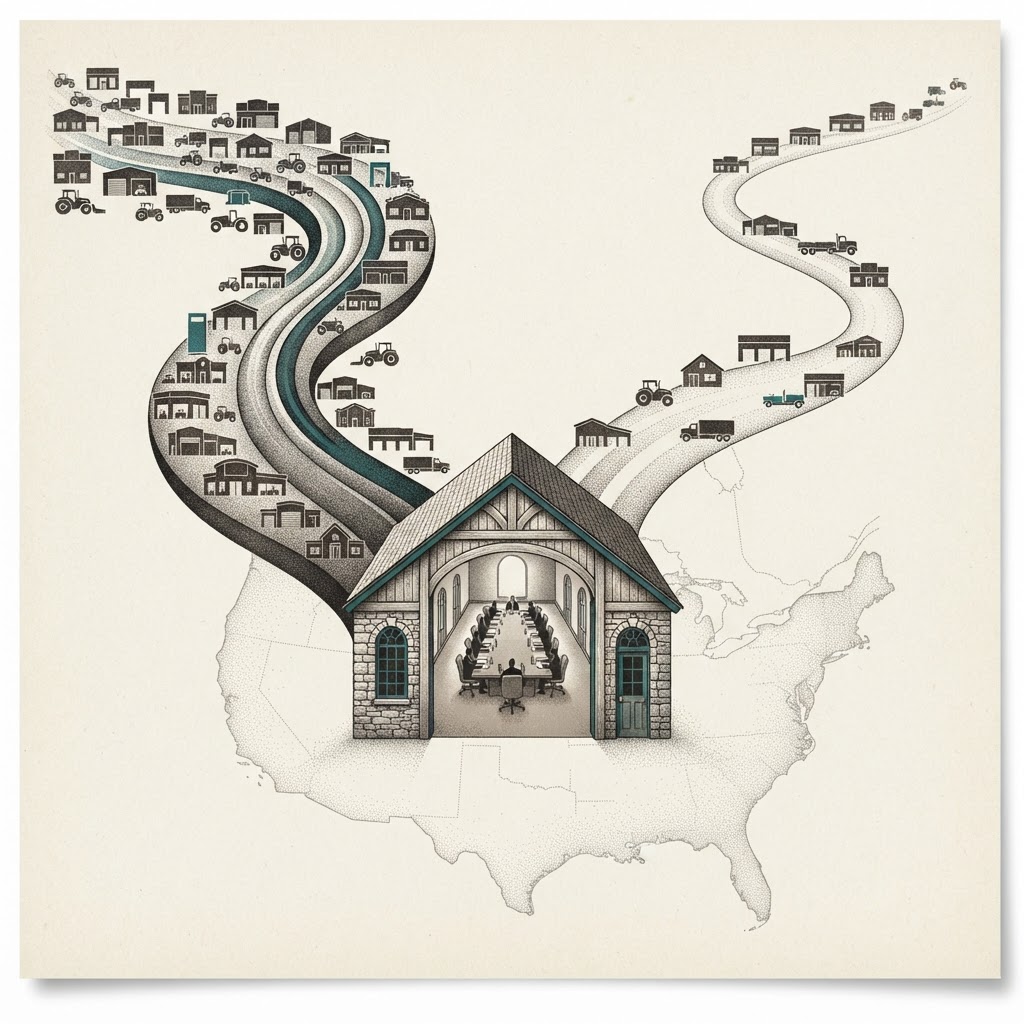
North America’s two major equipment dealer associations plan to merge in 2027, bringing the North American Equipment Dealers Association and Associated Equipment Dealers under the AED name. The stated aim is to consolidate advocacy, education and member services for dealers in the United States and Canada. The practical test will be whether one organization can represent a membership that spans different equipment sectors, markets and business models.

DIG Analysis — 2026-11-04: A unified association could give dealers a clearer channel for policy advocacy and shared services. But the announcement, as reported by For Construction Pros, does not specify how the combined organization will be governed, how representation will be divided or whether membership costs will change. Those details will determine whether consolidation produces a stronger voice or simply a larger structure.

A single organization

The merger brings together groups that have served equipment dealers through advocacy, education and member programs. Under the announced plan, the combined body will operate as Associated Equipment Dealers, with the change taking effect in 2027. The announcement describes the objective as a unified organization for dealers across the U.S. and Canada.

That structure could reduce overlap in policy work and member services. Dealers often face issues that cross product lines, including workforce development, regulatory requirements and the economics of supporting equipment customers. A single association can coordinate positions and avoid asking members to track parallel initiatives from separate organizations.

Consolidation also changes the internal balance of representation. Dealer groups differ in their geographic reach and equipment focus; a larger membership does not automatically mean every segment has equal influence. The organizations have not said how board seats, committees or regional representation will be allocated after the merger. Nor have they detailed how existing programs will be combined or which will continue under their current form.

Representation and execution

For dealers, the value of a trade association is measured in part by whether it can turn common concerns into sustained advocacy and usable services. A unified organization could concentrate resources and present a more consistent position to policymakers and industry partners. That benefit depends on how well it captures differences among members, from large multi-branch businesses to smaller regional dealerships.

Governance will be central. If one group’s priorities dominate the new body, members from other sectors could conclude that the merger has narrowed their access rather than improved it. The announcement does not provide a financial rationale, a combined membership figure or a timetable for operational integration. It also does not identify transition leadership or explain how member feedback will shape the new structure.

“The stated objective is a stronger, singular voice for the dealer community.”

Merger rationale described in the announcement, as reported by For Construction Pros

That rationale is straightforward, but “singular” can carry costs as well as benefits. A consolidated association may have more capacity to focus on shared issues, while members with distinct needs may have fewer independent channels through which to press them. Whether the new AED can manage that tension will become clearer as the parties disclose governance and service plans.

The transition ahead

The interval before 2027 gives both associations time to define the combined organization. Members will need to understand how dues, existing commitments, education programs and advocacy priorities will be handled. Dealers with established relationships inside either group may also want clarity on whether those contacts and programs will remain accessible during the transition.

For Construction Pros reported the planned merger and its stated purpose, but the available announcement leaves key operating terms open. The timing is set: the unified organization is expected to take effect in 2027 under the Associated Equipment Dealers name. Until the groups publish a transition plan, the scale of the change is clearer than its day-to-day consequences.

Who This Affects

OEM Impact

OEM channel managers will have one principal association counterpart for dealer-policy discussions and education initiatives. They should watch for changes in committee representation and advocacy priorities, since a consolidated voice could make dealer positions more coordinated while reducing access to separate association channels.

Dealer Impact

Dealer principals and association members will need to assess how governance, dues, regional representation and existing programs carry over before the 2027 effective date. Smaller or sector-specific dealerships could lose influence if board and committee arrangements favor the largest membership blocs.

Contractor Impact

Fleet operators and construction contractors are not direct parties to the merger, but dealer service capacity and policy advocacy can affect equipment availability, parts support and workforce pipelines. They should look for continuity in dealer education and service programs during the transition, particularly where local dealers rely on association resources.

Startup Impact

Series A founders and equipment-service startups may gain a more consolidated route to reach dealer networks through association programs and events. The effect depends on whether the new organization preserves access for emerging suppliers or concentrates member services around established dealer priorities.

Dealmaker Impact

PE dealmakers evaluating dealership platforms should track the merger’s effects on dealer advocacy, training and member services, which can influence operating costs and channel relationships. The announcement does not disclose financial terms or organizational savings, so investors should avoid treating consolidation as evidence of lower dues or improved economics.

Back to News
equipment dealerstrade associationsdealer advocacyAEDNAEDAindustry consolidation