 Translate

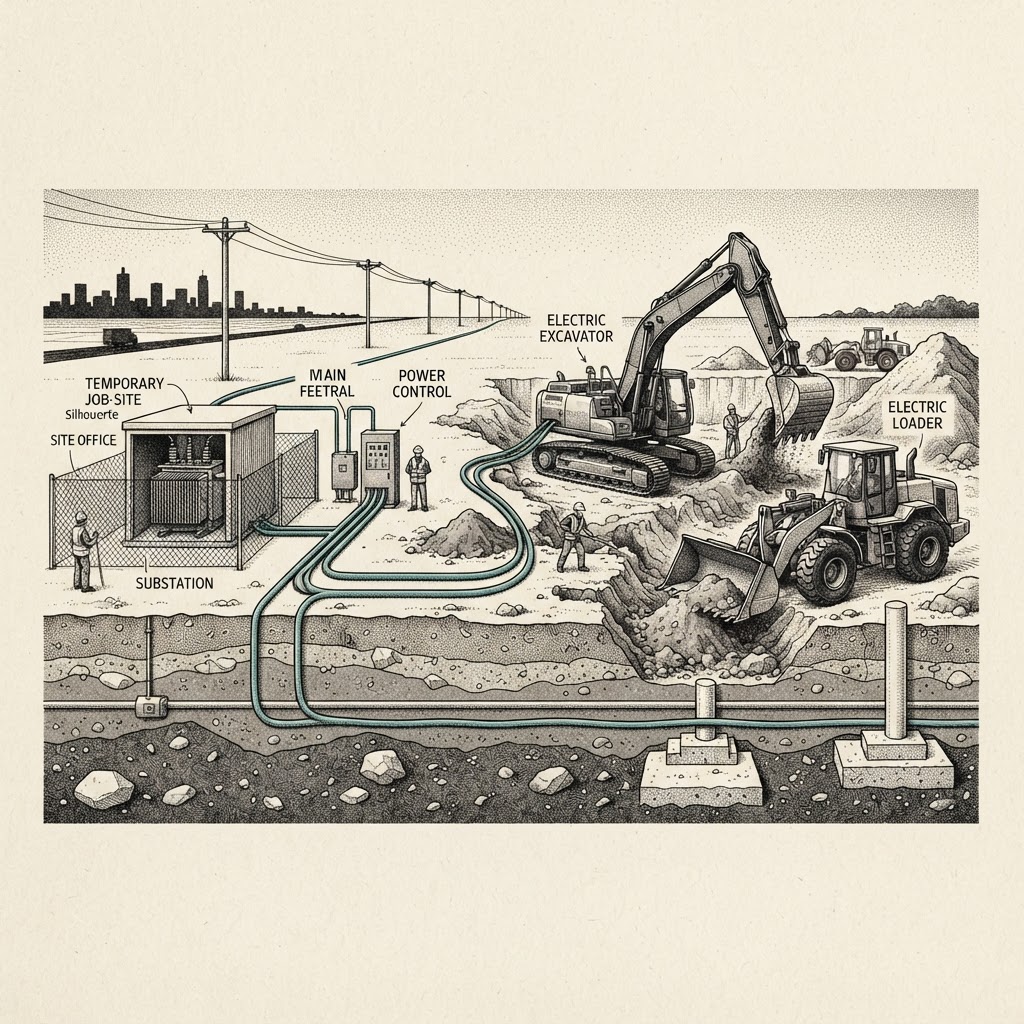
Volvo Construction Equipment and Hitachi Energy are joining forces to develop end-to-end solutions for zero-emission construction sites, bringing power infrastructure into a conversation often dominated by the machines themselves. Their memorandum of understanding points toward a more integrated approach, but does not yet specify products, customers, investment or a timetable.
DIG Analysis — 2026-10-28: The agreement addresses a practical constraint on electrification: equipment cannot operate on a job site without a dependable way to supply and manage power. Pairing an equipment maker with an energy systems company may help connect those requirements, though the memorandum is an early signal of intent rather than evidence of a deployable commercial offer.
Power becomes part of the product
Construction equipment companies have been developing lower- and zero-emission machines, while site power has often remained a separate procurement question. That division can complicate deployment. Contractors and project owners must consider charging or other power needs alongside machine selection, site access, operating schedules and the availability of electrical capacity.
Hitachi Energy brings expertise in energy systems; Volvo CE contributes a broad construction equipment portfolio. The proposed collaboration would connect those capabilities in solutions designed for the site as a whole. In principle, that could give customers a more coordinated path from power planning to equipment operation, rather than leaving them to assemble separate suppliers and interfaces.
The companies have not described the technical scope. The announcement does not identify which machines or power systems are under consideration, whether solutions will be permanent or temporary, or how they will be delivered and serviced. Nor does it say whether the partners expect to build new equipment, integrate existing products or work with other providers.
“The partnership aims to integrate power infrastructure with heavy machinery to support the industry's transition to sustainable operations.”
Company description, as reported by ACN Newswire
The deployment gap
Job sites vary in duration, location and access to grid power. A long-running project near established infrastructure presents a different challenge from a remote or short-term site. A solution that depends on major electrical works may be difficult to justify where a project is brief; one designed for mobility would still need to deliver enough capacity for the equipment and work schedule.
Those constraints make coordination commercially important. If power availability limits machine utilization, the operating case for zero-emission equipment weakens even when the machine itself meets performance requirements. Integrating planning and equipment could reduce friction, but it cannot by itself guarantee grid connections, permitting or economical power at every site. Those responsibilities involve utilities, project owners and contractors beyond the two companies.
The arrangement may also reshape competition among suppliers. Energy companies, charging providers and equipment manufacturers have been addressing adjacent parts of the problem. A joint offer could put pressure on vendors whose products are sold as standalone components, while creating a need for interoperability if customers want to combine machinery from multiple brands. The memorandum does not state whether the companies intend to build an exclusive system.
What remains to be proved
The source announcement, published by ACN Newswire, frames the collaboration around developing end-to-end solutions. It provides no financial terms, project commitments, customer names or quantified emissions targets. Without those details, the agreement should be read as a development framework, not a forecast of near-term sales or a measure of demand.
The next evidence will be specific: defined equipment and infrastructure, a field deployment, and a commercial model that shows who pays for site upgrades and how operating costs compare with current practice. Service coverage and the ability to support mixed fleets will matter as much as the technology. Until those points emerge, the memorandum establishes a direction for joint work, while leaving the investment case open.
For now, Volvo CE and Hitachi Energy have announced an intent to develop solutions that connect energy infrastructure with heavy machinery; the companies have not disclosed a launch date or named a first project.
