 Translate

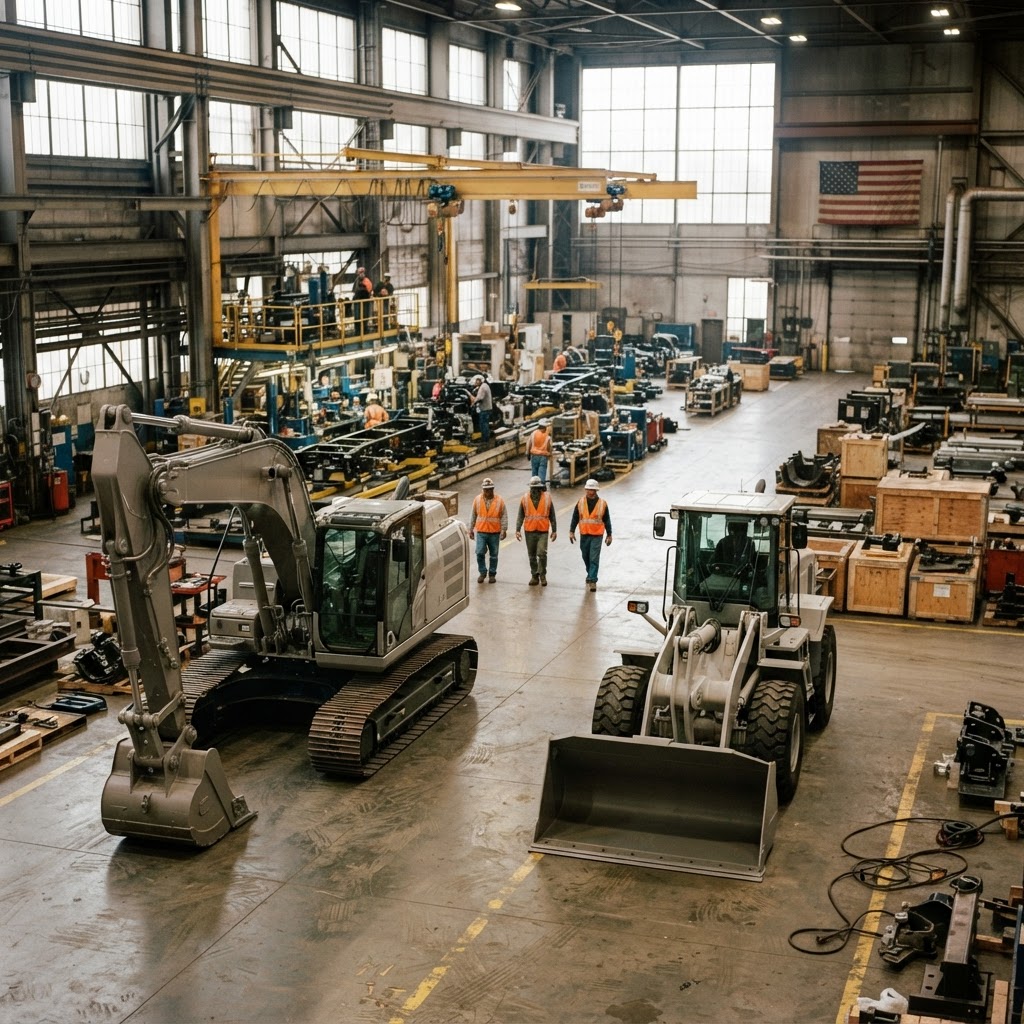
Volvo Construction Equipment has officially begun U.S. production of excavators and large wheel loaders at its Shippensburg, Pennsylvania facility, a capability the company says will allow it to manufacture more than 50 percent of its North American volume domestically. The move, reported by Business Wire via Yahoo Finance, is explicitly tied to reducing lead times and meeting steady demand driven by U.S. infrastructure investment.
DIG Analysis — 2026-08-20: Volvo CE’s shift expands domestic capacity in a measured way that will shorten delivery cycles for heavy machines while insulating North America operations from global logistics disruption. The factory will not only affect machine availability but also recalibrate inventory, parts stocking, and dealer stocking strategies across the region.
What happened: local lines for large machines
Production at Shippensburg adds excavators and large wheel loaders to the plant’s portfolio. Until now, much of Volvo CE’s North American volume came from plants overseas, with finished machines and components crossing transatlantic and transpacific supply chains. Bringing more than half of regional manufacturing onshore changes that balance. Volvo CE frames the decision as a response to sustained regional demand tied to public works and private construction activity, with Scott Young, Head of Region North America for Volvo CE, noting the strategic intent to better service contractors and dealers.
Why it matters: lead times, capacity, and dealer economics
Shorter lead times are the immediate, measurable benefit. For dealers and large fleet operators, domestic production reduces shipping time, customs variability, and exposure to ocean freight volatility. That can translate to smaller safety stocks, faster turn on order-to-delivery timelines, and improved fleet planning for contractors who bid on multi-month projects.
Operationally, the plant shift also forces changes across the channel. Dealers will need to revise stocking policies and parts forecasts because timing and cadence of deliveries will become more predictable. For Volvo CE, domestic production increases fixed-cost exposure in North America but supplies greater control over scheduling and final assembly quality. The net effect is a tradeoff between higher local overhead and lower variable logistics risk.
