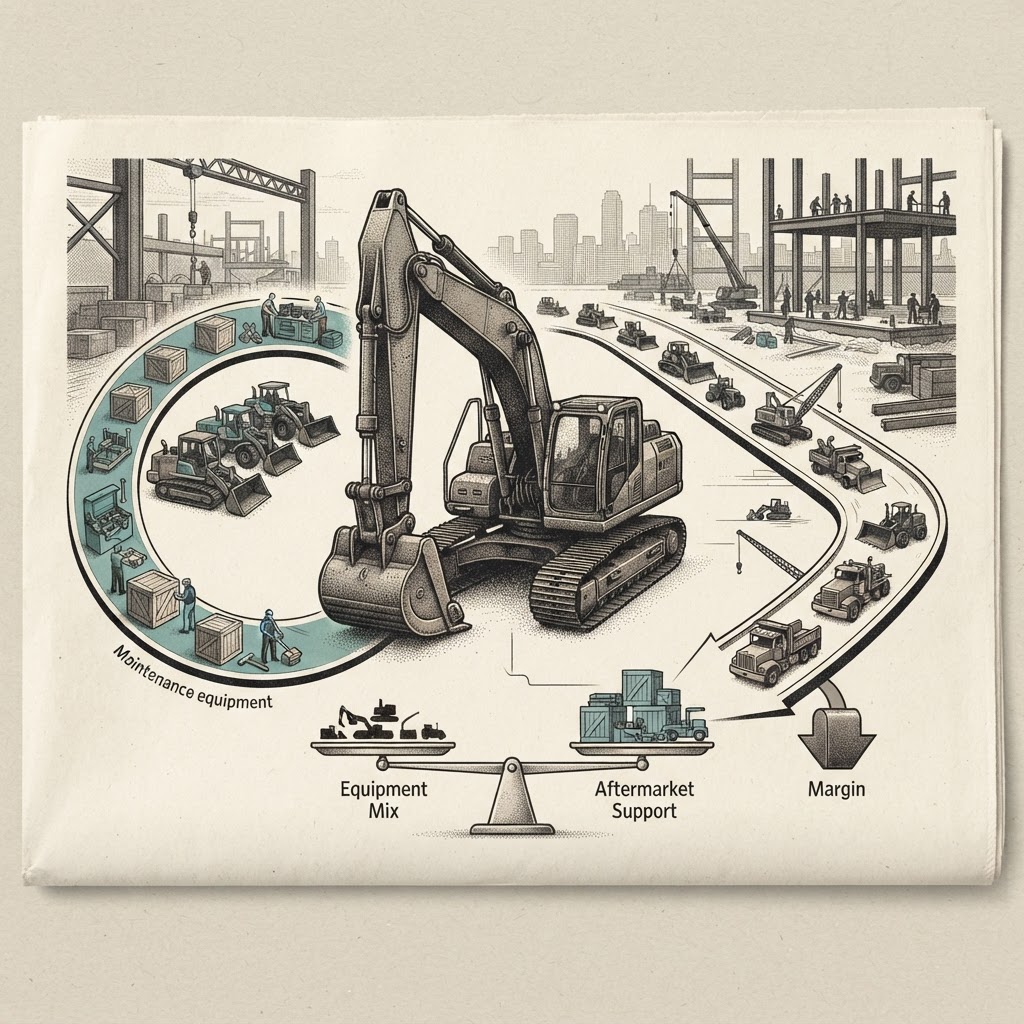
Volvo Construction Equipment reported higher machine deliveries and order intake in the third quarter of 2026, while service sales grew 5%. The figures point to a broader contribution from aftermarket work, though the company’s update does not quantify the margin gain or explain how durable the order growth may be.
Volvo Construction Equipment increased machine deliveries by 8% and order intake by 16% in the third quarter of 2026, while service sales rose 5%, a combination the company said helped improve its margin. The figures suggest that equipment demand and recurring service revenue both contributed, but the company did not disclose the size of the margin improvement in the summary of results.
DIG Analysis — 2026-10-24: The quarter’s central signal is not simply that orders grew faster than deliveries. It is that services advanced alongside machine sales, giving Volvo CE another source of revenue as the mix of markets and products shaped profitability. The unanswered question is whether the order increase reflects lasting demand or customers bringing purchases forward.
Orders move ahead
Order intake rose twice as fast as deliveries on a percentage basis. That gap can indicate a growing backlog, although the available figures do not provide absolute volumes, order cancellations or the value and timing of scheduled deliveries. Without those details, the 16% increase cannot be read as a direct forecast of near-term production or sales.
Volvo CE attributed the improved margin to favorable market mix and service growth. Market mix matters because equipment sold across regions and product categories can carry different prices and costs. A shift toward markets or machines with stronger economics can lift reported profitability even when unit growth is modest. The company did not specify which regions or product segments drove the mix benefit, nor did it quantify the contribution from services.
The distinction matters for interpreting the result. If order growth is concentrated in higher-margin products and can be delivered without substantial discounting, it may support earnings in subsequent quarters. If it is instead concentrated in markets with longer lead times, or reflects a temporary buying cycle, the effect on realized revenue will arrive later and may be less persistent. Volvo CE’s reported percentages alone do not resolve that uncertainty.
“The company also saw a 5% growth in service sales, which contributed to improved overall margins.”
Volvo Construction Equipment Global, third-quarter 2026 results summary
Services add another earnings stream
Service sales grew 5%, below the reported increases in deliveries and orders, but the category carries a different commercial profile from new machines. Parts, maintenance and other support can generate revenue over the operating life of equipment, linking current sales to the installed fleet. The reported growth indicates that services added to the quarter’s margin improvement; it does not establish the service business’s margin rate or how much of the increase came from prices, activity or a larger fleet.
That distinction bears on the quality of growth. A service operation can soften the effect of uneven equipment demand, but its contribution depends on fleet utilization, parts availability and the company’s ability to retain customers after the initial sale. The summary did not provide detail on service contracts, customer retention or regional performance. Nor did it say whether the increase was broad-based across the installed base.
The balance between machines and support is also a measure of commercial execution. Higher deliveries can expand the pool of equipment that may require future parts and maintenance, but that benefit does not arrive automatically. Dealers and manufacturers must keep machines productive and make support available where customers operate. The quarter’s 5% service growth is evidence of progress, not a full accounting of the economics of that relationship.
What remains unclear
The company’s account leaves several questions open for investors and competitors. It did not state the exact margin change, identify the markets behind the favorable mix, or provide a breakdown of the order increase. Those omissions limit comparisons with earlier periods and make it difficult to judge whether profitability improved chiefly through product selection, service activity or cost control.
For now, the reported quarter combines three positive movements: deliveries up 8%, orders up 16% and service sales up 5%. Whether the order growth converts into profitable deliveries will depend on backlog quality and the timing of customer demand, while the durability of service growth will depend on support across the installed fleet. Volvo CE has reported the direction of the change; the figures supplied do not yet show its scale.
 Translate