 Translate

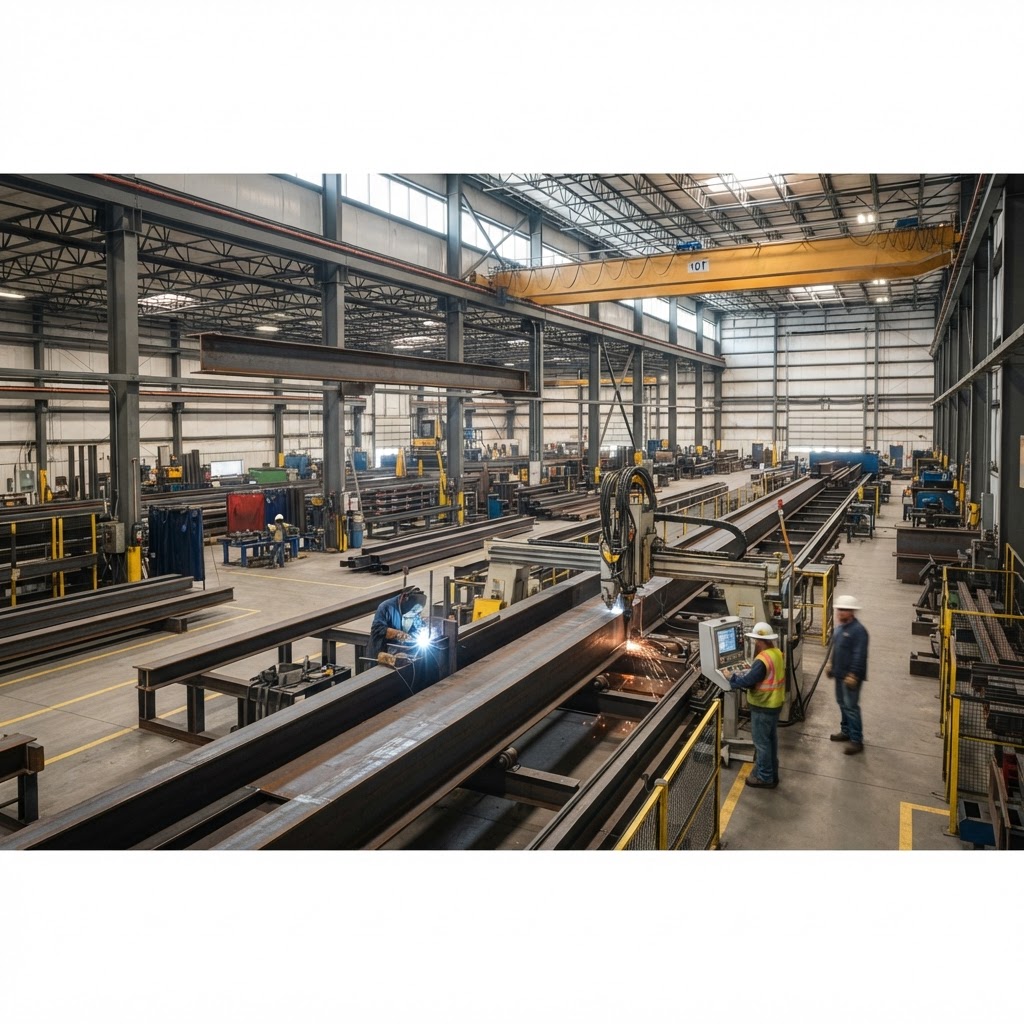
Voortman Steel Machinery has opened a $51 million manufacturing facility in Monee, Illinois, adding production capacity for the automated steel-processing equipment used by construction and structural steel businesses. The new site is a concrete bet that North American demand will justify more manufacturing closer to customers.
DIG Analysis — 2026-10-05: The strategic value is not simply additional floor space. A U.S. production base can give Voortman more control over lead times, output planning, and customer responsiveness in a market where fabricators are weighing automation against labor constraints, project schedules, and capital costs. The facility’s returns will depend on converting that proximity into dependable delivery and support.
Capacity is a commercial commitment
The opening marks a meaningful expansion of Voortman’s North American manufacturing footprint. The company’s equipment serves steel processors and fabricators supplying construction and structural steel markets, where machines must fit into high-throughput operations and meet demanding project requirements. Increasing production capacity gives the manufacturer more room to serve orders, but it also creates a larger fixed-cost base that must be supported by sustained utilization.
Construction Owners reported the facility opening and the $51 million investment, describing the move as a response to growing North American demand for automated fabrication technology. That demand is not automatic. Buyers must justify equipment purchases against labor availability, financing costs, shop capacity, and the timing of their project backlogs. Manufacturers, in turn, have to make the case that automation can improve throughput and consistency without creating unacceptable installation, training, or maintenance burdens.
Local manufacturing can help narrow the distance between production and customer needs. It may improve coordination on delivery schedules and make it easier to respond to changes in regional demand. It does not, by itself, guarantee shorter lead times: suppliers, workforce availability, commissioning capacity, and production planning will all shape the outcome. The operational test is whether Voortman can scale output while maintaining the quality and support standards customers expect.
Automation demand meets a disciplined buying cycle
For structural steel fabricators, automation is increasingly a capacity decision, not merely a technology upgrade. Shops facing scarce skilled labor may see automated processing as a way to handle more work with available staff. Yet a new machine is only productive when it is integrated into existing workflows, supported by trained operators, and kept running through maintenance and parts availability.
That puts the spotlight on the full ownership proposition. Customers will assess purchase price alongside utilization, uptime, operator training, software and workflow integration, and the ability to service equipment over its life. A closer manufacturing presence could strengthen Voortman’s ability to coordinate with customers, but execution at the plant and in the field will determine whether that advantage is visible in day-to-day operations.
The investment also represents a capacity-planning signal to the market. Manufacturers typically commit substantial capital when they believe demand is durable enough to support additional output. However, the company’s decision should not be treated as proof that every fabricator is ready to invest. Steel project pipelines can shift, and individual shops face different labor, financing, and backlog conditions. The near-term evidence to watch is not the announcement alone, but production ramp-up, delivery performance, and the pace at which customers put new equipment to work.
“The investment underscores the company’s commitment to meeting growing North American demand for automated fabrication technology.”
Construction Owners, reporting on Voortman’s Monee facility opening
The measure will be execution
Voortman’s Monee facility is a significant industrial investment with a clear strategic logic: build more capacity in a core market for the company’s steel-processing equipment. Its importance will be measured in operational outcomes rather than the headline figure. Can the site support reliable output? Can the company translate expanded capacity into customer delivery and service advantages? And will fabricators invest quickly enough to keep that capacity productive?
For the broader market, the opening reinforces that manufacturers see automation as a durable requirement in steel fabrication, even as customers remain selective about capital spending. The strongest signal will come from how the plant performs across a full demand cycle. If output, delivery reliability, and customer adoption align, Monee can become a practical competitive advantage. If demand or ramp-up falls short, the $51 million commitment will be a reminder that capacity built ahead of the market carries its own risk.
