
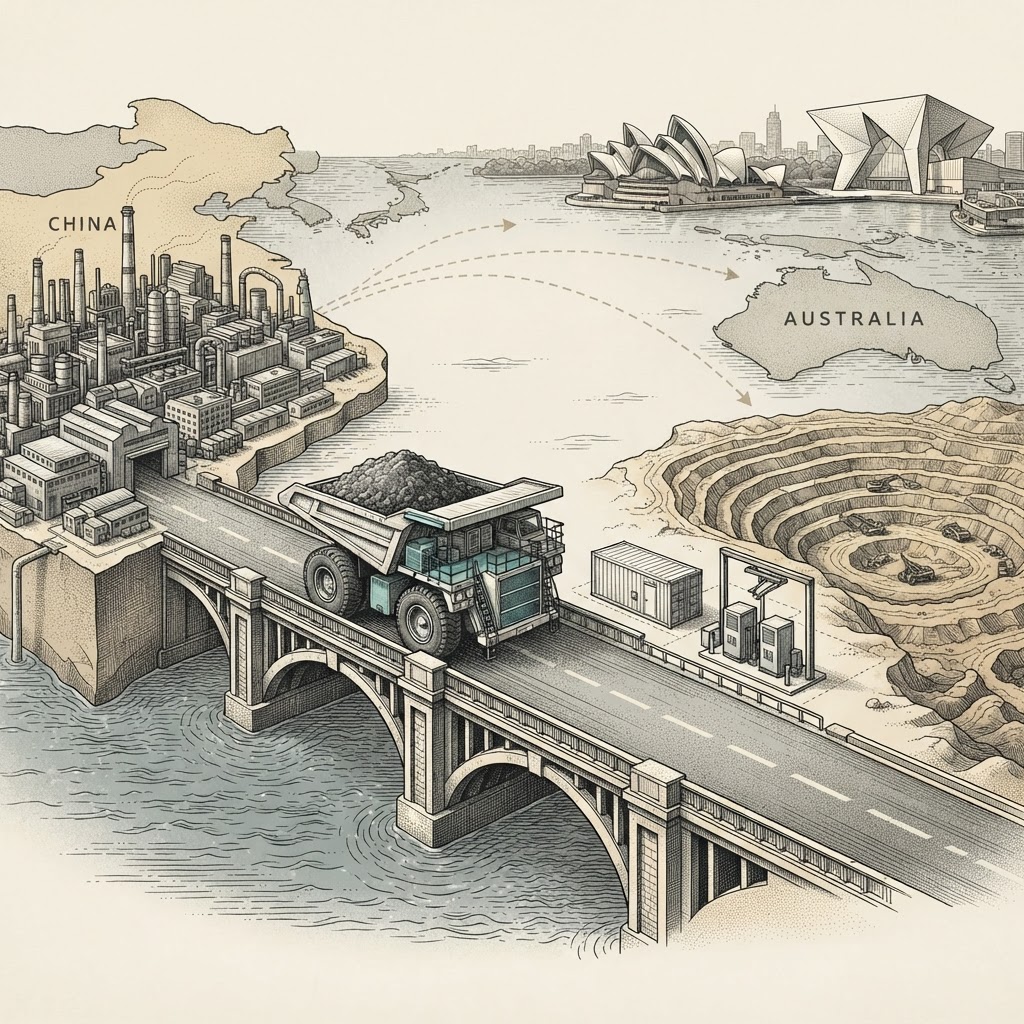
Zijin Longking is preparing to take its battery-electric mining trucks beyond China, establishing an Australian entity and planning a public introduction at the IMARC 2026 mining conference in Sydney. The move brings a new Chinese supplier into a market where mine operators are weighing emissions targets against the practical demands of haulage: uptime, charging infrastructure and support over long distances.
DIG Analysis — 2026-10-26: The Australian entity is a market-entry step, not evidence of commercial traction. Zijin Longking can point to 43 electric trucks deployed in China, but the available information does not identify their operating hours, payload classes, customer economics or performance in Australian conditions. Those details will matter more to fleet buyers than a conference display.
A first foothold
Zijin Longking is a subsidiary of Zijin Mining, the Chinese mining group. Its planned Australian offer includes battery-electric haul trucks and energy storage systems, a pairing that suggests the company wants to address both vehicles and parts of the supporting power infrastructure. The company has not disclosed which truck models it intends to sell in Australia, how it will price them or whether local assembly is under consideration.
That leaves several commercial questions open. Mine operators will need to understand how the trucks fit into existing loading and haulage cycles, what charging capacity a site would require, and how batteries perform under local climate and duty-cycle conditions. They will also assess parts availability, technician coverage and the consequences of a vehicle being out of service at a remote operation.
International Mining reported the Australian entity and the planned IMARC appearance. The publication’s account places the move alongside a separate investment in China: on October 20, 2026, Zijin Longking broke ground on a 550 million yuan intelligent mining truck production facility. The project signals an effort to expand manufacturing capability, though the announced investment does not establish how much capacity will be dedicated to electric vehicles or export markets.
Scale before proof
The 43 trucks already deployed in China give the manufacturer a starting point for its case to Australian buyers. They are evidence of field use, but not enough on their own to establish fleet-wide economics. A mine’s decision will depend on the cost and reliability of the full operating system, including charging equipment, energy supply, battery replacement and maintenance, as well as the truck’s productivity against incumbent diesel equipment.
Battery-electric haulage may also alter the way a site plans its power demand. Offering storage alongside trucks could help address constraints at mines where grid capacity is limited or power demand fluctuates. But Zijin Longking has not provided technical or commercial terms for its storage systems, nor explained whether they will be sold as a package, financed separately or supported through a local partner.